

According to international assessments, Australian unis are ‘struggling’. Closer to home, some academics are questioning whether a uni degree is even worth it.
Articles on University rankings
Displaying 1 - 20 of 65 articles

A small portion of university research funding comes from individual donors. Most universities have policies in place to protect against wrongdoing.

Ubuntu philosophy is a better way to represent scholarly contributions in African academia.

Universities need to move away from competing over rankings, and instead focus on building a collaborative educational system that puts collective well-being first.

Financial pressures keep business school leaders trapped in a paradox. They know MBA rankings are flawed – but still invest in them.

The ranking industry is targeting universities in Africa, which are seen as offering a new market.

Global rankings are compelling and prestigious. But they don’t necessarily tell students what it is like to study at a particular university.

‘Fast science’ can damage research integrity – just as fast food can damage your health. ‘Slow science’ offers an alternative path forward.

Globally, we’re witnessing a rise in far-right governments increasingly hostile towards universities, historically springboards for progressive change. What should the future look like for universities in Canada?

Finding a balance between sometimes contradictory definitions of the role of universities will be the first challenge for the University Advisory Group.

We all need to understand that ranking is not objective and true. University rankings are massively overvalued, and reinforce global, regional and national inequalities.

Responding to societal challenges and promoting sustainable development is an especially pressing concern for African universities.
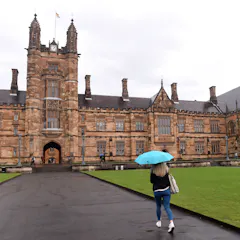
The Conversation talks to University of Melbourne researcher Gwilym Croucher about what the Times Higher Education rankings mean.

The UK is offering an elite visa for well-off graduates from elite institutions to stay temporarily in the UK.

You’d think class sizes would be an important consideration for students when choosing a university, but universities don’t make that information public. They should.

Allegations that World Bank officials manipulated country rankings in its much-used ease of doing business index highlight a deeper problem with these types of rankings.

The ‘we’re No. 1’ mentality at universities has shaped how everything from campus food, bookstores and research are run, and these models can change.

The focus on rankings has been more a symptom than a cause of the challenge Australian universities face, namely a structural change in their revenue base.
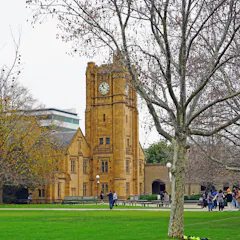
With 13 universities in the top 200 in the new aggregated ranking system known as ARTU, Australia ranks fourth in the world and is part of a rising new order in the global higher education sector.

The gravitational pull of global rankings consumes university energy and attention. But there had to be a better way to measure their value.
Top contributors
-

Associate Professor, Melbourne Centre for the Study of Higher Education, The University of Melbourne
-
Associate Professor, Department of Educational Studies, University of British Columbia
-
Vice Chancellor, Monash University
-
Professor of International Higher Education, UCL
-
Professor of Public Humanities and Director of the ANU Humanities Research Centre, Australian National University
-
Professor of Higher Education, Rhodes University, South Africa, Rhodes University
-
Deputy Director, Office for Research, Griffith University
-
Professor of Higher Education, University of KwaZulu-Natal
-
Vice-Chancellor, Birmingham City University
-
Professor, University of Southern Denmark
-
Executive Director, Group of Eight Australia
-
Director and Professor, Australia-China Relations Institute (UTS:ACRI), University of Technology Sydney
-
ARC Laureate Fellow, Swinburne University of Technology
-
Vice-Chancellor and President, Queensland University of Technology
-
Senior lecturer in TESOL education, University of New England