
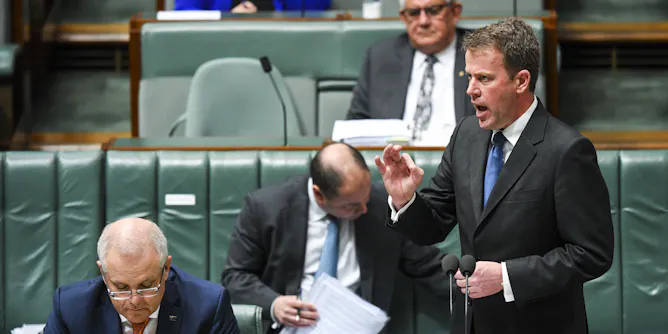
Three key policy errors in the legislation mean the Morrison government is unlikely to achieve the stated goals of its package.
Articles on University fees
Displaying 21 - 40 of 90 articles
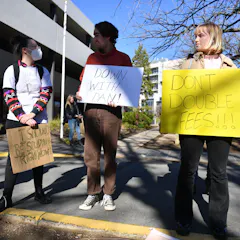
The Nationals are demanding major changes to the government’s controversial planned new regime of higher education fees, declaring they would disadvantage regional communities and students.

Doubling the cost of degrees in the humanities and social sciences has a disproportionate impact on women because they account for two-thirds of the students.
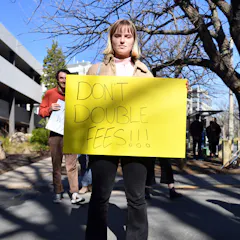
The government’s higher education changes appear driven by three factors.

Australia has a long history of international student education, spurred on by government policy.

For every $1 lost in university tuition fees, there is another $1.15 lost in the broader economy. This means loss of university revenue can cost the Australian economy more than $40 billion by 2023.

Helping international students is in Australia’s best interest. Universities rely on them to stay afloat, and in 2018, Australian universities contributed $41 billion to the economy.
Kenya’s once financially healthy universities are in financial straits.
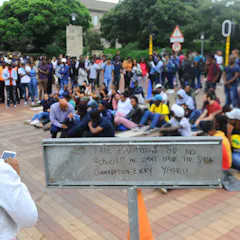
South Africa students are protesting and have brought university campuses to a stand still. This could have been avoided.

If Labor is to once again uncap university funding, vocational education reform is a vital.
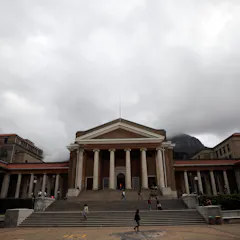
Alternative scenarios for tertiary funding in South Africa are set out in a completely separate report from the Davis Tax Committee drawing from work done by the higher education department.
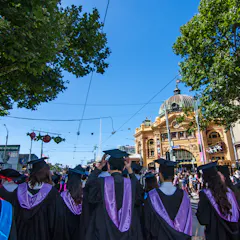
Earnings data suggest higher education remains financially attractive for most students, and the small proposed fee increases should not materially affect that.

Students on ‘enabling’ courses may now have to pay substantial fees under higher education reforms.

Higher education reform means more pain for students and universities with long lasting consequences.
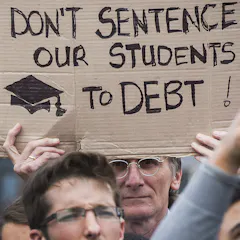
The ministerial task team’s report presents a jaundiced view of an important organisation that’s opened the doors of higher education to many who would otherwise have been closed out.
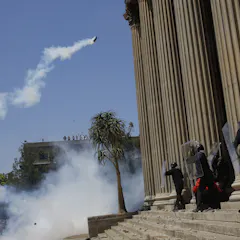
It’s easy to understand why the government treats each student demand as distinct. But these are complex issues and they are intertwined.
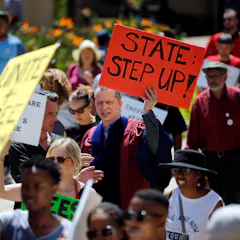
South Africa must address the root factors contributing to nationwide protests in the higher education sector or face dire consequences

Pension fund managers must consider environmental, social and governance issues when making investment decisions. The student funding crisis is a perfect example of a social issue.
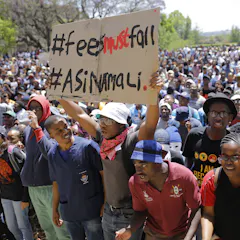
There has been a great deal of research, planning and talking to come up with solutions to South Africa’s higher education funding crisis. Some of these plans must now be put into action.
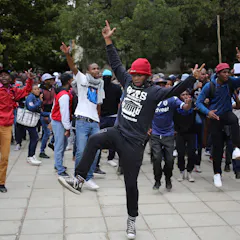
Student protesters have demonstrated good leadership in some spheres but come up short in other areas. This suggests that universities ought to focus more on how they teach leadership.
Top contributors
-

Professor of Higher Education Policy, Monash University
-
Professorial Fellow, University of Canberra
-
Associate Professor, Melbourne Centre for the Study of Higher Education, The University of Melbourne
-
Researcher, Social Sciences, University of Fort Hare
-
Director of the Centre for Education Rights and Transformation and Associate Professor of Education, University of Johannesburg
-
Senior Researcher in Labour Studies and Education, University of Johannesburg
-
Research Associate in Higher Education Policy and Planning, Ali Mazrui Centre for Higher Education Studies, University of Johannesburg
-
Chief Director: Tshwane University of Technology – Institute for Economic Research on Innovation; Node Head: DST/NRF SciSTIP CoE; and Professor Extraordinary: Stellenbosch University – Centre for Research on Evaluation, Science and Technology., Tshwane University of Technology
-
Professor of Higher Education, Rhodes University, South Africa, Rhodes University
-
PhD Scholar, Wits School of Education, University of the Witwatersrand
-
Researcher at the Centre for Integrated Post-School Education and Training, Nelson Mandela University
-
Professor of Education, Postgraduate School, University of Johannesburg
-
Professor, Sol Plaatje University
-
Teaching & Learning Specialist, Office of DVC Academic, University of the Western Cape
-
Professor of Sociology, University of the Witwatersrand