
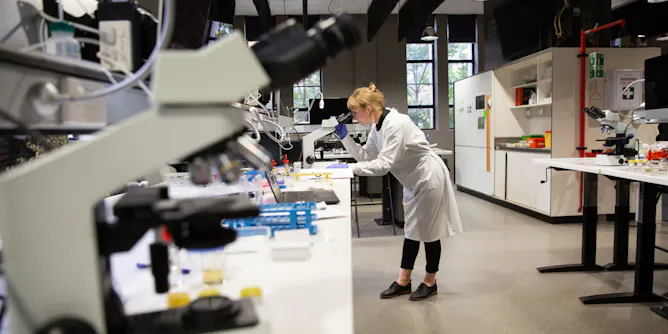
School leavers used to have one main chance to get into university – by finishing their Year 12 exams with certain marks. This situation has changed.
Articles on university entry
Displaying all articles

Reaping the benefits of uni doesn’t happen through hope or just turning up to lectures. You need to ask questions, and be an active, independent learner.

A new report looks closely at who uses the ATAR, who doesn’t and what that means for students and universities.

Don’t feel you need to rush out and enrol in a degree on how to become an AI engineer (unless, of course, that is where your interest and passion lie).

The student’s goal should not primarily be about pleasing family or outperforming others but on becoming the best version of oneself.

More and more colleges are offering admission to students who never applied.

The pandemic has has a serious impact on school pupils – but a record number have applied to university.

New research shows university students who gained entry via bridging programs outperform others who gain admission through ATARs and other means. They are also more likely to complete their degree.

Students matching the ‘traditional’ applicant’s profile see university as a stepping stone to a good job. Those from less-well-represented groups care more about higher education’s intrinsic value.

There are some myths about senior schooling kids and parents need to know. They include the idea everyone needs an ATAR to get into university, and that year 12 must be stressful. Neither are necessarily true.
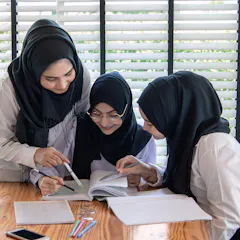
A higher proportion of Islamic-school students in years 11 to 12 are enrolled in science and maths than other students in Australia. But they may not all get the careers they want.

Higher education should provide access for as many people as possible to fulfil their potential as individuals. Leaders in higher education must be ready to examine what it will take to achieve this.

Eight Year 12 students in Queensland share how they feel about their disrupted, final year of school.

A recent report recommended all students leave school with a learner profile. This will capture their academic results, as well as other achievements like extracurricular activities.

A new study and its methods provides a way to replace the current Year 12 structure with one that will help prepare senior school students for their journey into the future – whatever that may be.

There are five transitions young people aged 16-25 make between school and employment. Most involve some vocational education and training. Some involve university and others no education at all.

Even before COVID-19, use of the ATAR for university entry was contentious. Now it’s even more so, and universities need to rely on other ways to admit students.

Universities are increasingly accepting more students into degree programs without an ATAR. Here are some of the most common ways in.
Top contributors
-

Director, Peter Noonan Policy Impact Program, Mitchell Institute, Victoria University
-
Adjunct Associate Professor of Education Policy, Victoria University
-
Associate Professor in The Future of Work, Flinders University
-
Policy Fellow, Mitchell Institute, Victoria University
-
Pro Vice-Chancellor (Academic Quality), Southern Cross University
-
Founding Director of the Centre for Islamic Thought and Education, Adelaide University
-
Professor and Director, Mitchell Institute, Victoria University
-
Vice Chancellor, Torrens University Australia
-
Associate Pro Vice Chancellor for Student Inclusion and Professor of Learning and Teaching in Higher Education, University of East Anglia
-
Professor, Leadership and School Transformation, School of Education, University of Newcastle, University of Newcastle
-
National Centre for Vocational Education Research (NCVER)
-
Senior Lecturer, Griffith University
-
Professor, University of Newcastle
-
Lecturer, Academic Portfolio Office, Southern Cross University
-
Senior Research Fellow, Mitchell Institute/Centre for International Research on Education Systems, Victoria University