

Preventing unintended pregnancies among women living with HIV is a critical strategy for the prevention of mother-to-child HIV transmission.
Articles on Unintended pregnancies
Displaying all articles

Childbearing goals have remained remarkably consistent over the decades. What has changed is when people start their families and how many kids they end up having.

There hasn’t been a new form of male birth control since the 1980s. More contraception options for all partners could help reduce the rate of unintended pregnancies.

States taking the strictest stands against abortion tend to have among the worst statistics in the nation on child and family well-being.

It is likely that countries may use the US abortion ban to further restrict abortion access for fear of losing health funding.
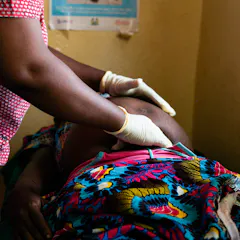
Up to 257 million women who want to avoid pregnancy are not using safe, modern contraception methods

In past rulings, the court has acknowledged that there’s a connection between the ability of women to control their reproductive lives and the economic health of the nation.

In Eswatini, Botswana, South Africa and Lesotho more than 1 in 5 children are HIV-exposed but uninfected. A coordinated strategy is needed to ensure all children reach their developmental potential.

Kenya spends millions treating women who have complications after unsafe abortions.

Women should not be blamed for getting pregnant accidentally, because factors outside their control are frequently at play.
Top contributors
-

Senior Research Fellow, Global and Women's Health, School of Public Health and Preventive Medicine, Monash University
-
Policy Outreach Manager , African Population and Health Research Center
-
Research scientist, African Population and Health Research Center
-
Senior Research Fellow, Jean Hailes Research Unit, School of Public Health & Preventive Medicine, Monash University
-
Finkel Professor of Global Health, Monash University
-
Senior Research Fellow, Monash University
-
Professor of Sociology and Director of the Carolina Population Center, University of North Carolina at Chapel Hill
-
Venable Professor of Law, University of Baltimore
-
Assistant Professor, Harvard University
-
Research Scientist, African Population and Health Research Center
-
Senior lecturer in Paediatrics and Child Health, Stellenbosch University
-
Physician/Investigator at Lundquist Institute at Harbor-UCLA Medical Center and Professor of Medicine at David Geffen School of Medicine, University of California, Los Angeles
-
Professor of Sociology; Director, Institute for Population Research, The Ohio State University
-
Assistant Professor, Heilbrunn Department of Population and Family Health, Columbia University
-
Professor of Law, University of Virginia