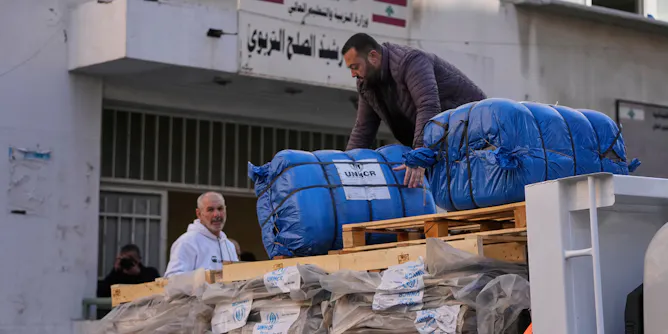
The drop in funding has also led donors to prioritize the trend of using aid to control the movement of people – over their needs.
Articles on UNHCR
Displaying 1 - 20 of 84 articles
In light of the U.S. retreat from humanitarian leadership, countries like Canada must assume a more prominent role in sustaining global protection systems.

When the world order is being undermined, we must denounce attempts by states that see themselves as empires to intimidate other states and devalue the principles of sovereignty and territorial integrity.
Camps are dynamic, culturally significant spaces. We propose the significance of these cultural practices may provide an alternative pathway to protection.

Amid their enduring statelessness and the ongoing risk of ethnic cleansing, Palestinian refugees must be protected under the provisions of United Nations High Commissioner for Refugees.

Capturing biometric data helps UN agencies and other groups avoid the risk of fraud and increase efficiency. But the practice is complicated and has created security risks for vulnerable groups.
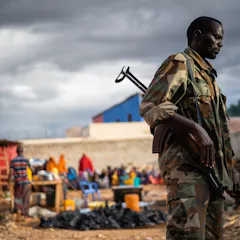
The negative effects of conflict on human capital – particularly nutrition, health and education – are larger than commonly thought.

A specific regional protocol could ease the management of internally displaced persons in the region.

If the Canadian government sticks to its new plans for refugee resettlement, the next three years could have significant implications for refugees and refugee policy beyond Canada’s borders.

In 2018, Africa accounted for 70% of the world’s people displaced by armed conflict and human rights abuses.

A scholar of humanitarianism sums up what she saw on the ground during a five-week research trip to Poznań, Lublin, Warsaw, Krakow and several smaller cities along the Poland-Ukraine border.
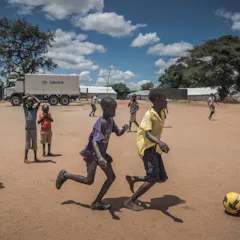
Refugee law puts humanitarianism above considerations of state sovereignty.
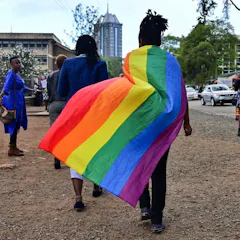
LGBTI refugees from other countries expect Kenya to be safer but are quickly disillusioned.
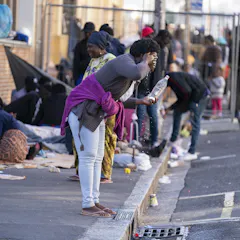
South Africa does not put refugees in camps. So, the government is responsible for their protection and well-being. Its performance was hit-and-miss.
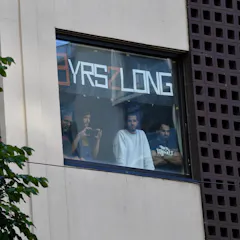
Offshore processing is a failed policy that continues to haemorrhage cash, destroy lives and erode the international system for refugee protection.
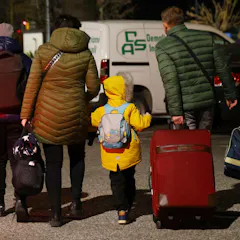
The European response to Ukrainian refugees shows a system working mostly as it should, but some people are still left behind.
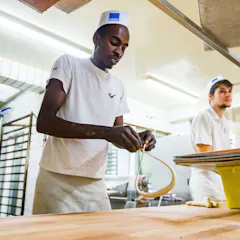
Our “Self-Reliance Index” helps organisations and governments assess how their programmes are doing in helping refugees to become self-reliant.
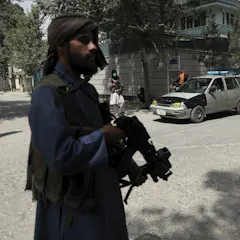
The U.S. military collected biometric data on Afghan civilians. The information may have fallen into the hands of the Taliban, highlighting why collecting the data is too risky in the first place.
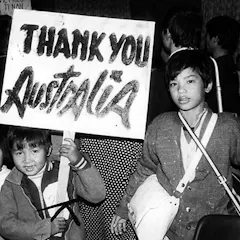
Since the 1970s, Australian immigration policy has changed dramatically, meaning Afghan refugees face far greater hurdles than those who fled Saigon after the Vietnam War.
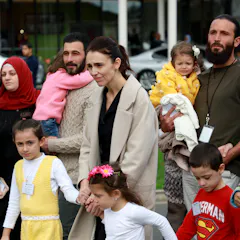
World Refugee Day on June 20 is an opportunity for New Zealanders to reflect on what more could done to protect some of the world’s most vulnerable people.
Top contributors
-

Lecturer and Senior Research Fellow at the South African Research Chair in International Law (SARCIL), University of Johannesburg
-
Honorary Research Associate at Institute for Democracy Citizenship and Public Policy in Africa, University of Cape Town
-
Professorial Fellow, University of Canberra
-
Professor in Human Rights and International Law, University of Newcastle
-
Associate Professor, School of Law, Murdoch University
-
Visiting Research Fellow at the Centre for Peace and Security, Coventry University
-
Professor of Law, University of Essex
-
Professor, Department of Anthropology, University of Delaware
-
Professor of Forced Migration and International Affairs, University of Oxford
-
Senior Researcher at the Feinstein International Center, Tufts University, and Research Associate at the Refugee Studies Centre, University of Oxford
-
Director - Whitlam Institute, Western Sydney University
-
Professor of International Migration and Forced Displacement and Director of the Institute for Research into International Migration and Superdiversity, University of Birmingham
-
Professor of Law, Conflict and Global Development, University of Reading
-
Chancellor's Postdoctoral Fellow, University of Technology Sydney
-
Senior Lecturer, Criminal Law and Criminology, UNSW Law, UNSW