

From almost 350 questions, nine experts answer the most common ones you asked.
Articles on Development
Displaying 1 - 20 of 367 articles

People restoring Africa’s ecosystems need climate services that combine forecasts with Indigenous knowledge and information about land, water and livelihoods.

The abrupt disappearance of a lake is one clear sign that the ice below is melting, and a clue to wider permafrost changes.

Africa still needs millions of better-paying jobs and higher productivity to reduce poverty. What has changed is the route to achieving those goals.

Playing improv music activates the reward system of the brain.

The drop in funding has also led donors to prioritize the trend of using aid to control the movement of people – over their needs.
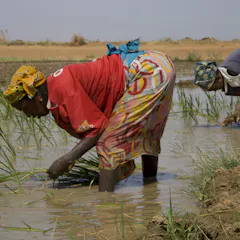
Science can only change the world when societies decide to give it the means to do so.

State lawmakers are trying to shield tracks from nuisance lawsuits − but the larger threat may be rising land values and redevelopment pressures.

After the Second World War, Canadian work in global literacy campaigns helped elaborate Canada’s image as benevolent and innocent regarding internal colonialism.

Researchers are using machine learning models to identify gentrification in imagery. Community insights help keep the models on track

Africa does not lack household savings, but only a small share of these are placed in formal institutions.

While 9 till 3 seems normal, this is not necessarily what’s best for high school students as they grow.

While genes do influence some food preferences, positive experiences can help make new tastes easier to swallow.

Providing street lighting will need a new approach to infrastructure development.

The government’s resource management reforms aim to make development easier. But will the new regime benefit everyone equally?

A pediatric dentist and an anthropologist explain how baby teeth and adult teeth help humans chomp their food over a long lifespan.
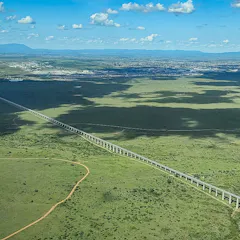
African governments and other local actors have a crucial role to play in shaping the activities of Chinese firms.

Developmental delay might mean a toddler isn’t using sentences when expected, or not meeting milestones such as walking or feeding themself.

Rather than viewing ubuntu as an alternative to development, our research suggests that development and ubuntu are complementary.
Many of Africa’s most powerful innovations are not being measured correctly.
Top contributors
-

Distinguished Research Professor and Australian Laureate, James Cook University
-
Associate Professor, Florida Institute for Built Environment Resilience, University of Florida
-
Associate Principal Research Fellow, Burnet Institute
-
Professor of Economics, University of Copenhagen
-
Professor of African and Development Studies, University of Edinburgh
-
Lecturer in Human Geography, University of Salford
-
Professor of Sustainability, Azim Premji University
-
Lecturer in Economics, University of the Witwatersrand
-
Professor of World Politics, SOAS, University of London
-
Economist, UNSW
-
Sr. Associate Vice President for Research and Research Professor, University of Oregon
-
Senior Lecturer, Griffith Law School, Griffith University
-
Senior Lecturer, International Development and NGO Management, University of East London
-
Professor: International Business & Strategy, Wits Business School, University of the Witwatersrand
-
Reader in Development Economics, University of Manchester