
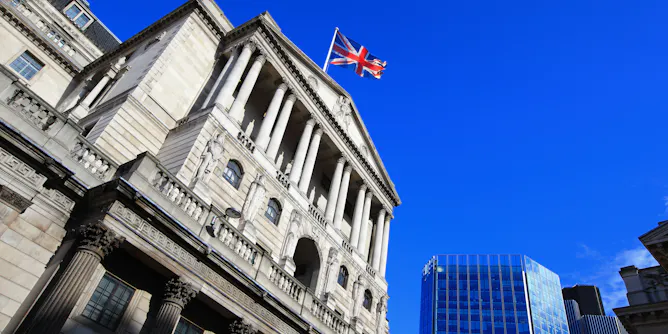
The bank has so far shied away from negative rates but it is running out of other firepower.
Articles on UK economy
Displaying 241 - 260 of 544 articles

What you need to know when it comes to saving, investing, borrowing and spending.
History shows that governing parties lose support when jobs are lost.

Second waves of coronavirus cases are far more likely to be driven by poverty and economic necessity.

Markets bring broad benefits to local communities – much more so than big supermarket chains.

Evidence from South Korea tells a precautionary tale about rushing to end lockdown, without the right public health measures in place.

Many key workers are among the UK’s lowest paid.

Research shows lower income groups have a very different perspective on the economy.

Billions have been lost in tax to fake self-employment and many registered as self-employed will struggle to get state aid.

Employment levels regularly dip after crisis.

The UK must look now to a package of long-term measures that includes investment in industry and public services, increased unemployment benefits and universal basic income.
Even allowing for falls in asset values and some tax dodging, a modest tax on the wealthiest could pay off the government’s ballooning debt.

Significant numbers of key workers barely make the minimum wage.

The worst effects of social distancing will undoubtedly be felt by the young, the poor and the socially disadvantaged.

‘Helicopter money’ payments would benefit everyone.
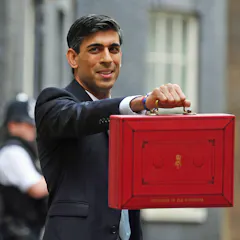
Rishi Sunak has delivered his first budget as UK chancellor and the Conservative Party’s first budget since winning the 2019 general election.

Is the UK economy booming or are the statistics being twisted out of shape by the shuffling of gold bullion?
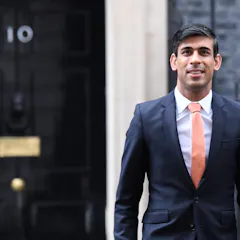
The question is: how long will Rishi Sunak last?

To ensure its energy security and influence in the Gulf region, the United Kingdom will likely deepen its relations with GCC nations in a post-Brexit world.

Research consistently finds that immigration has little, if any, impact on the employment prospects of UK-born workers. But it doesn’t account for possible regional variations.
Top contributors
-

Honorary Research Fellow, City Political Economy Research Centre, City St George's, University of London
-
Senior Lecturer in Economics, The Open University
-
Professor of Industrial Strategy & Regional Development, Co-Director Centre for Governance, Regions and Industrial Strategy (CGRIS), University of Bath
-
Visiting Academic, The Open University
-
Professor of Economics and Political Economy, University of Leeds
-
Professor of Business Economics, University of Birmingham
-
Professor Emeritus of Economics, SOAS, University of London
-
Vice Dean and Professor in Economics, University of East London
-
Head of Department of Economics, Finance & Accounting, Brunel University of London
-
Professor of Finance, University of Liverpool
-
Senior Lecturer in Economics, Lancaster University Management School, Lancaster University
-
Senior Lecturer in Accounting, University of Surrey
-
Professor of Economics, Lancaster University
-
Senior Lecturer in Economics, University of Sheffield
-
Professor of Applied Economics, Massachusetts Institute of Technology (MIT)