
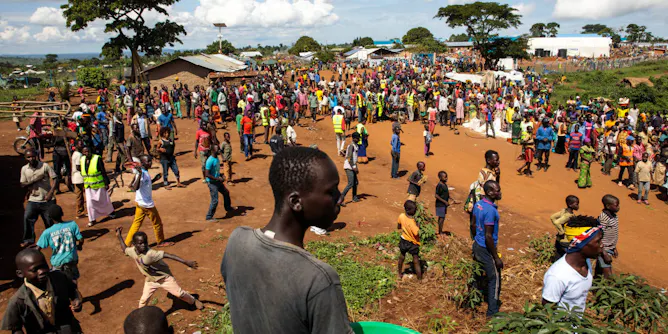
Uganda is making an effort in a neighbourhood where few other countries have the same enthusiasm.
Articles on Uganda
Displaying 201 - 220 of 469 articles
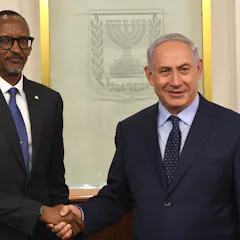
Most countries in Africa have chosen to separate the issue of the Palestinians from economic cooperation with Israel.

We’ve made advances towards delivering new devices to empower even people with basic medical knowledge to administer malaria tests in the field.
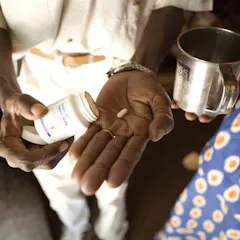
There are currently 1.2 million Ugandans enrolled on antiretroviral therapy (ART). They are especially affected by the lockdown.
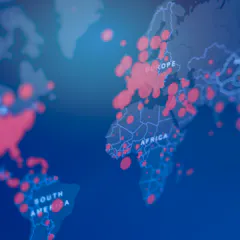
Policymakers need to make sense of the data so as to predict and manage what’s happening. To address this need, we developed a visualisation tool to track and predict country-level COVID-19 cases.
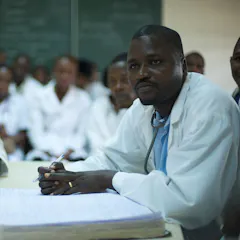
India, Nigeria, Pakistan and South Africa lose thousands of trained doctors each year, lured away to work in richer countries – at great cost to their nation’s healthcare systems.

Finding a way to increase the participation of men and fathers in unpaid care work would have an important influence on a more equal distribution between women and men.
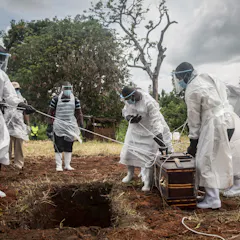
Uganda needs to activate the community engagement pillar and resource the new strategy that’s in place.

Lockdowns to curb the spread of COVID-19 had various effects on food as it went from farms to plates.
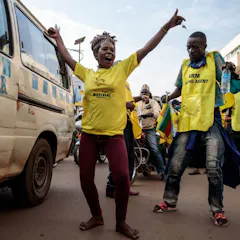
These appointments provoked debate in Uganda, reflecting both the constraints and the possibilities of women’s rights reform in an authoritarian country.
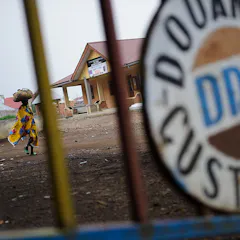
Within already economically perilous border areas, informal cross border trade is even more vulnerable during a pandemic.

Digital media shutdowns in Africa will lead to higher economic costs and greater public outrage.

Without reliable, local and timely data, countries will miss the potential of sugar-sweetened beverage taxation as a public health intervention.
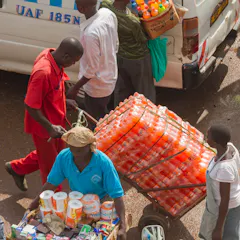
Implementing a sugar-sweetened beverage tax in all African countries will require sufficient political will and support from civil society.
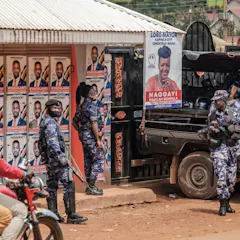
Arbitrary detention and torture are both prohibited under local and international laws.
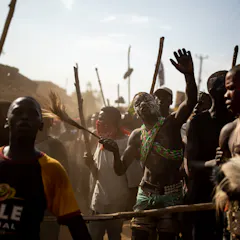
Sacred sites where rituals are performed by the community should be protected as living archives that house local heritage.
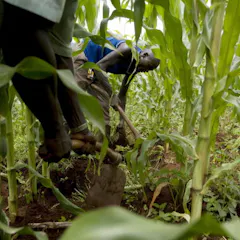
The government intervening to ensure food safety will increase awareness among producers and consumers.

It is often assumed that patrimonial beliefs fuel electoral malpractice whereas civic ones challenge it, but this is an oversimplification.
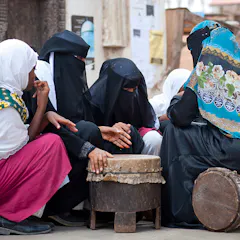
Women’s motivations for joining terrorist networks belie Kenyan media accounts of naive girls manipulated through romantic notions of Jihadi brides or wives.

Africa’s key to future food-nutrition security may depend on the untapped potential of indigenous fruit trees.
Top contributors
-

Professor in International Development, University of Antwerp
-
Research associate at African Centre for Cities, University of Cape Town
-
Lecturer in Law, University of East London
-
Research Fellow at the Centre for Planetary Health and Resilient Conservation Group, Griffith University
-
Professor and Chair, Southwestern Environmental Science and Policy, Northern Arizona University
-
Health Systems Researcher, Makerere University
-
Professor/Senior Research Fellow, Centre for Advancement of Scholarship, University of Pretoria
-
Lecturer, Department of African Languages, Makerere University
-
Professor of International Relations, Norwegian University of Life Sciences
-
Professor of Anthropology and International Development, The University of Western Australia
-
Senior Researcher at the Feinstein International Center, Tufts University, and Research Associate at the Refugee Studies Centre, University of Oxford
-
Professor of World Politics, SOAS, University of London
-
Postdoctoral Research Associate, King's College London
-
Lecturer and Senior Research Fellow at the South African Research Chair in International Law (SARCIL), University of Johannesburg
-
Professor of Democracy, University of Birmingham