
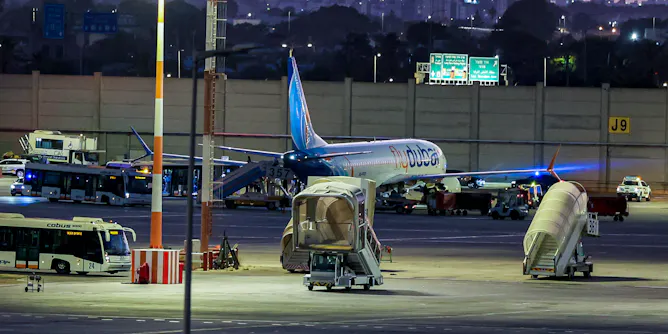
Israel’s prime minister said the pilot stabbed a colleague and tried to crash the plane before passengers subdued him.
Articles on UAE
Displaying 1 - 20 of 81 articles

Paris’ International Space Summit was an opportunity to understand what and who Europe needs to reliably sustain its launch ambitions and become a world-class leader in Space.
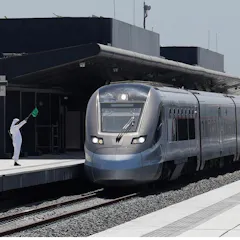
Once completed, the 2,177-kilometer GCC Railway will connect six Gulf kingdoms and provide alternative routes to Europe and Asia.

The way wealthy migrants and influencers reacted to Iranian attacks can tell us a lot about the image that places like Dubai have carefully cultivated.

Security measures alone are insufficient to resolve resource governance challenges in the DRC.

The Iran war has hurt Gulf economies, but the effects have differed across the region.
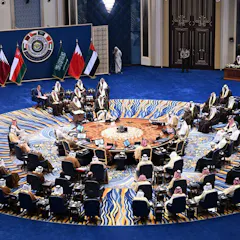
The Gulf Cooperation Council was formed after the Iranian Revolution of 1979. Since then, GCC members have tried different strategies to contend with Tehran.
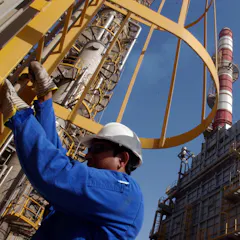
With the Strait of Hormuz still effectively closed, prices will likely stay high in the near term. But a weaker cartel could mean more competition in the future.
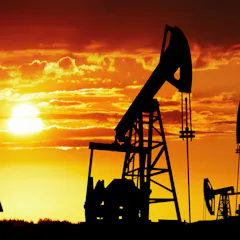
UAE wants to increase its production of oil beyond the quotas it is alloted by the oil-producing cartel.
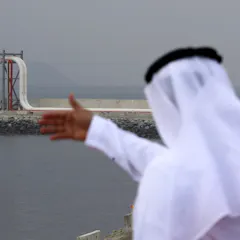
The UAE and Saudi Arabia have long been at odds over oil policy. The latest move is also likely to further their broader regional rivalry.
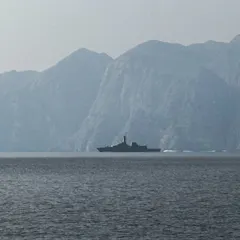
The pivotal waterway is much more than a global economic choke point. It is a politically and culturally dynamic region with its own dangerous undercurrents.
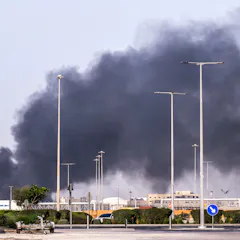
Commercial data centers have become critical infrastructure, supporting everything from financial transactions to government services. And critical infrastructure is often targeted in war.
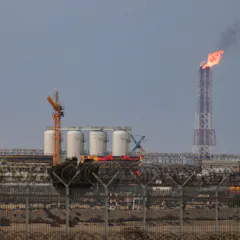
Iran has responded in kind to attacks on its energy infrastructure. With the energy assets of Gulf states now in play for Tehran, regional chaos grows by the hour.
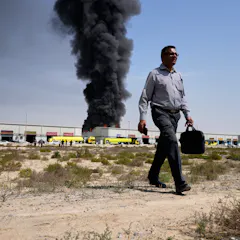
The US will no doubt remain a strategic partner, but Gulf nations have greater agency – and may not be afraid to use it.
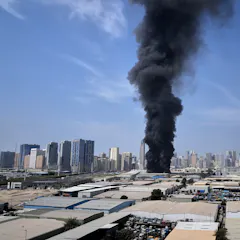
The Iran war is affecting the whole Middle East. An expert on the region looks at four key issues that shed light on the war’s likely end and political consequences.
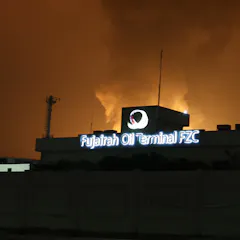
Missiles and drones have rained down on cities across the Gulf since the start of the conflict in the Middle East.
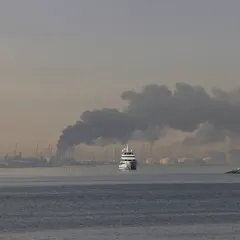
Qatar, the UAE and other Gulf nations have spent years cultivating an image of being an oasis of stability in the Mideast. The current war risks undoing all that work.

Initially, the two gulf states were in alignment over Yemen’s civil war. But the Arab coalition’s unity has long since gone.
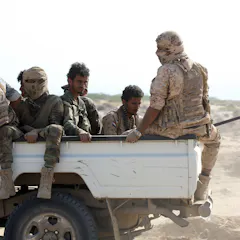
The seizure of southern Yemen by separatists raises the prospect of the country being carved in two.
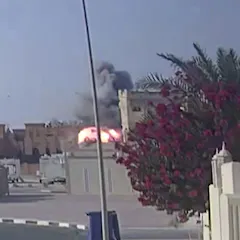
The region’s authoritarian leaders have been buoyed by the loss of Iranian power. But such victories mask a region that is still very much beset by danger.
Top contributors
-

Fellow for the Middle East at the Baker Institute, Rice University
-
Professor of Middle Eastern Studies and Public Policy and Director of the Interdisciplinary Studies Institute, UMass Amherst
-
Professor of International Relations, Lancaster University
-
PhD Student, UMass Boston
-
Senior Lecturer in International Law, The University of Western Australia
-
Professor of International Politics, Lancaster University
-
Lecturer in Politics and International Relations, University of Aberdeen
-
PhD Candidate, Department of Politics and International Studies, University of Birmingham
-
James Martin Fellow, Oxford Martin School, Environmental Change Institute and Institute for Science Innovation and Society, University of Oxford
-
Visiting Fellow, Department of Government, London School of Economics and Political Science
-
Associate Professor in International Security, University of Leeds
-
PhD Candidate, UCL
-
Associate Professor of Middle East Politics, Durham University
-
Research Associate, King's College London
-
Senior Lecturer in Physiology, Exercise and Nutrition, University of Stirling