

A new study in twins shows the likelihood of being trans is influenced by your genes.
Articles on Twin studies
Displaying all articles

After a certain point, our trust is fairly stable, so there could be a link between our formative experiences and our feelings about politics.

Why genetic influence on lifespan appears to have doubled.

Twins Bridgette and Paula Powers have gone viral for the way they speak in unison, using the same gestures and words.

The largest study yet of ‘twin stars’ shows planetary orbits may be less stable than we thought.

The new Netflix documentary follows identical twins as they adopt different diets. This is a great example of a twin study – a uniquely useful research tool in science.

Our feelings about nature depend on lots of factors, but a new study shows our genes are one of the most important.

There is no perfect diet that works for everyone.

Previous research suggests teacher quality accounts for up to 30% of the reason some students get better marks than others. Our research on twin pairs turns that on its head.

Large studies are unpicking the complex relationships between food, metabolism and health.

Before sending humans to Mars or the moon, scientists need to understand what long-term space living does to the human body. Now results are coming in from the Kelly brothers in the TWINS Study,
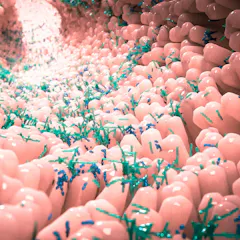
The effort to edit the genes of Chinese twins implies that all our traits are determined by our genes. But changing our diet, environment, lifestyle and microbes may have a greater effect.
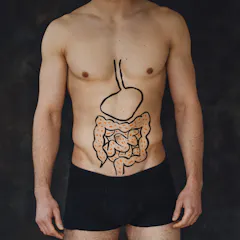
Gut microbe metabolites can tell us a lot about our health.

Can you blame bad teeth on your genes? Here’s why the answer is not as simple as you might think.

New research reveals why some people use food to soothe their emotions.

A twins study shows that children born via IVF have similar epigenetic changes compared with those born naturally.

Teenagers are heavily influenced by what their friends eat, to the extent that they forget about their parents’ cooking.

Smoking causes 96,000 premature deaths a year in the UK. The fact that it protects against Parkinson’s disease is not a reason to take up the habit.
Top contributors
-

Professor of Genetic Epidemiology, King's College London
-
Deputy Director, Twins Research Australia & Professor in Genetics and Cell Biology, Deakin University
-
Associate Professor, Psychology, Anglia Ruskin University
-
Associate Professor in Obesity, UCL
-
Research Fellow at Institute of Psychology, Psychiatry and Neuroscience, King's College London, King's College London
-
Research Fellow, King's College London
-
Reader in Cancer Biology, Bangor University
-
Senior Lecturer, King's College London
-
University Academic Fellow, University of Leeds
-
PhD candidate, King's College London
-
Associate professor, Norwegian University of Science and Technology
-
Associate professor, National University of Singapore
-
Principal research scientist, CSIRO
-
Chief, Epithelial Therapeutics Unit, National Institute of Allergy and Infectious Diseases
-
Toby Hughes is a Friend of The Conversation.
Professor, Adelaide University