
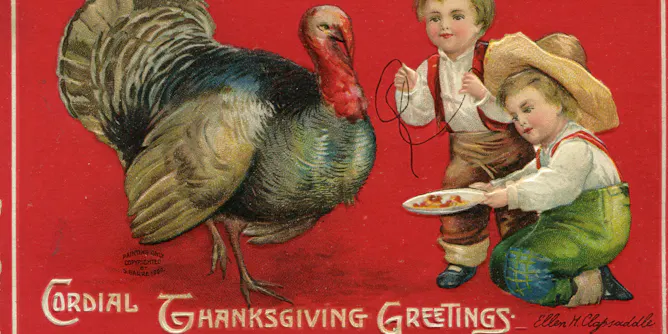
A mix of New England and British traditions and historical events led to the particular poultry you’ll find on Thanksgiving tables everywhere.
Articles on Turkey (bird)
Displaying all articles
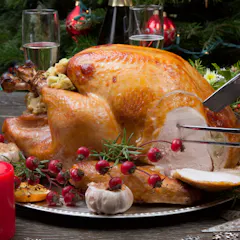
Both types of meat have their benefits.
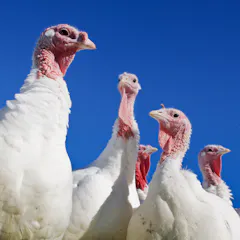
Sit down to Thanksgiving dinner ready to amaze your companions with physiological facts about why different cuts of the turkey have different characteristics.
Tryptophan, found in food, is an important ingredient in the neurotransmitter serotonin. But is that enough to support it as a possible mood booster? The research is decidedly mixed.
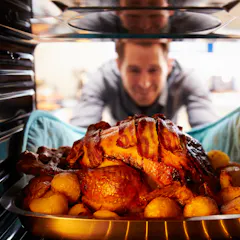
Follow these food safety tips to keep everyone happy and healthy this festive season.
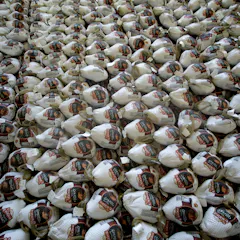
An economist explains why turkeys defy the economic laws of supply and demand.
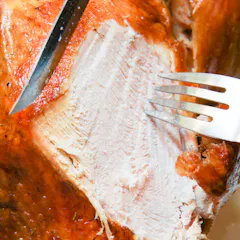
Remember that story about the molecule found in turkey that makes you drowsy? Research shows it’s a myth – tryptophan doesn’t cause you to nod off, but it may be connected to cooperation.
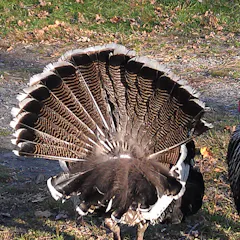
The fate of turkey tails shows how Americans have shifted from eating whole animals to focusing on choice cuts – and the surprising places where unwanted parts end up.
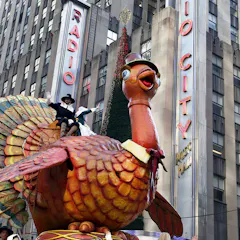
A globalization expert shares two surprising tales of how the powerful winds of trans-Atlantic trade affected the quintessentially American holiday.
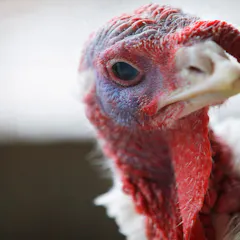
Economic theory suggests when demand goes up, so does the price, but oddly, it doesn’t for turkeys ahead of Thanksgiving.
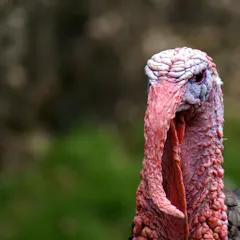
If I say “Christmas dinner”, perhaps the following image is conjured up: a large table groaning under the weight of roast potatoes, parsnips, peas, Brussels sprouts, a jug of gravy, and in the centre “the…
Top contributors
-

Associate Professor of Business, Boston University
-
Professor of History, Texas A&M University
-
Professor of Sociology and Associate Dean for Research & Graduate Affairs, College of Liberal Arts, Colorado State University
-
Full Teaching Professor of Psychology, Penn State
-
Distinguished Professor of Management & Global Business, Rutgers University
-
Professor of Animal Science, Iowa State University
-
Research Fellow, ZERO2FIVE Food Industry Centre, Cardiff Metropolitan University
-
Adjunct Faculty in Psychology, Rochester University
-
Professor of Anatomy, Lancaster University
-
Assistant Director of the Global Systems Institute, University of Exeter
-
Food Technologist, Cardiff Metropolitan University