

A repeat of 2019’s disastrous fire season is possible in 2020, and it would have dire consequences.
Articles on Tropical forests
Displaying 41 - 60 of 78 articles
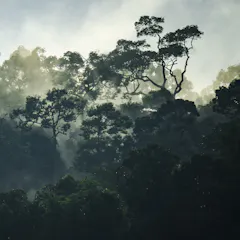
Scientists behind a major new study explain how they discovered these forests are becoming less able to sequester carbon.
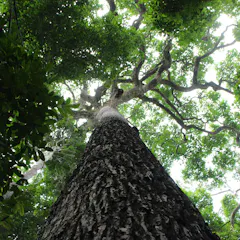
Trees in tropical forests are more than carbon sponges – they’re cultural artefacts.
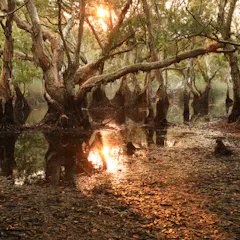
Researchers found that palm oil plantations up to five years old were more harmful to the climate than already established ones.

New research shows that slowing deforestation is the most essential step for saving Madagascar’s lemurs, and can help protect them against the longer-term threat of climate change.
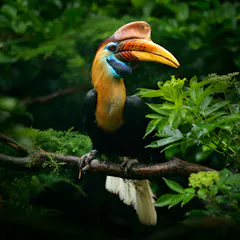
Instead of boycotting palm oil, source it from pastureland and not recently logged forests.
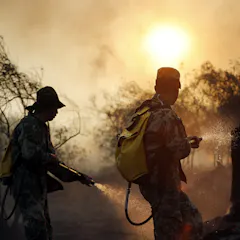
Yerba mate is a wildly popular South American tea with a growing global market. Can this ‘superfood’ save Paraguay’s tropical forests, too?

The cleared land of Paraguay’s Chaco forest produces everyday products like charcoal and leather that are sold abroad to consumers who may never know the unsavory origins of their purchases.
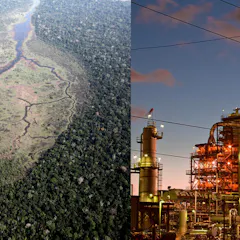
California’s new plan to fight global climate change is innovative. But it raises tricky ethical questions with no easy answers.
If the Amazon rainforest functions as our planet’s lungs, what do raging wildfires threaten? An atmospheric scientist explains why the fires, though devastating, won’t suffocate life on Earth.
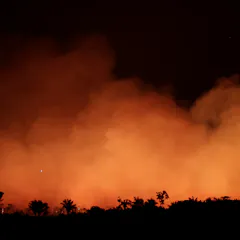
Don’t blame climate change for the 39,000 forest fires now incinerating huge tracts of the Brazilian Amazon. This environmental catastrophe is human-made and highly political.
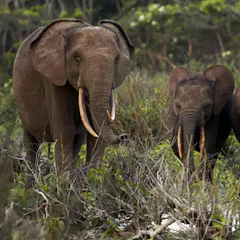
A new study shows these elephants boost the carbon stored in their forests by 7%.
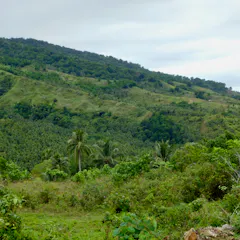
Restoring tropical rainforests is good for the climate, wild species and humans. But where to start? A new study pinpoints locations that will maximize benefits and minimize negative impacts.

The impact of deforestation for oil palm plantations is well known – and now research has found the replanting process could be additional harm to biodiversity.

Many nations are restoring degraded tropical forests to slow climate change, protect endangered species and improve rural life. But those forests often are cleared again soon afterward.
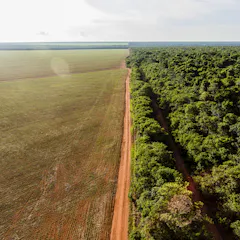
Brazil has set itself a target of restoring almost 50,000 sq km of the Amazon rainforest by 2030. But it won’t get there without changing its policies and how it engages with local people.
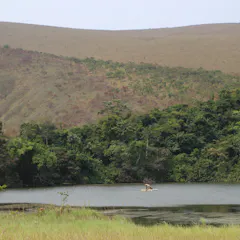
Tropical deforestation can release a huge amount of carbon into the atmosphere, contributing to climate change.
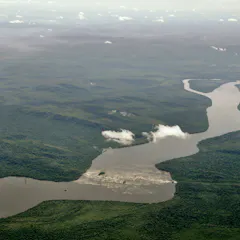
Thousands of dirt roads crisscross the Brazilian Amazon, serving ranchers, loggers and miners. The area’s fragile waterways — and the spectacular fish that live in them — pay a high price.
Forest fires emit twice as much carbon in the Brazilian Amazon as deforestation, according to new research.
Future initiatives for conservation mainly depend on the proper co-ordination of scientists, governments, conservation groups and the media, especially when corruption is close by.
Top contributors
-

Distinguished Research Professor and Australian Laureate, James Cook University
-
Professor of Global Change Science at University of Leeds, UCL
-
Professor of Conservation Science, Bangor University
-
Professor of Conservation Science, Lancaster University
-
Reader in Ecology and Conservation Biology, Manchester Metropolitan University
-
Professor of Biosphere-Atmosphere Interactions, University of Leeds
-
Honorary fellow, University of York
-
Research scientist working on savanna and forest distribution, Université de Montréal
-
Lecturer, School of Natural Sciences, University of Lincoln
-
Emeritus Professor of Biotechnology, University of South Wales
-
Professor Emerita of Ecology and Evolutionary Biology, University of Connecticut
-
Postdoctoral Researcher, TROPIBIO Project, Universidade do Porto
-
Associated Researcher, Biology, Rio de Janeiro Botanical Garden Research Institute
-
Directeur du GIP ECOFOR, chercheur en sciences forestières, Inrae
-
PhD candidate, Earth System Science, Stanford University
