

Militias mete out violence far from the centres of power – but their dirty work is politically useful.
Articles on Tropical forests
Displaying 21 - 40 of 78 articles

Tropical forests are one of humanity’s best hopes for slowing climate change.
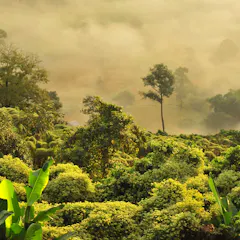
Many see carbon markets as key to channelling billions of dollars into reducing carbon emissions and protecting forests, but they also put the well-being of communities at risk.

Fussy about moisture and temperature, ferns are excellent indicators of environmental change.
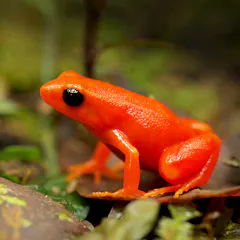
While species are and will be affected everywhere by climate change, those already living in a warm climate will reach their tolerance threshold faster.
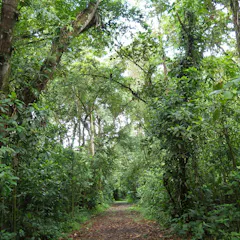
As governments and corporations pledge to help the planet by planting trillions of trees, a new study spotlights an effective, low-cost alternative: letting tropical forests regrow naturally.
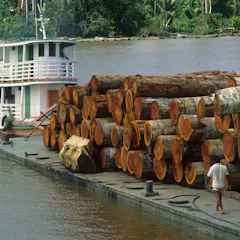
New study compared sites with similar distances from cities and population densities.

More than 100 world leaders have pledged to end the destruction of forests by 2030 as a way to slow climate change. That will require changing how the world produces four widely used commodities.
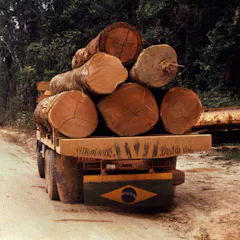
World leaders are slowly learning from decades of failure on tropical forest conservation.
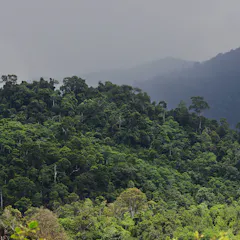
Europe’s forests are growing, but tropical areas are losing tree cover at a massive scale due to EU demand for imported products. Here’s how to redress the imbalance.
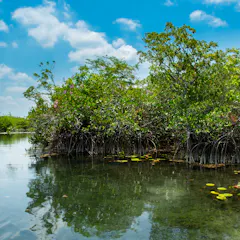
Mangroves grow in saltwater along tropical coastlines, but scientists have found them along a river in Mexico’s Yucatan, more than 100 miles from the sea. Climate change explains their shift.

Observations collected since the 1980s in the Amazon, Central Africa and Southeast Asia show we are not giving tropical forests enough time to recover after logging.

Towering trees in African tropical mountain forests are a vital, overlooked carbon store threatened by deforestation.

For one of Earth’s most biodiverse forests, 21,000 years of natural change pale in comparison to modern, man-made climate breakdown.
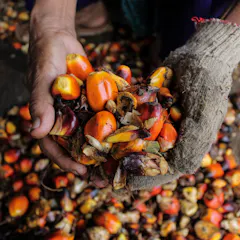
Palm oil is responsible for widespread deforestation and labor abuses, but it’s also cheap and incredibly useful. That’s why many advocates call for reforming the industry, not replacing it.
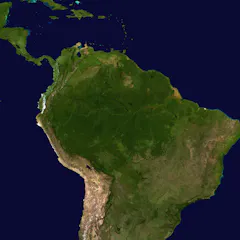
Even this radical scenario wouldn’t be as effective as it may first seem.
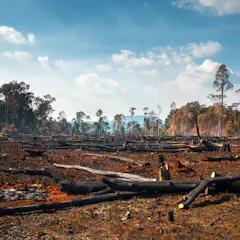
Scientists in Malaysia monitored a forest for 20 years after deforestation.
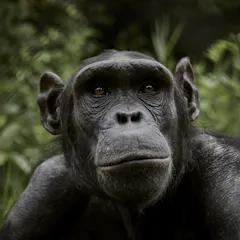
But with chimps now endangered, we risk losing their forest-rebuilding abilities.
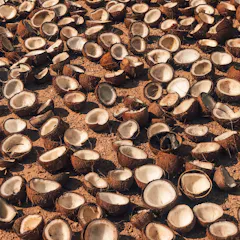
The coconut – an icon of unspoiled tropical idylls – causes more environmental harm than many people realise.

Mining strips nitrogen from the soil and means the forest struggles to grow back even after mines are abandoned.
Top contributors
-

Distinguished Research Professor and Australian Laureate, James Cook University
-
Professor of Global Change Science at University of Leeds, UCL
-
Professor of Conservation Science, Bangor University
-
Professor of Conservation Science, Lancaster University
-
Reader in Ecology and Conservation Biology, Manchester Metropolitan University
-
Professor of Biosphere-Atmosphere Interactions, University of Leeds
-
Honorary fellow, University of York
-
Research scientist working on savanna and forest distribution, Université de Montréal
-
Lecturer, School of Natural Sciences, University of Lincoln
-
Emeritus Professor of Biotechnology, University of South Wales
-
Professor Emerita of Ecology and Evolutionary Biology, University of Connecticut
-
Postdoctoral Researcher, TROPIBIO Project, Universidade do Porto
-
Associated Researcher, Biology, Rio de Janeiro Botanical Garden Research Institute
-
Directeur du GIP ECOFOR, chercheur en sciences forestières, Inrae
-
PhD candidate, Earth System Science, Stanford University
