
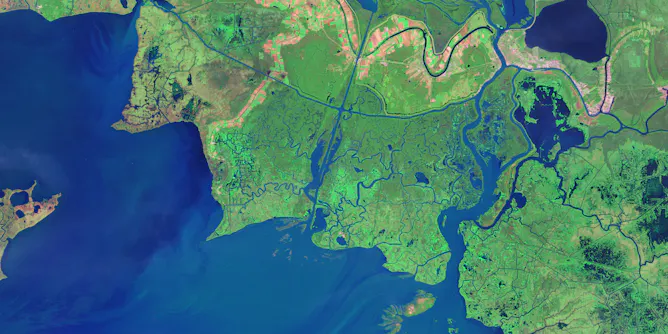
Time-lapse animations that once took days to create are now easy to build with publicly available satellite images and free online tools.
Articles on Tropical deforestation
Displaying all articles
Brazilian President-elect Luiz Inácio Lula da Silva says he will end land clearance in Brazil’s Amazon region. But powerful forces profit from rainforest destruction.
These crucial ecosystems are being battered by lots of different threats that are combining to make the matter worse.
Management in the forestry and land use sector could reduce 60% of the entire nation’s carbon emissions.

More than 100 world leaders have pledged to end the destruction of forests by 2030 as a way to slow climate change. That will require changing how the world produces four widely used commodities.
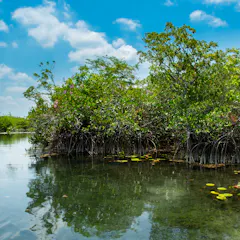
Mangroves grow in saltwater along tropical coastlines, but scientists have found them along a river in Mexico’s Yucatan, more than 100 miles from the sea. Climate change explains their shift.

Observations collected since the 1980s in the Amazon, Central Africa and Southeast Asia show we are not giving tropical forests enough time to recover after logging.
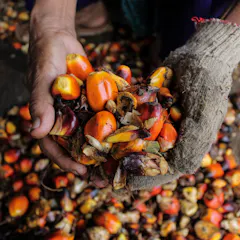
Palm oil is responsible for widespread deforestation and labor abuses, but it’s also cheap and incredibly useful. That’s why many advocates call for reforming the industry, not replacing it.

Jair Bolsonaro’s government has put forward laws that could put Indigenous land into the hands of mining, agricultural and timber businesses.

Mining strips nitrogen from the soil and means the forest struggles to grow back even after mines are abandoned.
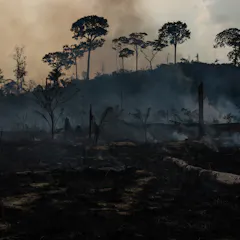
A new study finds 70% of Amazonian dung beetles were killed by the severe fire and droughts of 2015 to 2016. By spreading seeds and poop, dung beetles fertilize forests and aid regrowth of vegetation.
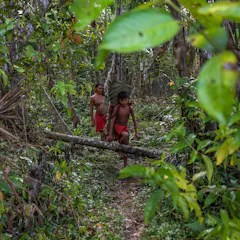
Native Brazilians are among the Amazon’s most effective defenders against logging and mining, because they’re fighting not just for the environment but for their people’s very survival.
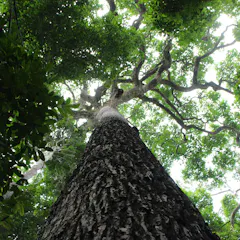
Trees in tropical forests are more than carbon sponges – they’re cultural artefacts.
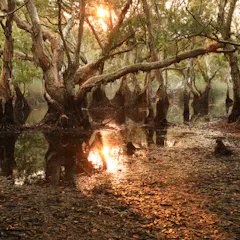
Researchers found that palm oil plantations up to five years old were more harmful to the climate than already established ones.
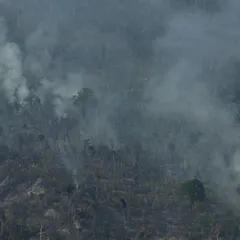
If the Amazon rainforest functions as our planet’s lungs, what do raging wildfires threaten? An atmospheric scientist explains why the fires, though devastating, won’t suffocate life on Earth.
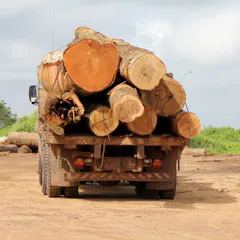
Brazil’s deforestation rate is back up. The UN Security Council has three main options.

The impact of deforestation for oil palm plantations is well known – and now research has found the replanting process could be additional harm to biodiversity.
Top contributors
-

Associate Professor of Geography and Environmental Studies, Texas State University
-
Professor of Geography, University of Florida
-
Professor Emeritus of Latin American Studies and Geography, University of Florida
-
Lecturer, PhD Candidate, University of Florida
-
Professor of Cultural Palaeoecology, Liverpool John Moores University
-
Associate Professor in Environmental Science, University of Nottingham
-
Assistant Professor, Global Development Studies, Queen's University, Ontario
-
Professor of Conservation Science, Lancaster University
-
Lecturer and doctoral candidate, University of Florida
-
Senior Research Associate in Tropical Forest Ecology, University of Oxford
-
Associate Professor of Global History, Michigan Technological University
-
Postdoctoral Researcher in Remote Sensing, University of Cambridge
-
Associate Professor of Geography, Environment, and Sustainability, University of Richmond
-
Ph.D., Associate research scientist, University of Florida
-
Professor of the Practice of Data Science, Washington University in St. Louis