

Paradoxically, the very scale of the crisis in Gaza makes worthwhile even the tiniest gesture of solidarity.
Articles on Trigger warnings
Displaying all articles

‘Baby Reindeer’ raises questions about the effectiveness of content warnings. Viewers may still be vulnerable to secondary trauma, particularly those who have experienced similar violence.

Researching family history is a popular hobby. But hobbyists can find themselves unearthing details of ancestors behaving badly or treated cruelly – or family secrets and trauma.
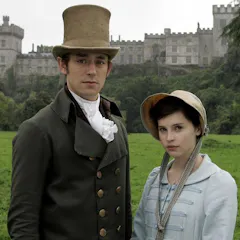
A UK university has attached a trigger warning to Northanger Abbey, Jane Austen’s biting satire, for ‘toxic relationships’. Ironically, Jodi McAlister loves it for the gentle romance at its centre.
Trigger warnings are increasingly ubiquitous but recent research finds they are ineffective, and possibly harmful, if used in a tokenistic way.
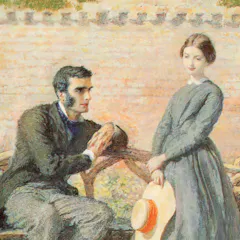
Despite arguments that young children have enjoyed Jane Eyre for 150 years, the Victorians were much more concerned about the novel’s influence than universities are today.

Even Samuel Johnson found some of Shakespeare’s violent scenes unwatchable.

Reading the poem Eurydice to her students unleashed surprising emotions for Stephanie Trigg. But literature works in mysterious, unpredictable ways, highlighting the impossibility of trigger warnings.

Highly restrictive speech codes are now the norm in some of the world’s universities.
Who am I, as an academic, to decide in advance what is or what is not triggering to others?
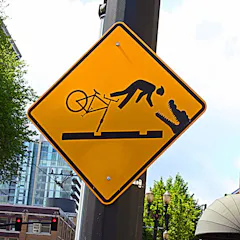
In the fraught debate over trigger warnings in the university classroom, they are routinely associated with censorship and silencing. Yet for teachers, they can open up a discussion of difficult material – not suppress it.

An archaeology lecturer was lambasted for allowing students to step out if they get upset. Why he was right to do so.
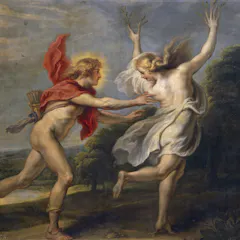
There are calls for Ovid’s Metamorphoses to be taught with a trigger warning. This 15-book epic is a rollercoaster of a read, with moments of both delicious joy and abject depravity. Like much great art, it was not created to please.

Lecturers need to flag up graphic material with their students before they click on it.
If you’ve been involved in internet discussions about sensitive topics like sexual abuse, you may have seen the letters “TW”, short for “trigger warning”. The convention originated primarily on feminist…
Top contributors
-

Redmond Barry Distinguished Professor of English Literature, The University of Melbourne
-
Associate Professor in English Literatures, University of Wollongong
-
Professor of Conflict History and Archaeology, University of Glasgow
-
Lecturer in English, Keele University
-
Associate Professor in Literary Studies, Monash University
-
Senior Lecturer in Learning Technology, Bath Spa University
-
Professor of Gender Studies, Chair in Sex Media and Sex Cultures, Linköping University
-
Honorary Professor of Classics and Ancient History, School of Historical and Philosophical Inquiry, The University of Queensland
-
Emeritus Professor of Sociology, University of Kent
-
PhD Candidate, Sexuality Education, Queen's University, Ontario
-
Senior Lecturer, Human Development, Wellbeing, and Counselling, University of Southern Queensland
-
Emeritus Professor, Faculty of Health, Arts and Design, Swinburne University of Technology
-
Senior Lecturer in English Literature, York St John University
-
Professor of English Literature, University of Southern Queensland
-
Senior Lecturer in Writing, Literature and Culture, Deakin University