

South Africa’s mathematics achievement trends are unusual. This could point to possible ways to improve results.
Articles on Trends in Mathematics and Science Study (TIMSS)
Displaying all articles

Less than a month since the government paused New Zealand’s science curriculum refresh, an international study puts our students in the middle of the pack – with worrying results for poorer schools.

Students with expert maths teachers scored significantly higher on an international maths test than any other group. But a student’s level of advantage also affects assessment scores.

Results from the world’s longest running large-scale international assessment of maths and science show Australia has significantly improved in Year 8 maths and science, and Year 4 science.

Data are about to be released on how well countries teach Year 4 and 8 maths and science Results from the last cycle of testing in 2015 showed Australia’s students achievement had flatlined.
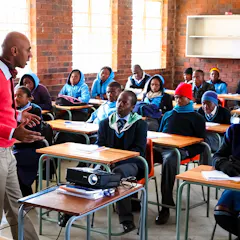
A shortage of competent and qualified maths teachers is a key contributing factor to the low maths performance of South African school children.

Various forms of testing that reduce students’ knowledge, capacities and skills to a single number cannot of themselves help inform improvement.
Policy continuity is what is needed to improve Australian students’ maths capability.

Rather than leaping to conclusions about a failing education system, we need to look at what the data tells us about student performance at a state level to help us make more informed decisions.

The furore over Australia’s international ranking in science, maths and English obscures what we should really be focusing on.

Australia’s performance in science continues to slide due to ineffective, traditional teaching practices and an outdated curriculum. Here’s what needs to change.

The questions young people tend to ask about maths often relate to their personal experience of how they found maths in school.

Latest TIMSS report shows that students in Australia make very little – if any – progress in maths from Year 4 to Year 8.

On the occasion of World Teacher’s Day, on Oct. 5, a scholar explains why borrowing teacher quality models from high-scoring countries such as Finland, South Korea or Singapore is not effective.

One in 10 children report spending multiple hours on homework. There are no benefits of this additional work, but it could leave a negative impact on health.
Top contributors
-

Deputy CEO (Research), Australian Council for Educational Research
-
Professor of Educational Administration, Penn State
-
Associate Professor and Research Fellow in the Learning Sciences Institute Australia (LSIA), Australian Catholic University
-
Professorial Research Fellow, School of Education, The University of Queensland
-
Senior Lecturer in Mathematics Education, Griffith University
-
Professor of science education, Deakin University
-
Associate Professor, The University of Queensland
-
Researcher Parliament of RSA, Cape Peninsula University of Technology
-
Senior lecturer, School of Education, University of Waikato, University of Waikato
-
Professor, Deakin University
-
Distinguished Research Specialist, Human Sciences Research Council
-
Professor, School of Education, University of Southern Queensland