

Not all mass shooters are white supremacists, but they are nearly all men.
Articles on Toxic masculinity
Displaying 101 - 120 of 129 articles

Many hate the fight against toxic masculinity because they don’t want to let go of male identity altogether. They don’t have to. They just have to let go of the bad parts.

Traditional notions of masculinity affect the health and well-being of men and those around them. Here’s how we can challenge these stereotypes.
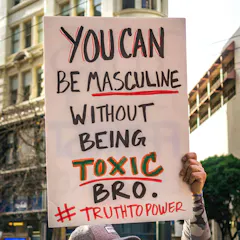
It’s time to address one of the roots of the problem.
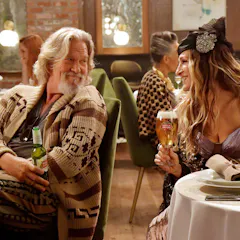
After the #me-too inspired Gillette ad, a male therapist says this year’s Super Bowl ads were disappointingly mild. But let’s not let that stop us from challenging each other.
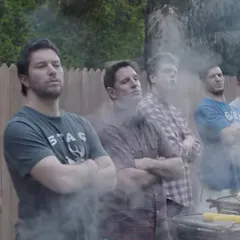
Gillette recently made headlines with their controversial campaign against toxic masculinity, but other brands appear to be better at taking action.

The new #MeToo-inspired Gillette ad for men’s razors has attracted some negative attention from men. Is the ad aimed at men or women? If men, does it represent a cultural shift in ads for men?
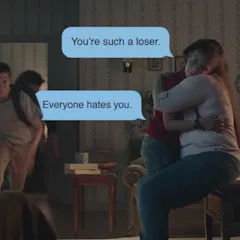
How do you celebrate masculinity without also acknowledging toxic masculinity in the #metoo era?

Gillette isn’t the only male-centric brand to have recently challenged masculine stereotypes. But advertising research can help us understand why it’s been getting the most flack.

The backlash against the Gillette ad shows how painfully little distance we as a society have covered since the #MeToo movement.

When 14 women were killed at École Polytechnique in 1989, no one at the time considered it an act of terrorism. Three decades later, that’s exactly how it should be viewed.

There’s increasing global recognition that violence against women and children often occur together in homes.

Prevailing patriarchal and cultural norms in some societies prevent women victims of sexual crimes from talking out by shaming them.

We love to be scared by creepy movies. But fear has other uses too. It can be used negatively by politicians to control us, but can also be a tool to harness internal change.

Ford works toward dismantling the idea that feminism is harming men. Instead, she proposes that a patriarchal society can be as harmful and destructive for individual men as it can be for women.
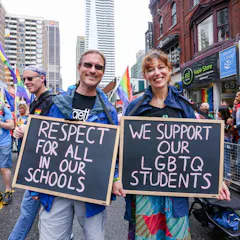
Sex, sexuality, respectful relationships, and gender all need to be discussed in schools as a measure to combat discrimination against LGBTQ people, rising rates of STIs and violence against women.

Men who subscribe to ideological masculinity believe that women’s empowerment has left them victimised and discriminated against. And they play out their resentment through violent acts.

Incels compare themselves to other men, before blaming women for withholding sex from, in their perception, deserving men.
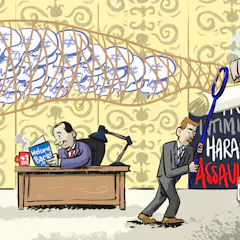
Like most forms of protest, the #MeToo movement offers evidence of problems but fails to tackle the broader causes and how to fix them.
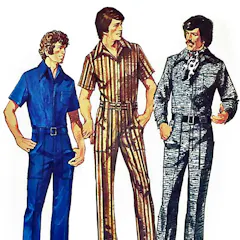
If you feel threatened or confused by the #MeToo movement, try channelling your masculinist mystique.
Top contributors
-

Research Professor, Masculinities Studies, School of Education, University of Calgary
-
Professor of Sociology, School of Justice, Queensland University of Technology
-
Professor of Communication Studies, Colorado State University
-
Masculinities Scholar, Cardiff Metropolitan University
-
Professor of Sociology, University of British Columbia
-
Honorary Fellow in Sociology, Australian National University
-
Senior Lecturer, Discipline of English and Writing, University of Sydney
-
Insights Researcher, University of Bristol
-
Assistant Professor of Psychology, University of Richmond
-
Professeure associée au département des sciences sociales, Université du Québec en Outaouais et à l'Institut de recherches et d'études féministes, UQAM, Université du Québec en Outaouais (UQO)
-
Professeur, Université du Québec à Montréal (UQAM)
-
Associate Professor, School of Health Studies, Western University
-
Associate Professor, Organizational Behaviour, Athabasca University
-
Professor of Cybercrime and Gender, University of Portsmouth
-
Assistant Professor of Psychology, Villanova University