

Euphoria tackles the status quo head on with an esthetic that transgresses the codes of television, while criticizing several taboos and social issues.
Articles on Toxic masculinity
Displaying 61 - 80 of 129 articles
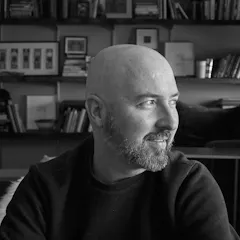
The author of Shuggie Bain returns to the public housing schemes of 1980s working-class Glasgow to explore the redemptive power of secure love and the dangers of violent, dominating masculinity.

In this special edition of ‘Don’t Call Me Resilient,’ we chat about how “the slap heard around the world” is part of a layered story of racism, sexism, power and performance.

A study of global far-right movements and their hashtags on Twitter have revealed similarities that display a reliance on long-held myths, including the idea of a “golden age of freedom.”

Years after the Sandy Hook massacre, school shootings are still frequent. Addressing the problem head-on takes more than ‘thoughts and prayers.’

Findings show that in the face of marginalisation and social exclusion, youth in gangs think that they have no options except violence to prove that they are ‘real’ men in their communities.

When addressing domestic and partner violence, First Nations communities need to be involved in how men’s behaviour change programs are developed and delivered.
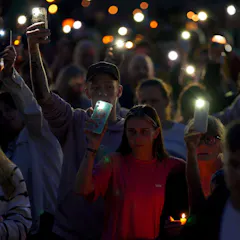
To combat online radicalisation, we first need to understand that the picture is rarely as simple as we’d like it to be.

Pipelines, dams, gadgets: does water management really need to be all about control and power? Adopting less masculine ideas and working with nature may be more prudent.

We need to clarify the role of the police, to promote a more justice-oriented style of police leadership and to put in place long-term mechanisms of accountability to support and sustain change.

Half of LGBTQ participants in a recent study experienced discrimination, insults, bullying or abuse while playing, watching or talking about sports.

Toxic and hyper-masculine workplaces are linked with a variety of health issues including anxiety, depression, burnout, hair loss, insomnia, and headaches.

Research from a unique natural experiment shows how strict ideas about masculinity can emerge when men vastly outnumber women.

Chivalry is not an elite men’s club. Women have always been involved.

Narcissism is relatively common among managers and can damage their relationships with employees. Yet some narcissists can enourage trust despite their shortcomings. So how can they be detected?

A sexual education program in Mexico City provides a blueprint for Australia. It shows how to engage students in conversations about lived experiences, among other effective methods.

While toxic CEOs may leave organizations, their style of leadership and the damage they leave behind have a long shelf life.

In Sherlock, domination is something to be revered, rather than challenged.

Evidence suggests that the defence of extreme intoxication isn’t rarely used, and is often successful in cases involving male violence against women.

The 2020 campaign showed voters how the candidates and their campaigns modeled gender roles differently. That has implications for who can be president in the future.
Top contributors
-

Research Professor, Masculinities Studies, School of Education, University of Calgary
-
Professor of Sociology, School of Justice, Queensland University of Technology
-
Professor of Communication Studies, Colorado State University
-
Masculinities Scholar, Cardiff Metropolitan University
-
Professor of Sociology, University of British Columbia
-
Honorary Fellow in Sociology, Australian National University
-
Senior Lecturer, Discipline of English and Writing, University of Sydney
-
Insights Researcher, University of Bristol
-
Assistant Professor of Psychology, University of Richmond
-
Professeure associée au département des sciences sociales, Université du Québec en Outaouais et à l'Institut de recherches et d'études féministes, UQAM, Université du Québec en Outaouais (UQO)
-
Professeur, Université du Québec à Montréal (UQAM)
-
Associate Professor, School of Health Studies, Western University
-
Associate Professor, Organizational Behaviour, Athabasca University
-
Professor of Cybercrime and Gender, University of Portsmouth
-
Assistant Professor of Psychology, Villanova University