
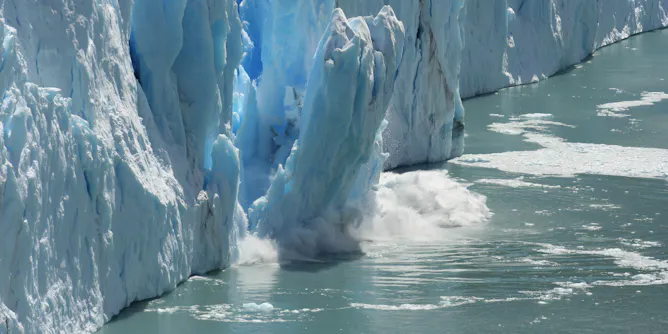
When Buckingham Palace announced the death of Queen Elizabeth II in September, the news overshadowed reporting of a critical review of climate tipping points, published in Science. Did you miss it?
Articles on Tipping points
Displaying 21 - 39 of 39 articles

The reef is suffering environmental conditions that are so extreme, scientists are struggling to simulate these scenarios in laboratories.
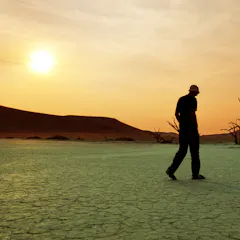
Many scientists now think 3°C of warming is likely.
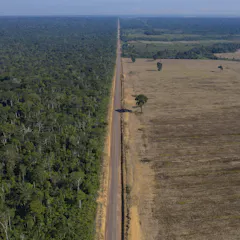
But with new commitments getting made by governments all over the world, we hope to see this progress improve soon.

Australia must treble its emissions reduction targets and reach net-zero emissions by 2035. Without this and other radical global action, the chance to hold warming to well below 2°C will pass us by.

The wet and low-lying East Siberian Arctic is likely to be a major methane source in the coming decades.
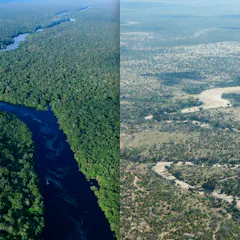
Our findings have worrying implications for the functioning of our planet.
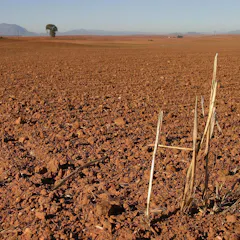
Nations are signed up to limit global heating to well below 2°C, and to aim for 1.5°C. Limiting warming to the latter matters - the future of humanity and the living world is at stake.
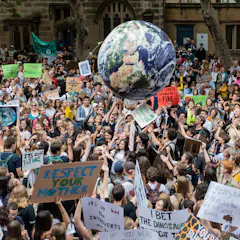
Can new language change the way the public and politicians perceive the hazards of the Earth’s changing climate?
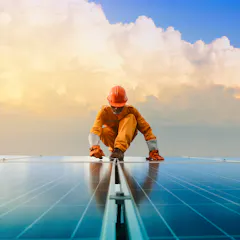
A rapid transition from fossil fuels is possible by targeting the ‘tipping points’ in our political and economic systems.
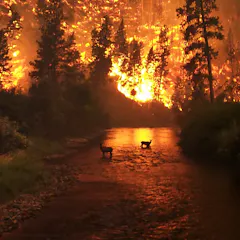
The Earth is on the edge of being pushed over a planetary threshold that could lead to a “Hothouse Earth.” But if we take the risks seriously there is room for a more benign future.
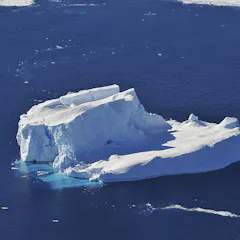
The climate secrets contained in an ancient tree that lived through abrupt global change reveal how Antarctica can trigger rapid warming in the north by dumping cold water into the Southern Ocean.
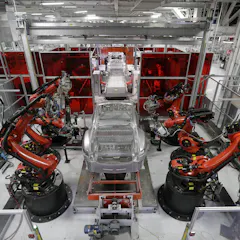
The Industrial Revolution led to centuries of social and economic upheaval. Are economists telling us not to worry about workplace automation because things will be better in a couple hundred years?
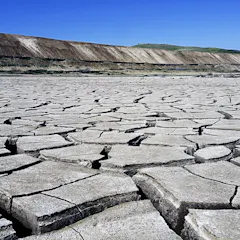
More and more research shows that we are likely to pass the 2 degree Celsius temperature limit much of the world has agreed on. Where did that limit come from, and what if we miss it?

You may have seen reports that humans use more resources than the Earth can produce – but, logically, how is that possible? A bathtub can help explain.
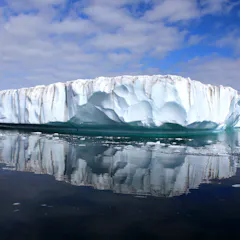
The Paris agreement has given us some solid targets to aim for in terms of limiting global warming. But that in turn begs a whole range of new scientific questions.

Things can change disturbingly quickly – just ask the people who once farmed the Sahara.

Citizens of countries that rank higher on the so-called Trust Index tend to be more generous when it comes to tipping waiters.

The concept of a “tipping point” – a threshold beyond which a system shifts to a new state – is becoming a familiar one in discussions of the climate. Examples of tipping points are everywhere: a glass…
Top contributors
-

Research Impact Fellow, Green Futures Solutions and Global Systems Institute, University of Exeter
-
Emeritus Professor of Physical Geography, University of Southampton
-
Assistant Director of the Global Systems Institute, University of Exeter
-
Professor of Sustainability, Bangor University
-
Professor of Climate Change, University of Exeter
-
Senior Researcher in Economics, University of Oxford
-
Research Lead, Carbon Dioxide Removal, CSIRO
-
Professor of Computer Science, Rice University
-
Emeritus Professor, Earth, Atmosphere and Environment, Monash University
-
Professor Emeritus of Geography and Environmental Studies, Wilfrid Laurier University
-
Professor of Practice in Meteorology, Professor of International Affairs & Director Center for Solutions to Weather and Climate Risk, Penn State
-
Professor in Physical Oceanography and Climate Physics, University of Southampton
-
Professor, Hospitality Finance, Director, Food Decisions Research Laboratory, Penn State
-
Associate Professor in Physical Geography, University of Southampton
-
Research Fellow, School of Biological, Earth and Environmental Sciences., UNSW