

Taking away the duty of boards to give effect’ to te Tiriti o Waitangi undermines the expectation that schools should work for Maori as well as for anyone else.
Articles on tikanga Māori
Displaying all articles
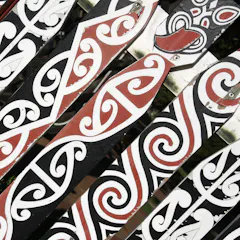
Utu is commonly misunderstood to mean violent revenge, but it really describes reciprocity, harmony and balance – ideas central to New Zealand’s international relations.
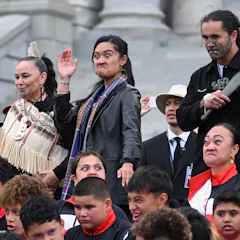
As the deadline approaches for Te Pāti Māori MPs to appear before the Privileges Committee, the place of tikanga in our democratic institutions is the real issue.
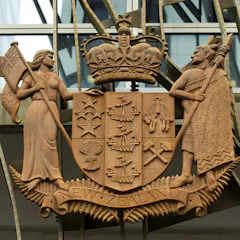
Claims of ‘activist’ judges usurping the law-making role of parliament are getting louder. But these need to be balanced against the slow and conservative nature of how the common law is developed.
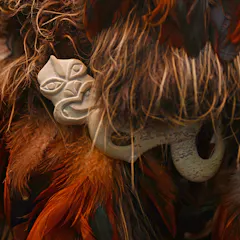
Shared values between Māori and Asian communities can reduce the cultural distance between New Zealand and the region. But the government needs to authentically embrace tikanga Māori to benefit.

Civil law can help communities who feel their traditional knowledge and cultural expressions have been misappropriated. Here’s how.
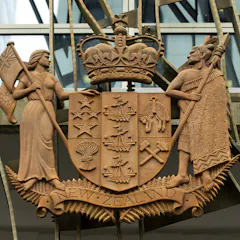
In overturning the convictions of Peter Ellis, the Supreme Court showed Māori tikanga has a place in New Zealand’s common law. The lower courts and the law schools now need to make it work.

Rather than leave the Treaty principles to parliament and the courts to define, why not embed the essence of the Treaty articles themselves in all laws?
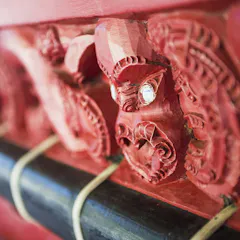
Just 1% of politics education in New Zealand is focused on the Māori dimension, new research has found. How can the country discuss Te Tiriti o Waitangi when very few understand it?

By allowing a case against local greenhouse gas emitters to go ahead, the Supreme Court of New Zealand has opened the door to a new front in climate law – one that takes tikanga Māori into account.

Accusations of being a ‘useless Māori’ or seeing life through a ‘vanilla lens’ might sound mean-spirited and hurtful. But behind the political sloganeering lie deeper questions about Māori identity.
Top contributors
-

Adjunct Professor, Stout Research Centre, Victoria University of Wellington and Auckland University of Technology, Professor of Political Science, Charles Sturt University
-
Associate Professor of Law, University of Auckland, Waipapa Taumata Rau
-
Professor, Te Herenga Waka — Victoria University of Wellington
-
Lecturer in Māori Studies, Te Herenga Waka — Victoria University of Wellington
-
Associate Professor, School of Health Sciences, University of Canterbury
-
Lecturer, Kaupeka Ture | Faculty of Law, University of Canterbury
-
Senior lecturer, Department of Global Value Chains and Trade, Lincoln University, New Zealand
-
Associate Professor of Law, University of Auckland, Waipapa Taumata Rau
-
Senior Lecturer in International Relations, University of Waikato
-
Senior Lecturer in Law, University of Auckland, Waipapa Taumata Rau