
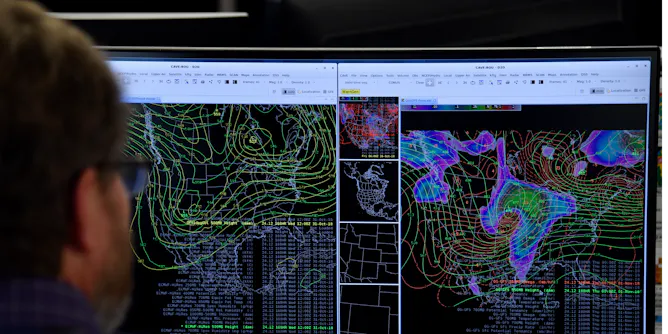
Would you trust a weather forecast made by a machine that had learned how weather systems behaved by reviewing thousands of past weather maps?
Articles on Thunderstorms
Displaying 21 - 34 of 34 articles
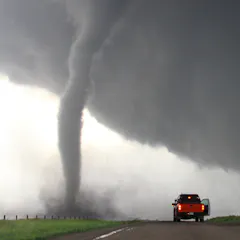
Studies show tornadoes are getting more common and more intense, and they’re shifting eastward to a new tornado hot spot.
Extended periods of rain are most likely found in locations where mountains are near oceans.
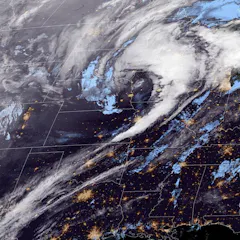
Forecasters described it as a ‘historical weather day.’ An atmospheric scientist who was at the heart of the storms explains what happened.
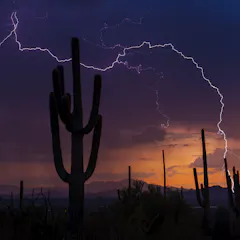
Monsoons are weather patterns that bring thunderstorms and heavy rains to hot, dry areas when warm, moist ocean air moves inland. They’re challenging to forecast, especially in a changing climate.
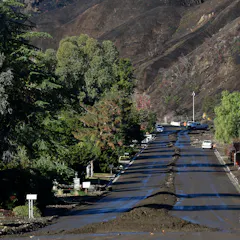
An atmospheric scientist and sailplane pilot describes why large areas of burned land can produce clouds and rainstorms.
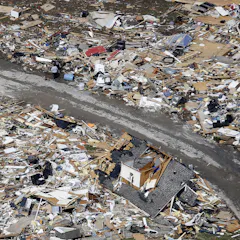
With the onset of spring come thunderstorms, and sometimes tornadoes. Learn how these systems form and why night tornadoes are especially deadly.
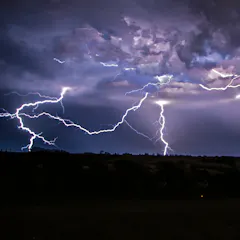
Volatile, unstable air means that it is very tricky to work out exactly where each thunderstorm will be.
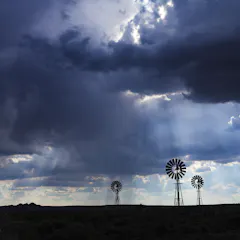
Why is thunder so loud? It’s because the amount of electrical energy that flows from the cloud to the ground is so enormous.
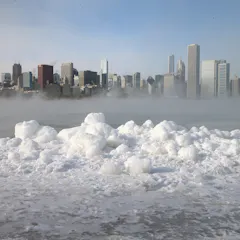
An atmospheric scientist explains why water can do some strange-looking things at very cold temperatures, and what’s different about snowfalls on Mars.
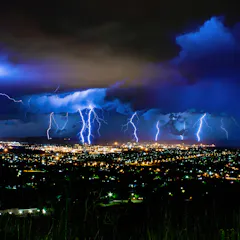
There are many reasons to be careful when there’s a big storm. But there are also ways you can protect yourself to avoid lightning.
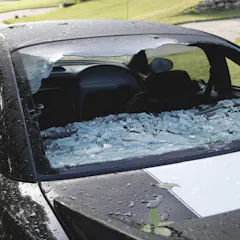
The future climate that scientists predict for the middle of the United States is one that will foster more hail events with bigger hailstones.
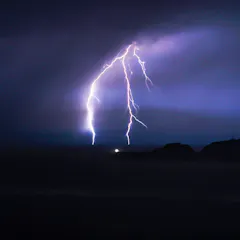
When you see a bolt of lightning, do you immediately start counting to see how far off a storm is? An atmospheric scientist parses the practice.
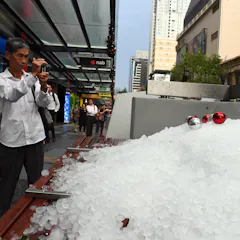
New “dual-pol” weather radars promise to spot large hailstones forming inside thunderstorms, giving people a heads-up when it’s about to hail.
Top contributors
-

Principal Research Scientist in Extreme Weather, The University of Melbourne
-
Research Fellow in Climate Science, The University of Melbourne
-
Professor of Atmospheric Science and Colorado State Climatologist, Colorado State University
-
Professor of Atmospheric Science, Iowa State University
-
Meteorologist and Research Program Manager, University of Wisconsin-Madison
-
Associate Professor of Mathematics and Statistics, University of Exeter
-
Associate professor in electrical engineering, University of the Witwatersrand
-
Senior Research Scientist, Australian Bureau of Meteorology
-
Lecturer in Civil Engineering, The University of Queensland
-
Sydney Horizon Fellow, University of Sydney
-
Chair Professor of Electrical Power Systems, The University of Melbourne
-
Adjunct Research Professor of Physics, Adelaide University
-
Professor of Urban Engineering, University of Illinois Chicago
-
ARC Future Fellow and Associate Professor in Climate Science, ARC Centre of Excellence for 21st Century Weather, The University of Melbourne
-
Professor, The University of Queensland