

When the Odyssey first began to circulate in ancient Greece, no one knew its author. So how did ‘Homer’ become the name on the book’s cover?
Articles on the Iliad
Displaying all articles
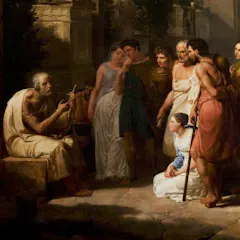
The Iliad does not unfold as a smooth, continuous narrative. Instead, it advances through a succession of micro-episodes.
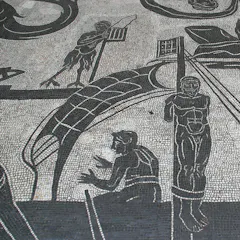
Preserved in the margins of ancient literary works are notes that reveal how the Greeks strove to map mythical places onto locations in the known world.

Both art forms encourage us, the listeners, to react, reflect and ultimately select with which speaker to side.

As Donald Trump has gained fame and power, his rage at opponents and appetite for vengeance appear to have sharpened. A classics scholar looks to literature for help understanding him.
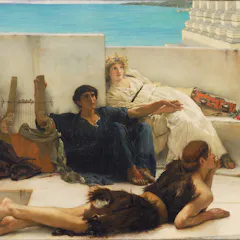
Homeric heroes must get nature on their side if they are to overcome the enemy.

In the ugly spectacle of American politics, it’s hard to keep humanity in sight. But literature, says a poet and scholar of the classics, can remind us of what we know about growing old.

What makes us human? Greek and Roman thinkers were preoccupied with this question. And some of their observations of animals foreshadowed recent findings in the behavioural sciences.

Through a nuanced exploration of place, time, and memory, this new video work invites audiences to reflect on landscape and its relationship to the echoes of conflict.
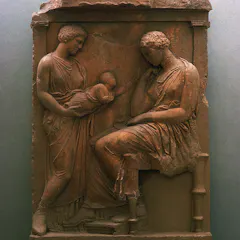
Greek epic poetry often uses mothers and wives to humanize its heroes, reminding listeners of the meaning of sacrifice.
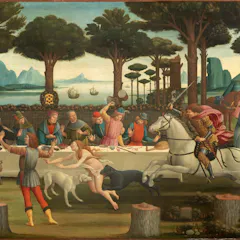
Western literature began with a plague and ever since, writers have been using pandemics to comment on society.
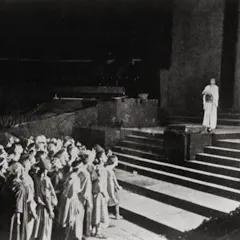
Greek epics remind audiences that leaders need to be able to plan for the future based on what has happened in the past. They need to understand cause and effect.
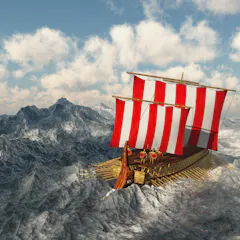
Analyse the great quest of Odysseus with a little 21st-century know how and it’s fascinating what you find out.

Memorial brings Alice Oswald’s poetic retelling of the Iliad to the stage, with its furious indictment of war and its aftermath.
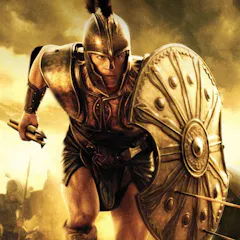
A classics professor is haunted by the co-optation of his discipline by the so-called “alt-right,” toxic masculinity and other self-styled “defenders of Western civilization.”
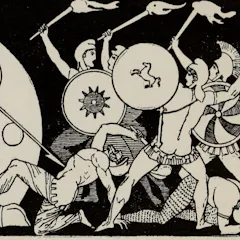
A central idea in the Iliad - a poetic work focused on the war for Troy - is the inevitability of death. The poem held a special place in antiquity, and has resonated in the millennia since.
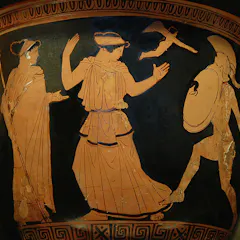
For over 2,800 years, audiences have grappled with the destructive powers of Helen of Troy – and the toxic legacy lives on.
Top contributors
-
 Rachel Hadas is a Friend of The Conversation.
Professor of English, Rutgers University - Newark
-
Professor of Classical Studies, Brandeis University
-
Reader, Physics, University of Aberdeen
-
Associate Professor of Ancient History, University of Leicester
-
Associate Professor of Classics & Ancient History, University of New Brunswick
-
Emeritus Professor of Classics, La Trobe University
-
Associate Professor, Physics, Universidade Estadual de Ponta Grossa (UEPG)
-
Senior Lecturer in Art and Performance, Deakin University
-
DPhil Candidate in Contemporary English Literature, University of Oxford
-
Professor, Department of Classics and Ancient History, University of Sydney
-
Lecturer in Classics and Archaeology, The University of Melbourne
-
Lecturer in English for Academic Purposes, University of Manchester
-
Senior Lecturer in Philosophy and Co-Director of the Centre for Engaged Philosophy, University of Sheffield
-
Postdoctoral Research Fellow, Trinity College Dublin
-
Doctoral Researcher, Physics, Universidade Estadual de Ponta Grossa (UEPG)