
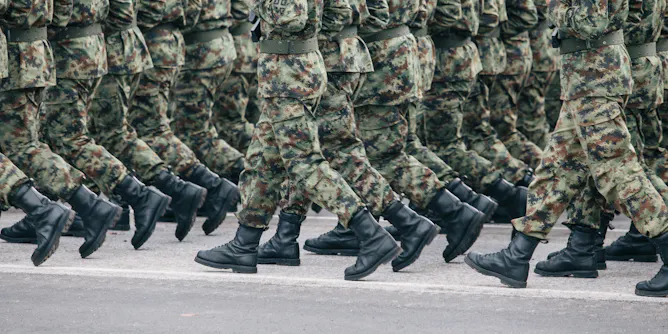
Popular discontent with the performance of a president should not be grounds for a military coup.
Articles on The Gambia
Displaying 1 - 20 of 75 articles
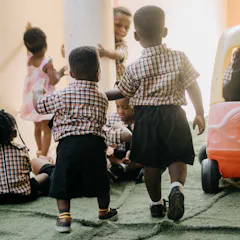
Why are some pre-primary education programmes more successful than others?
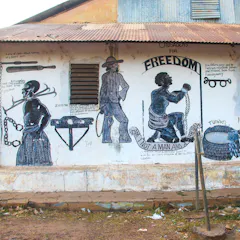
Recognising African agency in colonised territories allows us to rethink borders and revise history.

Assessments are often treated as culturally neutral when they are not.
The Gambia’s latest attempt at passing a new constitution suffered a setback due to controversial clauses, including retroactive presidential term limits.
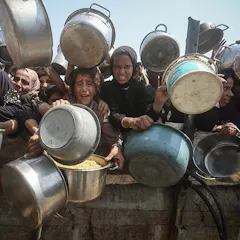
The wheels of international justice grind exceedingly slowly and will never be sufficient on their own to bring about lasting change.

A study in five west African countries found that children fostered by wealthier households were less likely to attend school than children fostered by poorer households.

Mosquito populations can respond quickly to changing climate, which means the location of areas at risk of malaria might change.
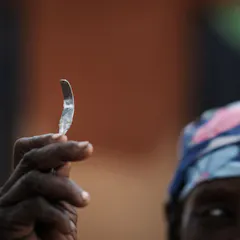
To eliminate female genital mutilation by 2030, progress would need to be 27 times faster. Understanding shifting trends behind this practice is a start.

Children benefit enormously from regular, cognitively stimulating interactions with their caregivers.
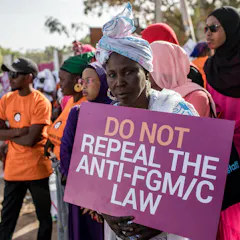
The potential repeal of the ban on female genital mutilation poses a threat to the well-being of girls in The Gambia.
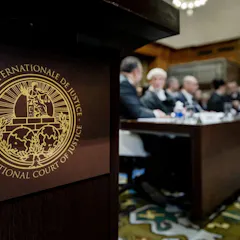
Genocide is called ‘the crime of crimes’ because of its collective significance.
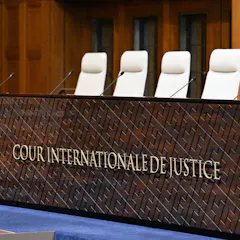
Six cases are testing international accountability mechanisms and showing how small countries like New Zealand can impact global justice.

The extraordinary documentary Ballaké Sissoko: Kora Tales takes a journey from Mali to The Gambia.
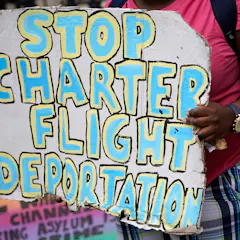
The forced return of migrants by European states has ignored pressures and interests of African countries of origin.

The danger from contaminated cough syrups is that early symptoms of poisoning, such as drowsiness, are sometimes observed in children without contamination.
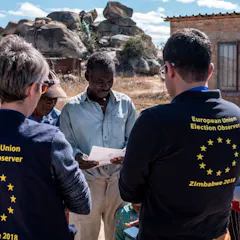
Voters speak favourably about the potential of observation to improve overall electoral quality and transparency.
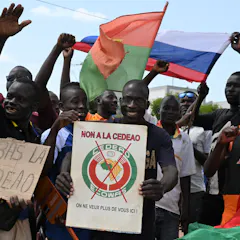
Although West Africa has made some headway with efforts to propagate democracy, its dividends, in the form of good governance, remain elusive.
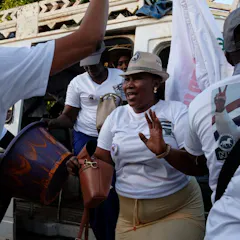
Temporary measures such as legislative gender quotas can increase women’s access to political participation.

Adama Barrow’s re-election in The Gambia was not unexpected. It, however, leaves the opposition with an uncertain path forward and signals the shrinking status of his predecessor, Yahya Jammeh.
Top contributors
-

Professor of Democracy, University of Birmingham
-
Director of Programs, Human Rights Center; Research Professor of Law, University of Dayton School of Law, University of Dayton
-
Senior researcher, Arnold Bergstraesser Institute
-
Lecturer, Nottingham Trent University
-
Senior lecturer, University of Ghana
-
Associate Professor International Law, Roskilde University
-
Lecturer, Political Science Department, University of Ghana
-
Associate Professor, Global Political Sociology, Roskilde University
-
Emeritus Professor, University of Cape Town
-
Reader, Institute of Commonwealth Studies, School of Advanced Study, University of London
-
Director of the Leaders of Africa Institute and Research Affiliate with Davidson College, Davidson College
-
PhD candidate in Political Studies at the Department of Politics and International Relations, University of Johannesburg
-
Associate Professor of International Studies, University of Nottingham
-
Chief Research Specialist in Democracy and Citizenship at the Human Science Research Council and a Research Fellow Centre for African Studies, University of the Free State
-
Associate Professor in Media Studies, University of the Witwatersrand