
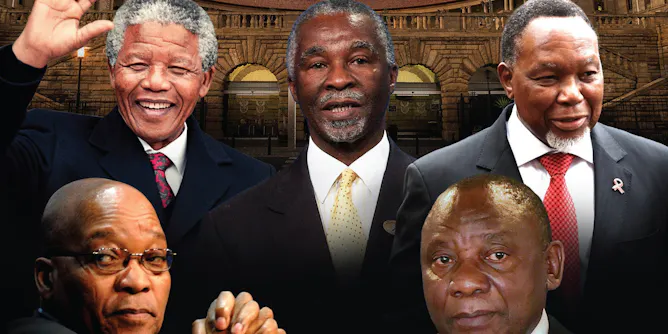
Mandela, the first president of a democratic South Africa, made big strategic choices – not necessarily the right ones, but certainly ones that were befitting of the times.
Articles on Thabo Mbeki
Displaying 21 - 40 of 111 articles
Scapegoating immigrants will not result in significantly improved healthcare service provision, reduced crime or less unemployment.
To his credit, former South African president Thabo Mbeki set up anti-corruption institutions that survived his own efforts to erode them.
The spread of misinformation in many pandemics, including the smallpox and 1918 influenza outbreaks, have undermined efforts to contain infections and prevent deaths.
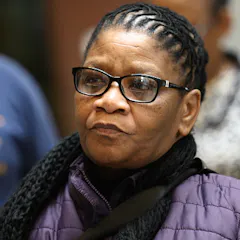
South Africa’s foreign policy is supposed to be guided by the principle of ubuntu (humanness), so a visit to an aggressor is hard to explain.
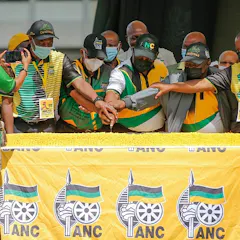
Non-racialism is one of the unexamined dogmas of the governing ANC, which has never fully understood how white racism functions.
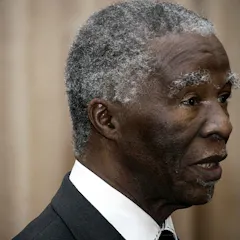
Every South African who cares about the future of the country will agree with former president Mbeki that, to avert disaster, something must be done urgently about its deep socio-economic problems.

The country is still a very different political space. It’s a noisy democracy with a free media, lots of dissenting voices, and insulting the government doesn’t carry any overt sanction.
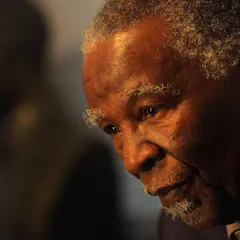
Mbeki has successfully transitioned from being an old horse of South Africa’s governing ANC to a highly venerated and in-demand African elder statesman.
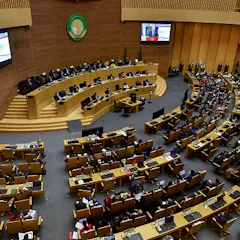
Despite the benefits that could come from integration, many African countries remain wary of the process.
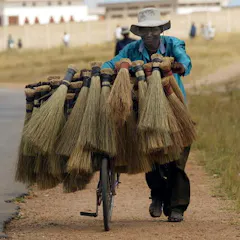
The informal sector in Zimbabwe is massive. Finding ways to connect it to the formal sector is vital.
This book is a history of individuals, ideas and institutions that were at the fulcrum of important scientific developments.
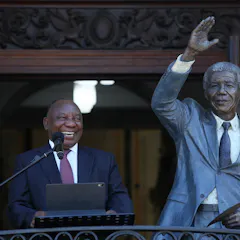
The extent to which presidents adhere to the constitutional written code will have profound implications in relation to their use of executive power.

The posturing is bound to continue. But at the age of 78 Jacob Zuma’s long day in the sun is over.

Former presidents Obasanjo and Mbeki have arguably made the most important contribution to Africa in the 21st Century by promoting peace, democracy, regional integration and pan-Africanism.
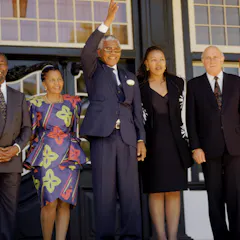
The book shows that the claim made by some analysts that it was the fall of communism that prompted moves towards negotiations to end apartheid is off the mark.
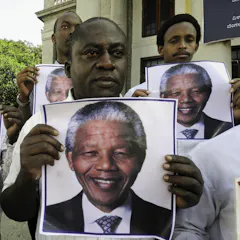
Mandela left at the right time in 1999, when the country still seemed in a healthy state, after which he consolidated his international reputation.
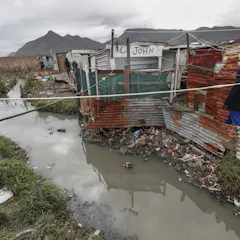
Book sheds new light on the evolution of the economic policy of the African National Congress, South Africa’s governing party.

The book is set to heighten the debate about the future of the party, whose dominance has been in decline since 2009.

Moe Shaik fancies himself as an analyst who can read people well. And yet, he has a rather large blind spot for his leaders – until they fall out with him.
Top contributors
-

Professor of Sociology, University of the Witwatersrand
-
Political Scientist, University of the Western Cape
-
Professor of Public Affairs, Tshwane University of Technology
-
Lecturer, Culture and Media department, Birkbeck, University of London
-
Professor in Political Science, University of South Africa
-
Lecturer in Politics and International Relations, University of Leicester
-
Senior Research Fellow, Centre for the Advancement of Scholarship, University of Pretoria., University of Pretoria
-
Emeritus Associate Professor in Public Law, UCT. Visiting Adjunct Professor, WITS School of Governance; Director, Africa Programme, University of Cambridge Institute for Sustainability Leadership, University of Cambridge
-
Lecturer, Nelson Mandela University
-
Professor of Political Studies, University of Johannesburg
-
Visiting Professor and Professor Emeritus, University of the Witwatersrand
-
Professor of World Politics, SOAS, University of London
-
Professor of International Law, University of Pretoria
-
Research Fellow at the Nelson Mandela School of Public Governance, University of Cape Town
-
Associate Professor, Department of International Relations, University of the Witwatersrand