
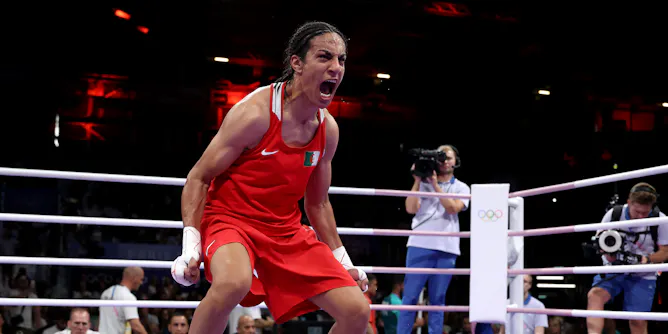
Most sports are organized according to a strict male-female binary. Nature isn’t.
Articles on Caster Semenya
Displaying 1 - 20 of 21 articles
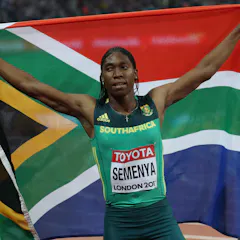
The judgment is a watershed moment for the relationship between sport and human rights.

The thorny issue of testosterone testing has made news, not just the growing skills on the field.
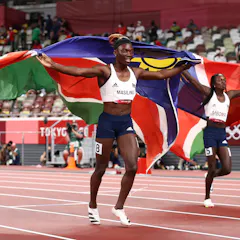
The controversy over female athletes being tested for testosterone levels is not just a contested scientific issue but also one of human rights.
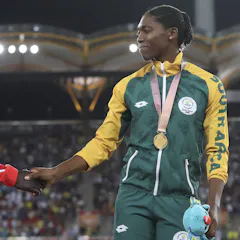
Mandatory sex testing at the Olympics might have stopped in the 1990s, but the policing of high performance female athletes’ bodies is still ongoing.
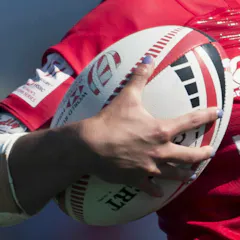
If “fairness” is why trans players have been banned by World Rugby, then sport bodies need to realize many athletes have an unfair advantage because of issues like class and cultural backgrounds.
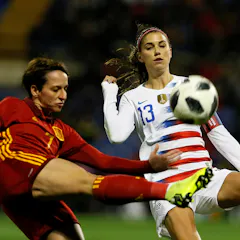
The best female athletes continue to be treated unfairly compared with male sportsmen.
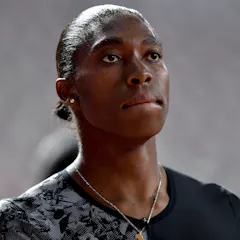
If the Semenya ruling by the Court for Arbitration in Sport remains unchallenged, this way of thinking and behaving might filter into the International Olympic Committee
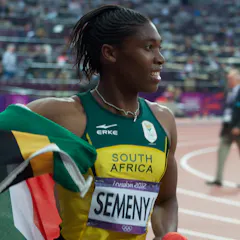
Athlete Caster Semenya will need to take hormone-lowering agents, or have surgery, if she wishes to continue her career in her chosen events. But the decision to ban her is flawed on many grounds.
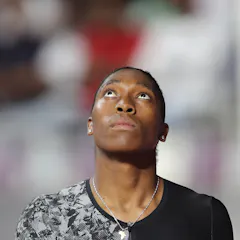
The great South African runner Caster Semenya may have competed in her last 800-metre race. She has been demonized for more than a decade, like many other female athletes before her.
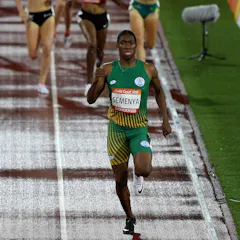
Sport is a special domain, but it is not immune from the law and human rights. We’re yet to see if the United Nations Human Rights Council will take steps following a new ruling on testosterone.
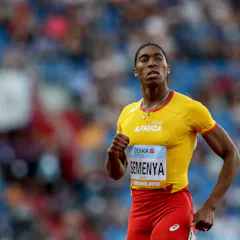
The question of whether heightened testosterone confers an advantage for some female athletes remains contentious.
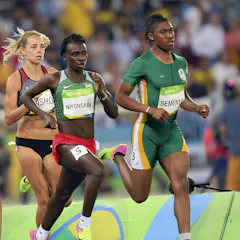
Arbitration case between athlete Caster Semenya and the IAAF centres on eligibility to compete based on testosterone – but there are other factors in play.

The International Association of Athletics Federations wants athletes who have differences of sexual development to medically reduce their testosterone levels. But this may be in breach of human rights.

A new policy may spell the end of Caster Semenya’s illustrious running career.
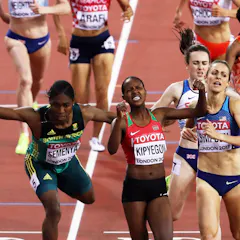
One way to get beyond gender barriers in sport would be to scrap sex segregation and replace it with a system similar to that of Paralympic disciplines.
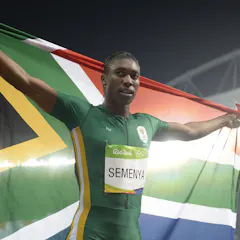
Caster Semenya’s gold medal in the women’s 800 metres track event at the Rio Olympics may be supplemented, in coming months, by an upgrade from silver to gold for the same event at the London Games. Re-testing…

A 1992 paper predicted that if women’s running performance continued to improve as rapidly as it had since the 1920s, top women athletes would soon be running as quickly as the men.
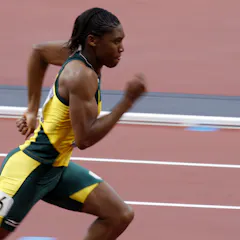
Some women naturally produce high levels of testosterone. Why is this innate condition treated differently from other conditions that potentially enhance athletic performance?
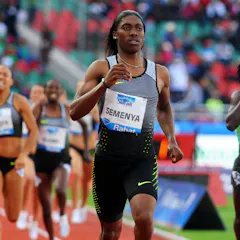
After much suspicion and derision, women with hyperandrogenism can compete in international events.
Top contributors
-

Professor Emeritus of Kinesiology and Physical Education, University of Toronto
-
Professor of Kinesiology, Penn State
-
Research Leader, Sport, Institute of Sport, Exercise and Active Living, Victoria University
-
Senior Lecturer in Biochemistry, Sheffield Hallam University
-
Associate Professor of Sport Management, University of Technology Sydney
-
Professor of Health Sciences, Adelaide University
-
Professor, Lincoln University, New Zealand
-
Associate Professor, York University, Canada
-
Professor of Ethics and Sports Integrity, KU Leuven
-
Researcher in Sports Studies, University of Tsukuba
-
Postdoctoral research fellow, Stellenbosch University
-
Associate Professor, Department for Health, University of Bath
-
Chen Su Lan Centennial Professor in Medical Ethics, National University of Singapore; Distinguished Visiting Professor in Law, University of Melbourne; Uehiro Chair in Practical Ethics, The University of Melbourne
-
Professor of Communications, Howard University
-
Professor of Private Law, University of Pretoria