
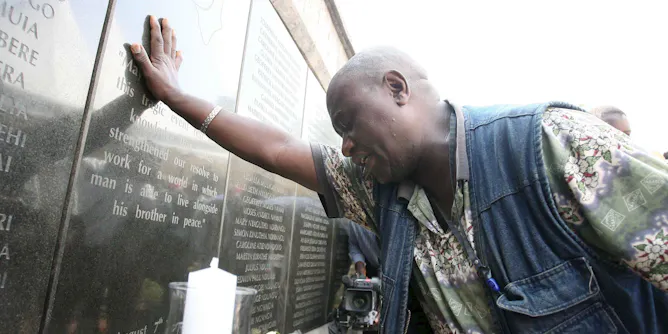
Two decades after terrorists bombed the US embassies in Nairobi and Dar es Salaam, Kenya has implemented a slew of measures to counter terrorism.
Articles on Terror attacks
Displaying 41 - 60 of 67 articles

Mali faces huge challenges. Through the upcoming presidential election, Malians will tell the next president what they will and won’t accept for their future.

Terrorists are wealthy. They’re poor. They’re Christian. They’re atheists. They come from all over. That’s why US counterterrorism efforts must be more nuanced than just barring Muslims.
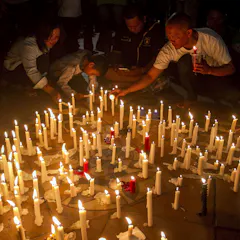
Indonesia has worked hard to block homegrown terrorist cells, but the involvement of children as suicide bombers in recent attacks has raised concerns that de-radicalisation programmes aren’t working.
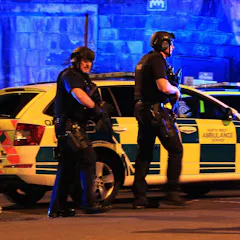
Terrorist attacks are increasingly unpredictable. Manchester provides a key lesson in identifying how the gap between hypothetical plans and the reality of incidents is widening.

No country is immune to terrorism, but de-radicalizing people who have been attracted to terrorist organizations like ISIS can work.
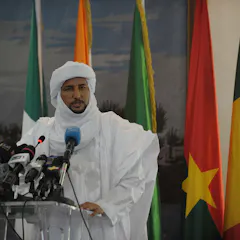
The ‘war on terror’ in Mali is building alongside a growing number of multinationals hoping to extract the oil and gas reserves of the Taoudeni basin, and a strong foreign military presence.

The recent Edmonton attack raises questions about a new type of terrorism and the different methods required to stop it. Labelling such attacks as the work of a “lone wolf” obscures a larger problem.
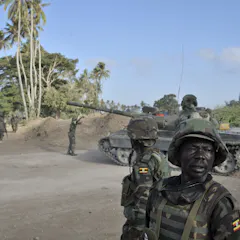
It’s unclear exactly when Kenya’s next president will begin the process of withdrawing troops from Somalia. If it’s too rushed, the move might destabilise the region.
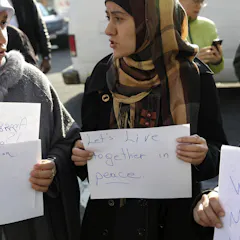
FBI data show that in 2015 anti-Muslim hate crimes spiked to the highest level since 2001. A scholar finds political rhetoric correlates to both sharp increases and decreases in hate crime.
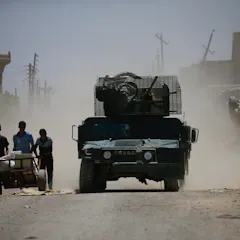
There are many obstacles to successful prosecution, including obtaining evidence in a war zone and using foreign intelligence in court.

The ban on electronic devices in cabin luggage overlooks the airports that would be least likely to detect a bomb.
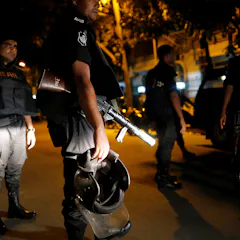
Countering violent extremism in Bangladesh will require a change in the political climate of the country so that young are exposed to diverse political avenues and have a real chance of getting a job.

The Berlin terror attack at the end of 2016 will have major political implications for Germany’s elections this year and an uneasy European Union, writes a German studies scholar.

The latest atrocity has targeted a much-loved German institution.

Many Australians are frightened by the prospect of terrorism on home soil, but statistics show they don’t have much to fear.
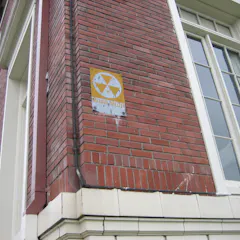
Is the U.S. prepared for nuclear attacks from terrorists or rogue nations? A radiation expert explains how Cold War-style fallout shelters could help protect us from this growing threat.

Lone offender – sometimes called “lone wolf” – attacks may become a more prevalent threat. What can we understand about them and the people who carry them out?
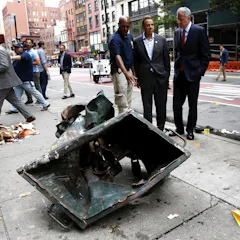
A year of violence continues with bombs in NYC and a stabbing in Minnesota, leaving many asking, why? A psychologist explains what research has revealed about the minds of violent extremists.

Even indirect exposure to the terrorist attacks of September 11 has left profound and deep impact on those too young to remember a world before that.
Top contributors
-

Professor, Institute for Health and Sport, Victoria University
-
Associate Professor and Principal Fellow in Urban Risk and Resilience, The University of Melbourne
-
Adjunct Associate Professor, Departnent of Social Sciences, Pwani University
-
Research Fellow in Counterterrorism, George Washington University
-
Sessional Instructor, Department of Literature and Language, Concordia University of Edmonton
-
Maître de conférences sur les conflits internationaux, University of Kent
-
Assistant Professor, University of California, Irvine
-
Fellow, Department of Anthropology, Durham University
-
Senior Lecturer in Policing, Liverpool John Moores University
-
Adjunct Professor, Australia-China Relations Institute, University of Technology Sydney
-
Associate Professor in Digital Futures, University of Bath
-
Professor of Communication and Middle East Studies, Georgia State University
-
Professor, University of Leeds
-
Timothy J. Jorgensen is a Friend of The Conversation.
Director of the Health Physics and Radiation Protection Graduate Program and Professor of Radiation Medicine, Georgetown University
-
Professor, City St George's, University of London