
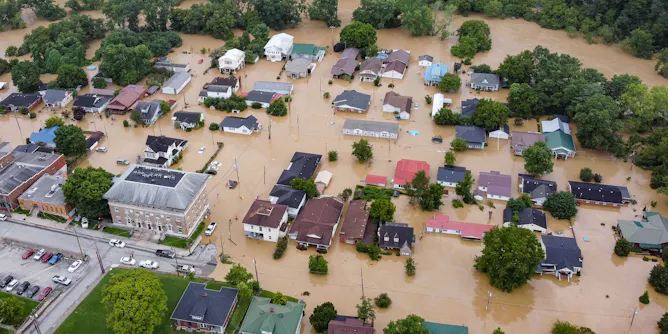
Extreme downpours caught people off guard from Las Vegas to Kentucky in July 2022.
Articles on Temperature
Displaying 41 - 60 of 133 articles
The strongest signal of our changing climate flares while most of us are asleep.
On a hot and humid day, the fan is your friend. But ice cream won’t make the difference you think it will.
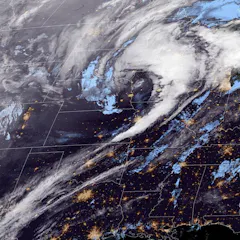
Forecasters described it as a ‘historical weather day.’ An atmospheric scientist who was at the heart of the storms explains what happened.
This is a really important question, and one which climatologists work on in many aspects of their jobs.
Many of the temperatures presently being recorded in Africa, and those projected in the next decade, are already close to the limits of human survival, or “liveability”.
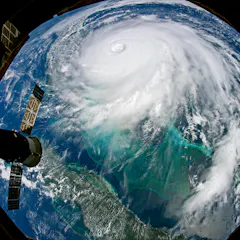
Take a closer look at what’s driving climate change and how scientists know CO2 is involved, in a series of charts examining the evidence in different ways.

These discoveries could help us treat a variety of conditions in the future – including chronic pain.
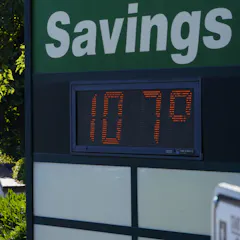
Which is worse, dry heat or wet heat? Both, says an exercise physiologist.
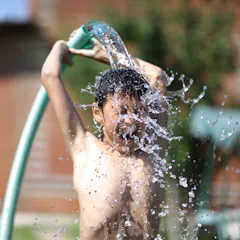
When the weather outside is very hot, it can make us feel really unhappy. Here’s why.

The US is shifting to a new set of climate ‘normals’ – data sets averaged over the past 30 years. But normal is a relative concept in a time of climate change.
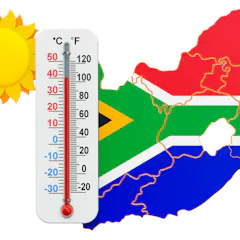
CC BY-NC-ND7.53 MB (download)
Understanding when there will be extreme heat and extreme cold can help people prepare.
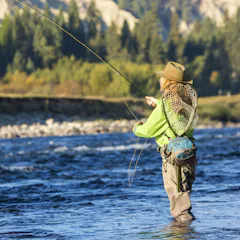
Groundwater was once thought to buffer streams from warming, but an inexpensive new technique shows streams fed by shallow groundwater may be just as susceptible as those without.
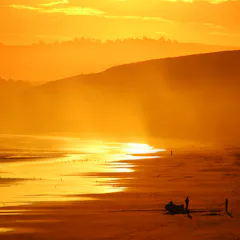
A new measure of average weather days in New Zealand puts the temperature on the rise, again.

Climate models are likely underestimating the true severity of future warming in urban areas.

Pikas – small cousins of rabbits – live mainly in the mountainous US west. They’ve been called a climate change poster species, but they’re more adaptable than many people think.
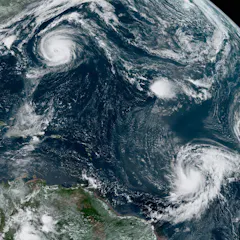
There were so many tropical storms in 2020, forecasters exhausted the list of names and started using Greek letters. And that’s only one reason 2020 was extreme.
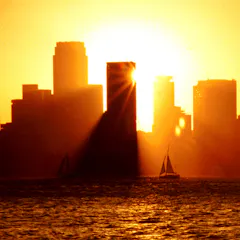
A changing climate means parts of Australia will get hotter, some drier, others wetter and we can expect more extreme fire days.
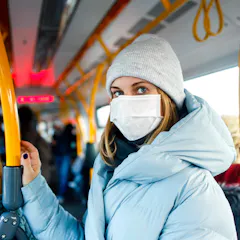
Winter weather forces us to congregate inside but evidence suggests cold, dry air also helps spread respiratory viruses.

‘Normal’ body temperature has declined in urban, industrialized settings like the US and UK. Anthropologists find the trend extends to Indigenous people in the Bolivian Amazon – but why?
Top contributors
-

ARC Future Fellow and Associate Professor in Climate Science, ARC Centre of Excellence for 21st Century Weather, The University of Melbourne
-
ARC DECRA Fellow, UNSW
-
Associate Professor of Exercise Physiology, Mississippi State University
-
Climate scientist, Australian Bureau of Meteorology
-
Deputy Director, Engagement and Impact, The ARC Centre of Excellence for the Weather of the 21st Century, Australian National University
-
Climate Scientist and Researcher, University of Cape Town
-
PhD Candidate, The University of Melbourne
-
Professor of Physical Geography, University of the Witwatersrand
-
Director, ANU Institute for Climate, Energy & Disaster Solutions, Australian National University
-
Climate Scientist, Australian Bureau of Meteorology
-
Professor emeritus, The University of Melbourne
-
Professor emeritus, School of Earth, Atmosphere and Environment, Monash University
-
Duncan Mitchell is a Friend of The Conversation.
Honorary Professorial Research Fellow, University of the Witwatersrand
-
Professor of Climate Science, UMass Lowell
-
Associate Professor of Education, Charles Sturt University