
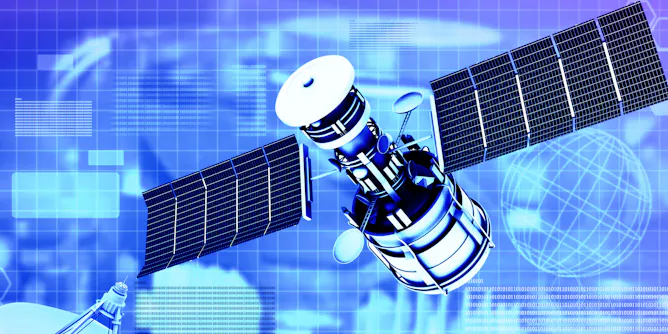
Telecom operators increasingly struggle to find “parking spots” for their satellites in outer space.
Articles on Telecommunications
Displaying 61 - 80 of 120 articles

A multibillion-dollar effort is just beginning to build an all-new nationwide wireless broadband network for emergency responders. How will it work, why do we need it and how will it last 25 years?
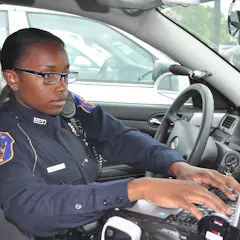
A new data management system can give emergency responders a fast lane on the internet to help speed rescue efforts after a disaster.
The Trump administration has decided to challenge the rules of protection of personal data imposed by the previous administration on ISPs.

When planning major infrastructure investments, it’s important to know which road, freight and information networks are most important – and which proposals might make things worse, not better.
President Trump has touted infrastructure investment as a way to boost the U.S. economy. At the moment, he’s missing a key opportunity – expanding broadband internet service.

Technology designed to keep mobile phones connected during a natural disaster could have wider uses in regional australia.
Trump’s FCC chairman Ajit Pai has proposed a major change in internet regulation, doing away with the Open Internet Order. Experts describe what’s at stake, and why it matters.

Mine communications are complex, slow and unreliable. The solution to keeping miners safe, and rescuing them when disaster strikes, might just be in their hands already.

Consumers don’t understand the contracts they are signing when they buy smartphones, new research shows.

What we and other responders learned that day would go on to spark major changes in U.S. emergency response efforts.
The price of voice communication has come down in South Africa. But poor regulation and a lack of competition means that the country still has some way to go to reduce the cost of communication.

Nanophotonics deals with photons at the nanometre scale, and it’s set to transform everything from internet speeds to turning your smartphone into a portable science lab.

Researchers face stiff fines or even jail time if they inadvertently communicate with foreign colleagues about matters deemed to have a military use.
Whatever BT, Virgin Media and other telecoms firms may say, the only future-proof network is a fibre-optic from door-to-door.

The cloud lies under the ocean. Thin cables about as big around as a garden hose traverse the Earth’s oceans carrying all our intercontinental internet data.

It happened before, it could happen again: Ofcom’s 200% price hike could stifle UK telecoms investment and pass costs on to customers.

Internet connectivity via your lightbulb? It’s already possible with LED lights that can enlighten as well as lighten.

Satellites are vital and vulnerable - we need to plan for a worst case scenario.
Mobile operators’ business models mean millions of phones are sat around unused.
Top contributors
-

Associate Professor, School of Engineering, RMIT University
-
Professor of Strategy, Frankfurt School of Finance and Management
-
Professor, Computer Networking and Telecommunications, University of Salford
-
Eugene M. Isenberg Chair in Integrative Studies, UMass Amherst
-
Associate Professor in Cyber Security, Adelaide University
-
Director, Innovative Planet Institute, Swinburne University of Technology
-
Professor of Cyber Security Practice, Edith Cowan University
-
Lecturer, Department of Management, Griffith University
-
Professor of Information Sciences and Technology, Penn State
-
Industry Fellow, Corporate Governance & Senior Lecturer, Swinburne Law School, Swinburne University of Technology
-
Associate Professor in Telecommunications Engineering, Swinburne University of Technology
-
PhD Scholar in Department of International Relations, Australian National University
-
Postdoctoral Research Associate, UCL
-
Assistant Professor of Media, Culture and Communication, New York University
-
Professor of Public Policy and Economics, University of Maryland, Baltimore County