

Government support programs like CERB and EI provide a safety net. During COVID-19, sex workers accessed various financial support — future policy needs to address the rights and security of sex workers.
Articles on Taxes
Displaying 101 - 120 of 228 articles
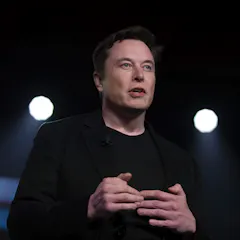
Giving away stock that has soared and that the donor has owned for at least a year makes the biggest dent in what share the IRS takes.
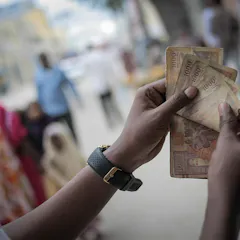
New evidence from Somalia points to effective ways to deliver public services in conflict-affected and fragile contexts.

Humanity’s biggest challenges are not technical, but social, economic, political and behavioural. Effective actions are still possible to stabilise the climate and the planet, but must be taken now.

Influential international actors like the World Bank and the IMF should focus on expanding social protection rather than focusing on eliminating the informal economy.

Research suggests punishing tax cheats can re-establish a sense of justice among the general public, so authorities should use their resources to ensure culpable offenders are held accountable.

Whether you pay tax on your Halloween treat supply depends on which state you live in and how it defines candy.
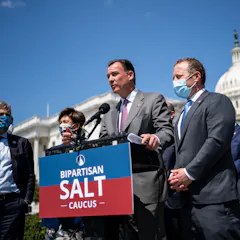
The 2017 tax cuts put a $10,000 cap on the deduction for state and local taxes. The richest households would see the biggest gains from eliminating or raising the cap.

U.S. opportunity zones can positively impact real estate development and help local communities. But to fully realize the program’s potential, it needs reform.

Megachurches and the men who lead them can be superrich. So why don’t the IRS and local authorities see a cent in taxes? A scholar explains.

Giving $100 to a favorite charity costs less than that for the roughly 8.5% of Americans who use this tax break.

A new report found that America’s top billionaires paid very little income tax despite tremendous gains in their wealth.

Many of the tens of millions of taxpayers fined every year don’t seem to realize the IRS offers a few ways to reduce the penalties they owe.

States claim the stimulus law assaults state sovereignty by barring local governments from using aid money to cut taxes. But the Supreme Court has consistently approved conditions on federal spending.
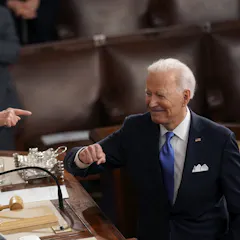
President Biden wants to raise the capital gains tax that wealthy people pay and use the extra revenue to fund new social spending on children and education.

For middle-class and wealthy families, securing government aid tends to be free of hassles. For low-income families, the process is often stigmatizing and the benefits meager.
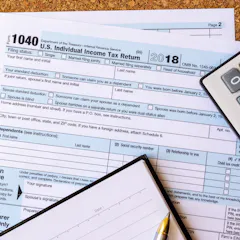
Dozens of prosperous countries save billions of dollars and hours annually by not requiring residents to fill out tax returns, so what is the United States waiting for?

It is morally unjustifiable for tech companies to walk away from the pandemic with massive profits while schools are burdened with debt.

An economist and an environmental law expert explain why a tax is more palatable to the industry and better for the public than regulation.

A tax on sugar-sweetened beverages may be intended to improve health, but for Indigenous consumers, such a tax would be unethical, contravene tax law and undermine Indigenous rights.
Top contributors
-

Associate Professor of Business, Boston University
-
Professor Emerita of Law, Vanderbilt University
-
Lecturer in Public Policy, University of Michigan
-
Professor of Law, University of Pittsburgh
-
Professorial Fellow, University of Canberra
-
Professor of Accounting, The Ohio State University
-
Professor of Law, University of Richmond
-
Assistant Professor of Accounting, Youngstown State University
-
Glenn Family Chair Emeritus of Economics and Philanthropic Studies, Indiana University
-
Research Fellow, Institute of Development Studies
-
Associate Professor of Accounting, Boston College
-
Sr. Professorial Lecturer & Managing Director of Kogod Tax Policy Center, Department of Accounting and Taxation, American University Kogod School of Business
-
Professor of the Practice of Data Science, Washington University in St. Louis
-
Assistant professor, Canada Research Chair in Taxation, Governance and Risk, University of Waterloo
-
Clinical Assistant Professor and Assistant Director of the Philip C. Cook Low-Income Taxpayer Clinic, Georgia State University