

Whether you pay tax on your Halloween treat supply depends on which state you live in and how it defines candy.
Articles on tax policy
Displaying 21 - 40 of 61 articles

In 1950, the top 0.01% of earners paid almost 70% of their income in taxes. By 2018, the super-rich paid proportionately less than the average for all other Americans.

Giving $100 to a favorite charity costs less than that for the roughly 8.5% of Americans who use this tax break.

A new report found that America’s top billionaires paid very little income tax despite tremendous gains in their wealth.
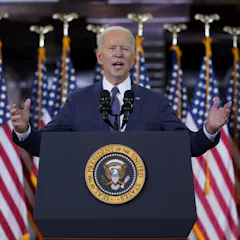
The corporate tax was created on the principle that people and companies should be taxed based on what they receive in benefits – and US corporations have received an awful lot.
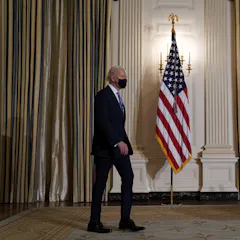
Joe Biden’s middling economic policies are a chance to cut through the bitter polarisation of US politics.

Congress tends to use the tax code to implement policy, which increases complexity and creates loopholes wealthy taxpayers like Trump can exploit.

This measure, included in a pandemic relief package, is supposed to encourage Americans to give more to nonprofits.

Taxation is one tool politicians think they can use to influence the economy and make life fairer for Canadians.

Constructing buildings to rent, rather than sell, may fulfil important housing policy objectives – but it won’t take off without tax reform.

The health of American democracy could be at stake.
Congress can fix this by updating the tax code.

Trump’s plan to slap $200 billion more in tariffs on Chinese goods is premised on yesterday’s waste-fueled economy. Tomorrow’s economy is ‘circular.’

Companies like Uber and Etsy don’t have to tell most of the people working with them how much they’ve earned. With the federal government so behind the curve, some states are changing their rules.
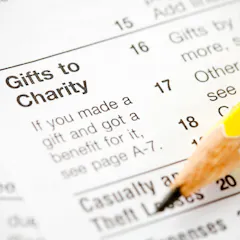
The lost incentives to give are likely to make a bigger difference than the small uptick in economic growth expected from the new law.
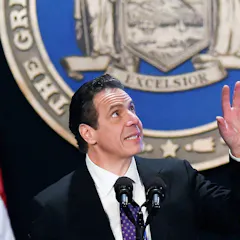
New York, California and other high-tax states are angling to use the charitable deduction and state payroll taxes as workarounds to shield both their residents and their revenue.
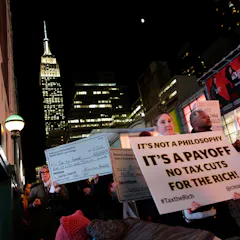
Historically, wishful thinking has blunted pushback.

Giving could decline by $21 billion or more per year.
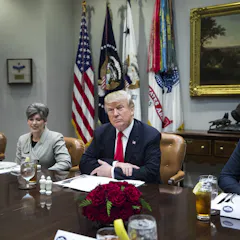
American voters would not give more money to the wealthy.
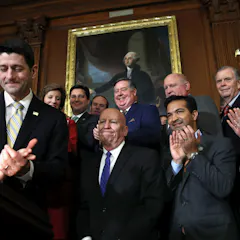
More than US$20 billion per year in giving is potentially at stake.
Top contributors
-

Glenn Family Chair Emeritus of Economics and Philanthropic Studies, Indiana University
-
Professorial Fellow, University of Canberra
-
Lecturer in Public Policy, University of Michigan
-
Part-Time Professor of Economics, The New School
-
Professor of Business and Society, University of Technology Sydney
-
Sr. Professorial Lecturer & Managing Director of Kogod Tax Policy Center, Department of Accounting and Taxation, American University Kogod School of Business
-
Associate Professor of Sociology, Cornell University
-
Associate Professor of Health Policy, Management and Behavior, University at Albany, State University of New York
-
Visiting Fellow, Faculty of Social Sciences, The Open University
-
Professor Emeritus, Economics & Finance, University of Houston-Clear Lake
-
Professor of Political Science, University of Colorado Boulder
-
Associate Professor of Business, Boston University
-
Professor of Real Estate and Regeneration, Northumbria University, Newcastle
-
Researcher, Global Health Policy, University of Oxford
-
Postdoctoral Research Associate in the Business School, University of Exeter