

Neither prospective school board social media lawsuit wins, nor proposed Ontario or federal privacy or AI legislation, would prevent problems related to rampant processing of human-derived data.
Articles on Targeted advertising
Displaying all articles

The Home Office has proposed paying influencers to discourage migrants from coming to the UK.

Google is paving the way to serve you ads based directly on your browsing history, instead of cookies.

None of the major digital platforms lets the public see what advertising they carry and how it’s targeted, according to a new report.

From voting info to risqué quips, this election, online political ads are more pervasive than ever before.

Social media isn’t simply awash in conspiracy theories and extremism. It contains pathways designed to lead people to ever more extreme material.

A new study looked at advertising and purchase data for children’s drinks and suggests that ads and pricing strategies contribute to sweetened children’s drink purchases.
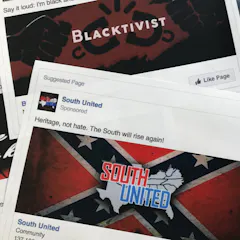
In one past example, Facebook allowed an ad targeting ‘Jew haters’. A new Australian initiative will collect data on its dubious targeted advertising practices closer to home.

The changes do not stop Facebook itself from collecting young users’ data and keeping it.

We know targeted political adverts contribute to polarisation, but commerical ones leave us fragmented too.

Have you ever been targeted with ads that are scarily specific to you, and wondered how the app or website could have known?

Marketers will soon be able to use AI-assisted vocal analysis to gain insights into shoppers’ inclinations – without people knowing what they’re revealing or how that information is being interpreted.

Facebook relies on targeted ads for a large proportion of its income, and reacted with fury over Apple’s new privacy opt-in.

In the past decade, the Australian government has commissioned data analytics projects worth more than A$200 million. We have little information about what they involved.

The drumbeat of data breaches and the growing problem of identity theft disproportionately harm low-income Americans.

Without much delay, Facebook and Twitter could make significant changes to limit political manipulation and propaganda. Will they? And will users ask it of the social media giants?

Brands need to build trust by being transparent about how they collect data.

Companies are now tracking how consumers react on social media to Super Bowl ads. They’re also studying how the brain responds to them. Could personalized Super Bowl ads be on the horizon?

Micro-targeted online advertising has destroyed how Americans share experiences and a common knowledge base. The fix for this societal and political problem is as simple now as it was in 1840.

When children work on their school assignments, unknown to them, the software they use is busy collecting data. These data are then used for individualized marketing of junk foods and other products.
Top contributors
-

Professor of Digital Communication, Director of QUT Digital Media Research Centre, Queensland University of Technology
-
Lecturer, Queensland University of Technology
-
Professor of Computer Science, Clarkson University
-
Associate professor, Australian Catholic University
-
Research Professor, University of Colorado Boulder
-
Director of Marketing Initiatives, Rudd Center for Food Policy and Health, University of Connecticut
-
Associate Professor of Computer Science, Carnegie Mellon University
-
Professor of Digital Business, University of Sussex
-
Professor of Media, School of Media, Film, and Journalism, Monash University
-
Lecturer in AI and Data Science, Swinburne University of Technology
-
Honorary Fellow, Public Health, The University of Queensland
-
University of Oxford
-
Assistant researcher, Digital Media, The University of Queensland
-
Venable Professor of Law, University of Baltimore
-
Professor of Law, University at Buffalo