
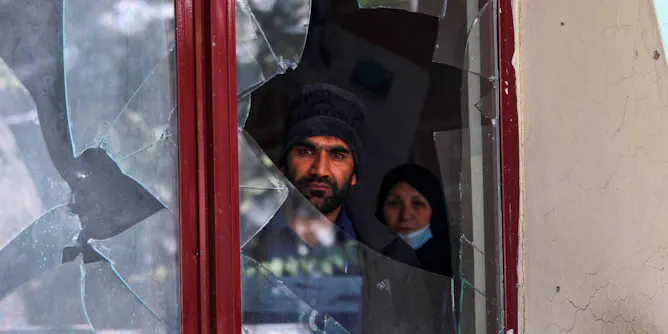
Scott Lucas, foreign policy expert, and Kambaiz Rafi, political economy researcher, discuss potential developments in Afghanistan under the new Taliban government.
Articles on Taliban
Displaying 81 - 100 of 257 articles
With travel to Afghanistan is nearly impossible right now and difficult questions over the types of evidence that would be admissible in court, investigators have their work cut out for them.
As the West contemplates how to engage with the increasingly brutal Taliban government in Afghanistan, the country’s people will suffer enormously.
Afghanistan is facing a looming hunger crisis. But the world must engage with the Taliban on purely pragmatic and humanitarian grounds, without extending formal recognition.
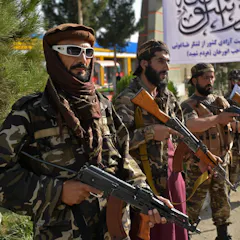
The Taliban is responsible for atrocities dating back to the 1990s, but has never been held responsible. The international community can play a role in ending the impunity.
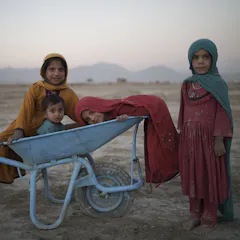
With 95% of households in Afghanistan not consuming enough food and the economy on the brink of collapse, this is a perilous time for the children of the country.
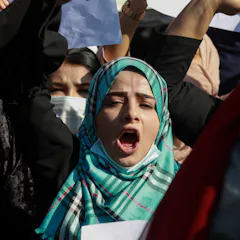
The age-old idea that Afghan women need rescuing from their men is a western construct that ignores the voices of Afghan women.
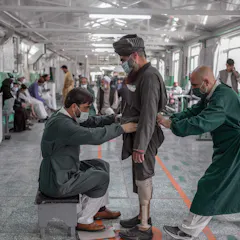
A scholar from Afghanistan outlines what more than $150 billion in assistance did and didn’t accomplish in two decades following the arrival of U.S. troops un 2001.

The Taliban say they won’t allow jihadi groups to flourish under their rule. But there is good reason to believe that al-Qaida, IS and other regional groups will benefit from the takeover.
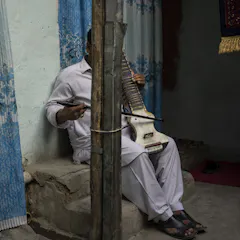
The international community, particularly the music and music research communities, must stand with the Afghan musicians when it comes to protecting their cultural rights and human rights.
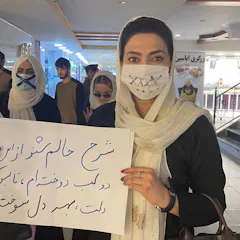
Two Afghan women scholars write about how Afghan women’s groups have been fighting for human rights, both now and historically.
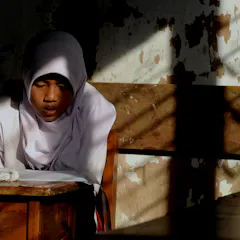
Indonesia can serve as an important model for the Taliban of how Muslim nations and faith-based organisations can play a big role in expanding girls’ education.

The Taliban’s punishments are at odds with many basic principles of Islamic law.
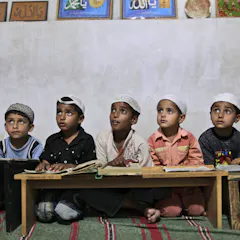
Madrassas don’t just provide an education that may lead to terrorism. They provide critical financial support to impoverished people.
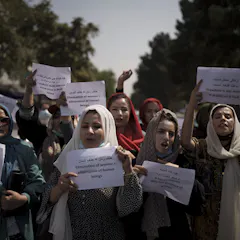
How can we reconcile competing claims that colonialism of any kind is detrimental with the view that Afghanistan has been failed by the West?
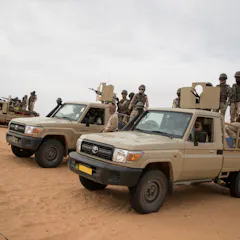
Jihadi groups take advantage of endemic poverty, inequality, high unemployment levels, illiteracy, ethnic divisions, and poor governance to spread their campaign of violence in the Sahel region.
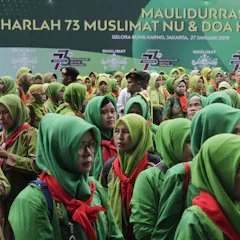
Nahdlatul Ulama is the world’s biggest Islamic organization, initiating a reform movement, which it is calling ‘Humanitarian Islam.’
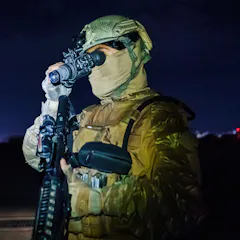
Despite efforts to prevent militant groups from getting weapons, they often get their hands on U.S. equipment and use it to attack American troops.

War rugs are more reflections of market forces than memorials to suffering.
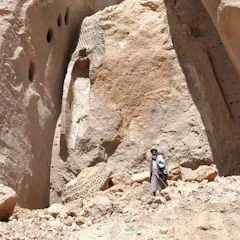
From 1996 to 2001, the Taliban outlawed almost all forms of art while looting and destroying museums. With their resurgence, Australia must strengthen measures to stop trafficking of antiquities.
Top contributors
-

Visiting Research Professor, The Senator George J. Mitchell Institute for Global Peace Security and Justice, Queen's University Belfast
-
Senior Research Fellow, Initiative for Peacebuilding, The University of Melbourne
-
Professor of Anthropology, Emerita, Concordia University
-
Director, Center for Afghanistan Studies, University of Nebraska Omaha
-
Associate Professor of International Relations and Women's, Gender, and Sexuality Studies, Stanford University
-
PhD Candidate, International Relations, Australian National University
-
Non-resident Research Fellow, Graduate School of Development, University of Central Asia
-
ESRC Postdoctoral Fellow, School of Government and International Affairs, Durham University
-
Professor of International Politics, Clinton Institute, University College Dublin
-
Chair in Global Islamic Politics, Alfred Deakin Institute for Citizenship and Globalisation, Deakin University
-
Assistant Professor of Political Science, Clemson University
-
Associate Professor, Faculty of Law, Centre for Human Rights and Legal Pluralism, McGill University
-
Tony Walker AM is a Friend of The Conversation.
Director, La Trobe University
-
Researcher and sessional academic, Australian Catholic University
-
Honorary Research Fellow, University of Birmingham