
Perceptions in Indonesia towards LGBT as revealed in a national survey.
Articles on Surveys
Displaying 121 - 140 of 145 articles

CFOs spend two-thirds of their waking hours working, according to a survey. The difficulty that companies are having hiring and retaining qualified employees is also at a 20-year high.

Home can be a slippery concept. But psychologists have long understood that it plays a huge role in self-identity and emotional well-being.

Some social groups are falling through the gaps of fertility data. Men, ethnic minorities and the LGBT community have explicitly been excluded from surveys.

New research reveals a happy work force is likely to increase a business’s profitability.

Not everyone who could vote did vote in the voluntary postal vote on same-sex marriage. So what can we draw from the result if only four out of five eligible Australians took part?

Companies may benefit when customers create content, provide feedback and do busywork once done by paid employees, but what about the customers themselves – all of us?

Europeans are, on average, more likely than Americans to say they fear climate change. What explains the gap?
The latest data from the Australian Bureau of Statistics shows inequality declining slightly as overall incomes stagnate.

The membership base of South Africa’s trade union movement has undergone significant changes which begs the question: has it moved away from its working class roots to become a middle class movement.
Australians will be asked to complete a voluntary, non-binding postal vote on marriage reform. Wouldn’t it be easier - and cheaper - to do a sample survey instead?

Millions of Americans believe brown cows produce chocolate milk? The way the media reported this factoid raises questions about science literacy – but different ones than you may think.
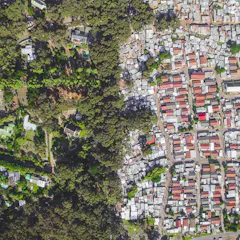
People in some of the most unequal countries in the world think theirs is the paradigm of meritocracy. Can the data help explain this phenomenon?

Advanced lab tests have entered the market to improve tuberculosis diagnosis. This will ensure prompt and correct treatment in managing the disease.
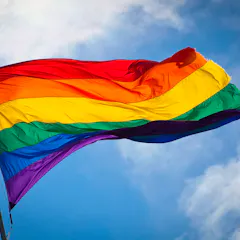
Why are there such big differences in public opinion about homosexuality? It turns out where you live can be a major influence on how you feel.
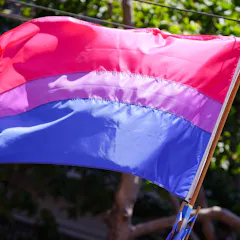
The proportion of young people identifying as lesbian or gay seems to have dropped slightly, but the proportion who identify as bisexual has grown.

Are you moody? Prone to distraction? Cellphones may act as a high-tech pacifier.
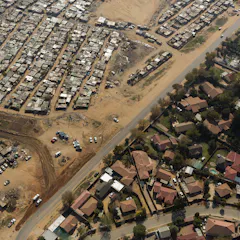
Without data, people don’t know what to believe or whom to trust. Empirical, thorough data collected by academics can help to fill important governance gaps.

Antibiotics can prevent serious harm and stop infections becoming fatal. But they won’t kill common cold and flu viruses, and careless overprescribing by doctors can do more harm than good.

From the UK, to Canada, Australia and the states – our opinions about the military are usually wrong.
Top contributors
-

Professeur au département Gestion, Droit et Finance, GEM
-
Professor of Psychology, San Diego State University
-
Associate Professor of Government, American University
-
Assistant Professor of Pediatrics, West Virginia University
-
Director, BehaviourWorks, Monash Sustainable Development Institute, Monash University
-
Associate Professor of Political Science, University of Richmond
-
Senior Lecturer, The University of Queensland
-
Professor of Finance, Duke University
-
Emeritus professor, Monash University
-
Professor, Future Fellow and Head of Statistics at UNSW, and a Deputy Director of the Australian Centre of Excellence in Mathematical and Statistical Frontiers (ACEMS), UNSW
-
Professor of Economics and Senior Researcher, Princeton University
-
Research fellow, BehaviourWorks Australia, Monash Sustainable Development Institute, Monash University
-
Associate Professor of Publishing, Portland State University
-
Professor of Public Policy and Director of the Policy Institute, King's College London
-
Professor of Book Publishing and Digital Humanities, Portland State University