

Polls suggest that the majority of Americans think climate change is real, is caused by humans and needs to be addressed. But climate change isn’t a priority when Americans go to vote.
Articles on Surveys
Displaying 101 - 120 of 145 articles
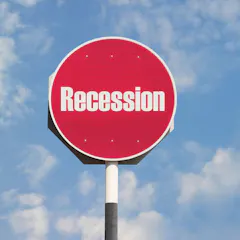
The latest survey by IAFEI, Duke University and Grenoble Ecole de Management indicate that nearly half of US CFOs believe the nation’s economy will enter a recession by the end of 2019
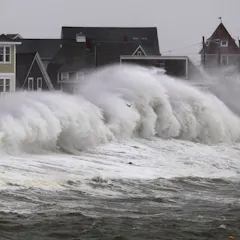
As the expected costs of climate change grow, cities are on the frontlines of adapting to sea level rise and more intense storms – and finding ways to pay for it.

The results of three surveys show that, in testing public opinion, much hangs on how the questions are asked and the surveys are designed.

IAFEI and a group of partners including Duke University and Grenoble EM survey CFOs across the world for the third quarter 2018, the survey was running from August 22 to September 6, 2018.

Data from victim and crime perception surveys help make sense of South Africa’s crime statistics.
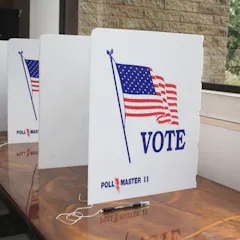
How do you know whether to trust a poll? Look carefully at how it was conducted – and examine your own biases.
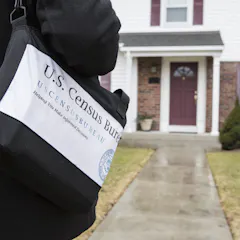
More than two dozen states and cities are suing over a controversial new citizenship question.

In April 2017 the IPSP conducted a survey on how cooperation and competition were perceived and how respondents felt in cooperative versus competitive situations.

According to our 32-year longitudinal study of first year science students, belief in creationism has declined over time.

We all think men are at it way more than they are. But estimates of how much nooky young women are getting are basically ludicrous.

An April 2017 survey explored Americans’ opinions about government intervention and welfare policies. It found that on average, they want more from their government, but are highly polarised.

IAFEI and partners Duke University and Grenoble EM regularly survey CFOs across the world. For the second quarter 2018, the poll ran from May 13 to June 7, 2018.
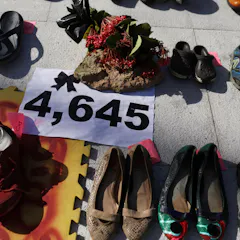
A survey shows that most Puerto Ricans didn’t highly rate the official information coming out of the island. With the Institute of Statistics in trouble, the situation is likely not to improve.
We are often presented with surveys that claim to show how we all think on a certain subject. But how many people do you need to ask for that finding to have have any convincing meaning?

The recent Aeroplan survey offended many consumers with questions they felt normalized intolerant views. But consumer research has a long history of learning about customers’ values.
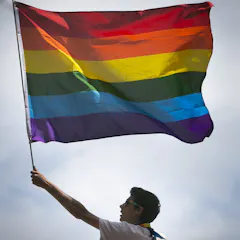
The 2020 census will count same-sex couples across the US. A broader count of the LGBT population would be even better.
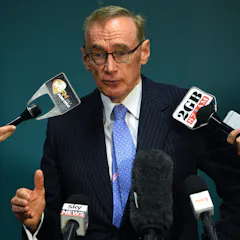
Most surveys are consistent in finding there is a substantial minority of the view that immigration is too high, but not a large majority.

More than 1,000 Nebraskans were asked about laws that protect business owners who refuse to serve gays or lesbians. People on either side of the issue made appeals to rights, freedom and capitalism.
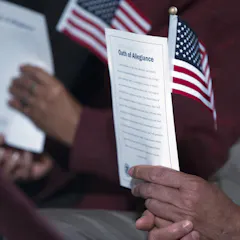
The Department of Justice wants to add a citizenship question to the next census. That could mess up the Census Bureau’s data and damage public trust in the system.
Top contributors
-

Professeur au département Gestion, Droit et Finance, GEM
-
Professor of Psychology, San Diego State University
-
Associate Professor of Government, American University
-
Assistant Professor of Pediatrics, West Virginia University
-
Director, BehaviourWorks, Monash Sustainable Development Institute, Monash University
-
Associate Professor of Political Science, University of Richmond
-
Senior Lecturer, The University of Queensland
-
Professor of Finance, Duke University
-
Emeritus professor, Monash University
-
Professor, Future Fellow and Head of Statistics at UNSW, and a Deputy Director of the Australian Centre of Excellence in Mathematical and Statistical Frontiers (ACEMS), UNSW
-
Professor of Economics and Senior Researcher, Princeton University
-
Research fellow, BehaviourWorks Australia, Monash Sustainable Development Institute, Monash University
-
Associate Professor of Publishing, Portland State University
-
Professor of Public Policy and Director of the Policy Institute, King's College London
-
Professor of Book Publishing and Digital Humanities, Portland State University