

A string of recent deals by the cutting-edge AI company suggest an interest in large amounts of behavioural, health and biometric data.
Articles on Surveillance capitalism
Displaying 1 - 20 of 29 articles

Human staff accumulate data as ‘expertise’ instead of giving it to their employers. For profit-chasing retailers, that’s a problem AI can eliminate.
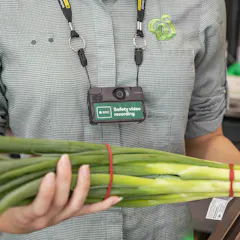
The hidden side of the supermarket giants’ quest for profits is an increasingly elaborate system for monitoring and managing shoppers and workers.

Apple’s plan for ‘spatial computing’ may redefine personal computing – and also facilitate trouble new kinds of surveillance.

Many people have become resigned to the fact that tech companies collect our private data. But policymakers must do more to limit the amount of personal information corporations can collect.

Citizens’ social media is a form of alternative media that challenges both mainstream media and right-wing propaganda.

Australia’s privacy laws are so vague a company can keep your data as long as it ‘needs’.

None of the major digital platforms lets the public see what advertising they carry and how it’s targeted, according to a new report.

The ABC’s decision to force viewers to create accounts to watch shows online raises concerns over privacy.

Facial recognition technologies have become more popular through increasingly sophisticated devices and popular fads. Casual use of face scanning and analysis features has long-term social impacts.

Canada needs to overhaul its approach to addressing online harms if it wants to remain a human rights leader and champion of internet freedom.

The COVID-19 pandemic has meant an increased dependence on digital technologies. However, this comes with a serious threat to our personal privacy and property.

Why a workers’ rebellion in 19th-century England is relevant in the age of data extraction, gig labour and management by algorithm.

Companies are allowed to track users as much as they like — as long as they spell it out in the fine print. But a ground-breaking Australian legal judgement should give them pause.

The web’s inventor believes the liberation of our data will help redistribute power on the internet.

Instagram’s Shop button signals the growing commodification of human interactions on social media.

Manufacturers will increasingly track the products they sell to make recycling them more profitable.

Internet sabbaths and surveillance capitalism in the COVID-era: William Powers on what’s changed since Hamlet’s Blackberry
The Conversation57.8 MB (download)
Journalist and author William Powers talks with Media Files about taking an internet sabbath, how the media covers tech and what's changed since his book Hamlet’s Blackberry was first published.

The Oculus Quest 2 headset is the latest step in the construction of a ‘mirrorworld’ built on high-tech surveillance and targeted advertising.

Using less cash means leaving more digital traces of where your money goes - but there are ways to keep some privacy.
Top contributors
-

Associate Professor, Faculty of Law & Justice; Lead, UNSW Public Interest Law & Tech Initiative, UNSW
-
Professor in Human-Computer Interaction, ARC Future Fellow, University of Sydney
-
Senior Lecturer in Digital Cultures, Australian Research Council DECRA Fellow, University of Sydney
-
Policy Lead on Technology, Cybersecurity and Democracy, Leadership Lab, Toronto Metropolitan University
-
Software Engineer, Digital Media Research Centre, Queensland University of Technology
-
PhD Candidate, ARC Centre of Excellence for Automated Decision-Making and Society, RMIT University
-
Associate Professor (Law), Southern Cross University
-
PhD student, Researcher at the Center for Studies on Integration and Globalization (CEIM), Université du Québec à Montréal (UQAM)
-
Director, Surveillance Studies Centre, Professor of Sociology, Queen's University, Ontario
-
Program Director, MSc Cyber Security Management, Aston University
-
Research Lead, Jeff Bleich Centre for the US Alliance in Digital Technology, Security, and Governance, Flinders University
-
Lecturer in Digital and Social Media, Curtin University
-
Ontario Research Chair of Digital Governance for Social Justice, York University, Canada
-
Honorary Fellow, Public Health, The University of Queensland
-
Visiting Scholar: School of Architecture and School of Engineering, University of Technology Sydney