
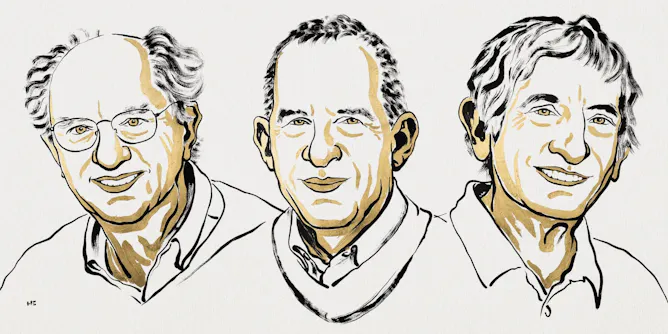
2025’s Nobel Prize in Physics is a tribute to the scientists who first discovered quantum behaviors in a macroscopic electrical circuit.
Articles on Superconductivity
Displaying 1 - 20 of 21 articles
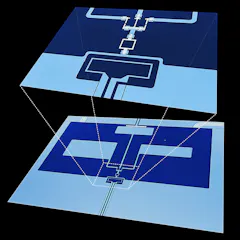
The discovery that superconducting circuits can behave like quantum particles was a revolutionary development in the field of quantum technologies.

Discovering new materials could drive forward areas such as green technology and advanced electronics.
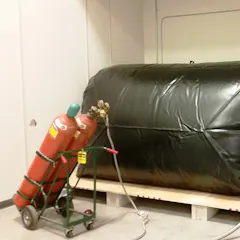
With the fourth significant shortage of helium in a decade continuing, companies and researchers are looking for alternative sources.

Claims about the discovery of a coveted room-temperature superconductor peppered the news in 2023. We pulled three stories from our archives on what superconductivity is and why scientists study it.
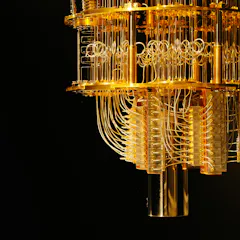
After decades of hype, quantum computers are on the verge of becoming useful. Here’s a refresher on why they’re such a big deal
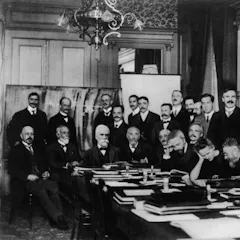
Superconductivity may sound like science fiction, but the first experiments to achieve it were conducted over a century ago. Heike Kamerlingh Onnes, credited with the discovery, won a Nobel Prize in 1913.

A potential new supermaterial isn’t so super after all, but the dream of a room-temperature superconductor is still very much alive.
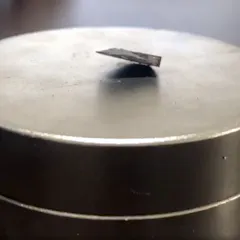
Room-temperature superconductors could transform technology – but the latest, much-hyped claims should be approached with caution.

Superconductors make highly efficient electronics, but the ultralow temperatures and ultrahigh pressures make them costly and difficult to use. Room-temperature superconductors promise to change that.
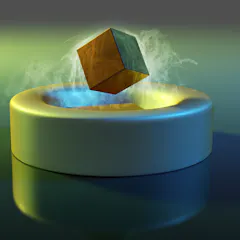
Superconductors are materials that can transmit electricity without any resistance. Researchers are getting closer to creating superconducting materials that can function in everyday life.
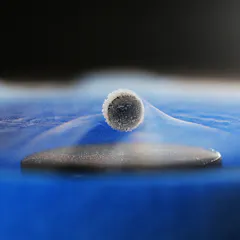
As we modernise Australia’s power grid, we should look to superconducting cables to save energy, cut emissions and future-proof the system

Generating energy usually means wasted heat. Semiconductors let the electrons flow with zero waste – but so far scientists only know how to get them to work at ultra-low temperatures.
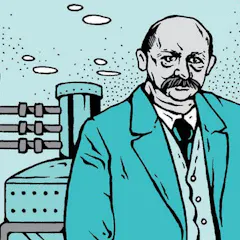
How was superconductivity discovered? It all began in April 1911, in a Dutch laboratory…

Helium lifts balloons and makes our voices squeak. But its supply on Earth is finite and is critical for modern industrial processes and medical imaging in hospitals. How worried should we be?

Layering substances like graphene in new ways could help us to build quantum computers or transmit electricity over long distances.

Advanced materials that seem like they come from Star Trek are becoming reality today.

How Messrs Thouless, Haldane and Kosterlitz could hold the key to the future.

Physicists have for decades tried and failed to make superconductors that work at room temperature. But we’re finally getting closer.
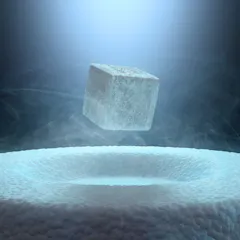
Just what is a superconductor? And what can it be used for? Research using superconductors at higher temperatures opens up more possibilities for this fascinating class of materials.
Top contributors
-

Professor of Physics and Astronomy, Rochester Institute of Technology
-
Associate Professor of Physics, Binghamton University, State University of New York
-
Distinguished Professor of Physics and Astronomy, Purdue University
-
Professor of Electrical and Computer Engineering, University of Southern California
-
Associate Professor of Photonics and Quantum Sciences, Heriot-Watt University
-
Professor of Chemistry, Mississippi State University
-
A/Prof, UTS Chancellor's Postdoctoral Research and ARC DECRA Fellow, University of Technology Sydney
-
Royal Society University Research Fellow, University of Cambridge
-
Senior Research Fellow, Materials Science, Queensland University of Technology
-
Chair in Emerging Technologies, Heriot-Watt University
-
CIF Director, Colorado State University
-
Professor and Canada Research Chair in Quantum Materials Discovery, University of Winnipeg
-
Principal research fellow
-
Professor and Director, Centre for Clean Energy Technologies and Practices, Queensland University of Technology
-
Associate Professor of Intelligent Systems and Data Science, Anglia Ruskin University