
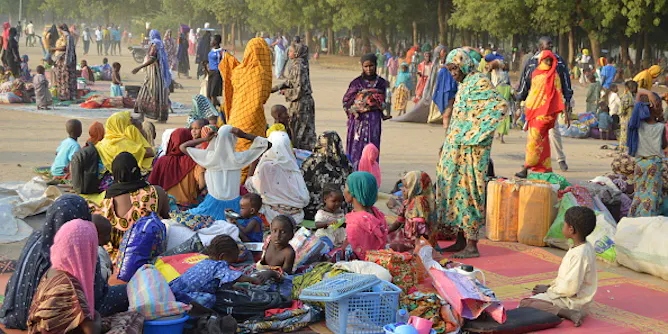
The failures of nominally elected governments has denied leaders - as well as the democratic system - a vanguard popular constituency.
Articles on Sudan
Displaying 161 - 180 of 304 articles
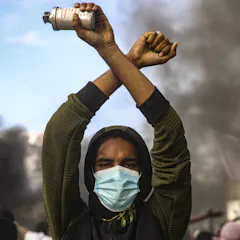
When the military leaders have responded so harshly and have not given in on any demands, why do the protests still continue?

Migration can be a matter of life and death, but religion can help people cope.

The military takeover and arrest of activists may well bring Sudan’s divided opposition together.
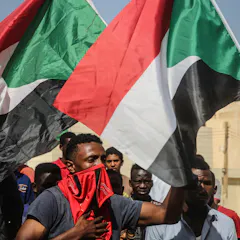
Sudan has needed and will require compromise and principled political goodwill to realise a difficult transition from military rule.

Governments are purposefully using laws that lack clarity, or ignore laws completely, to carry out illegal surveillance of their citizens.

Studying ancient DNA in Africa is valuable for understanding human evolution, population migrations, and human history locally, regionally and globally.
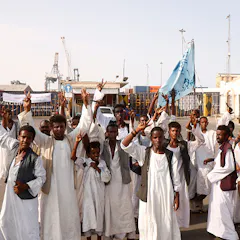
The grievances of those instituting the blockade are justified, to some extent. But the blockade will harm the entire nation instead of only disturbing the ruling elites.
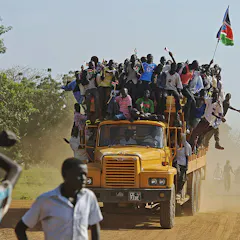
Prior to the secession of South Sudan, the rural livelihoods of people living in the 11 states were dependent on free trade and movement across the boundaries.

Kala-azar, already one of the most neglected diseases on the planet, is in danger of becoming even more neglected.

In the aftermath of the U.S. withdrawal from Afghanistan, Russia looks like an increasingly desirable international partner across much of the globe.
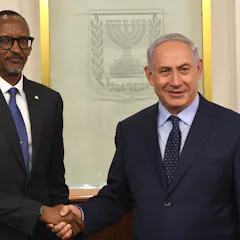
Most countries in Africa have chosen to separate the issue of the Palestinians from economic cooperation with Israel.

A spate of anti-clerical attacks has put a spotlight on the role of Christian leaders in South Sudan.

Desertification and climate change are threatening ancient sites in the Sahara.

The Abraham Accords peace deal was supposed to herald a new era for the Middle East. Yet the fault-lines remain as deep as ever.

Digital media shutdowns in Africa will lead to higher economic costs and greater public outrage.

Ethiopia, Sudan, Egypt and their neighbours could deploy large-scale solar and wind farms, connected by a regionally integrated power grid.
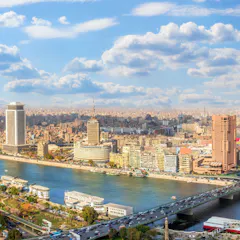
Given the ever increasing importance of coordinated management Ethiopia, Sudan, and Egypt should manage all dams through the Nile Basin Commission.

Nile communities carefully monitored and recorded the river’s flow. Centuries later these records are still being used by water resource managers around the world to analyse unpredictable river flows.
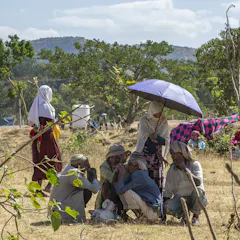
It’s a confluence of local, regional, national and, possibly, foreign interests.
Top contributors
-

Professor, Weber State University
-
Senior Research Fellow, Norwegian Institute of International Affairs and Visiting Professor University of Buckingham, Norwegian Institute of International Affairs
-
Associate Professor of History, University of Washington
-
Associate Professor of International Studies, University of Nottingham
-
PhD candidate, University of the Pacific
-
Professor of History, Colgate University
-
Professor of History, Durham University
-
Senior Lecturer in International Law, The University of Western Australia
-
Lecturer in History, Newcastle University
-
Senior Research Fellow, Horn of Africa and Southern Africa, Institute of Commonwealth Studies, School of Advanced Study, University of London
-
Researcher at the Austrian Institute for International Affairs, Österreichisches Institut für Internationale Politik (OIIP)
-
Professor of Architecture and SARChI: DST/NRF/SACN Research Chair in Spatial Transformation (Positive Change in the Built Environment), Tshwane University of Technology
-
Associate Professor of International Relations, University of Trieste
-
Associate Professor of Urban & Environmental Design, University of Khartoum
-
Research Fellow, International Food Policy Research Institute (IFPRI)