

The ongoing war in Sudan poses security, humanitarian, political and economic challenges for Chad.
Articles on Sudan
Displaying 121 - 140 of 304 articles
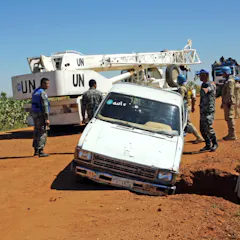
China’s involvement in Sudan is more financial than military, and favours stability.
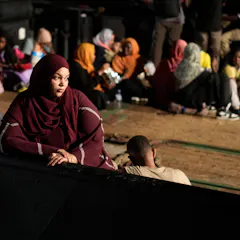
Research shows that young girls can be pushed into marriage in refugee camps or during national disasters.
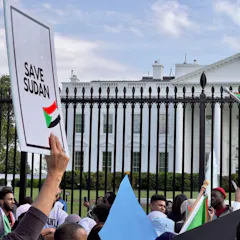
An agreement to end conflict is only one small step in an often long process.

As the United States government builds economic and security ties with African countries, some of those countries are encouraging African Americans to establish social and economic ties in Africa.
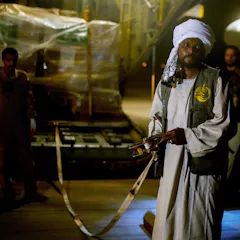
Three reasons getting the warring parties to stick to an agreement is so difficult.
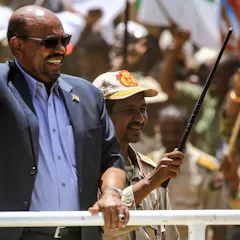
The failure to hold the perpetrators of the Darfur genocide accountable has led to further instability in Sudan.
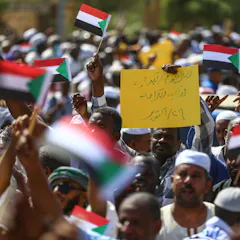
An African-led process would take into account complex regional dynamics – which would lead to a better and more stable peace agreement.
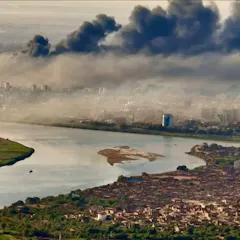
Both residents and Sudanese in the diaspora invested in homes to secure the future. Now the conflict is destroying hope.
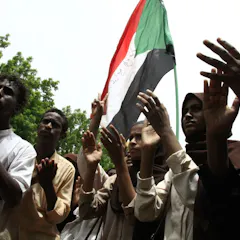
Sudan’s university students have played a key role in liberation struggles.

The Sudan army’s superiority is in its air force and arsenal of ground forces while the rival paramilitary force relies on nimble mobile units.

Tanzania’s refugee policy in the 1990s is a good example of how geopolitics affects ordinary refugees.
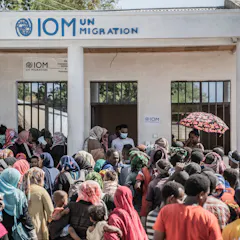
The number of refugees leaving Sudan is particularly high because Sudan was itself host to a million refugees.
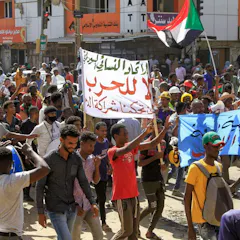
Sudan’s civilian protesters have gained a form of political power that traditional elites have struggled to attain.
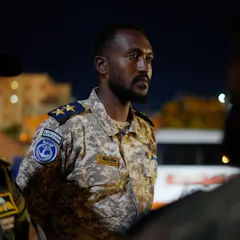
Sudan was formed by conquest, and its politics and, increasingly, its wealth have been controlled by the military ever since.
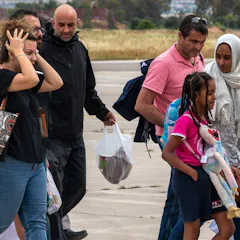
Evacuations offer some hope, but only for those that qualify for them.
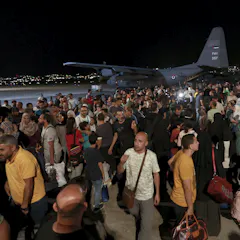
Sudan’s location and natural resources have attracted international partners keen to benefit either geopolitically or economically.
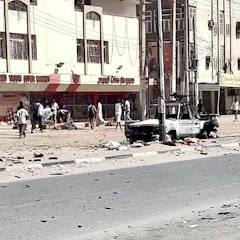
The role of the Wagner Group in the Sudan crisis is not yet clear, but its mercenaries are reported to be involved in a number of African countries.

Omar al-Bashir fell in 2019, but his military successors have preserved much of the authoritarian infrastructure of his regime.
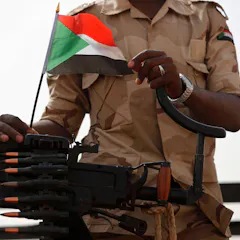
Armed group, mercenaries, mining, power struggles. It’s a familiar story in Africa, sadly.
Top contributors
-

Professor, Weber State University
-
Senior Research Fellow, Norwegian Institute of International Affairs and Visiting Professor University of Buckingham, Norwegian Institute of International Affairs
-
Associate Professor of History, University of Washington
-
Associate Professor of International Studies, University of Nottingham
-
PhD candidate, University of the Pacific
-
Professor of History, Colgate University
-
Professor of History, Durham University
-
Senior Lecturer in International Law, The University of Western Australia
-
Lecturer in History, Newcastle University
-
Senior Research Fellow, Horn of Africa and Southern Africa, Institute of Commonwealth Studies, School of Advanced Study, University of London
-
Researcher at the Austrian Institute for International Affairs, Österreichisches Institut für Internationale Politik (OIIP)
-
Professor of Architecture and SARChI: DST/NRF/SACN Research Chair in Spatial Transformation (Positive Change in the Built Environment), Tshwane University of Technology
-
Associate Professor of International Relations, University of Trieste
-
Associate Professor of Urban & Environmental Design, University of Khartoum
-
Research Fellow, International Food Policy Research Institute (IFPRI)