
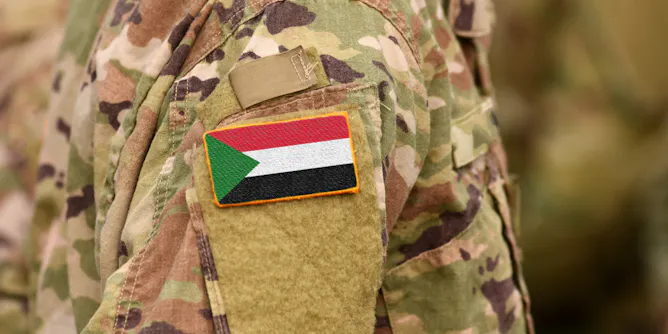
When the establishment retains some leverage over reformers change can be slow, superficial, and short-lived. Sudan appears to be a textbook case of this scenario.
Articles on Sudan
Displaying 221 - 240 of 304 articles
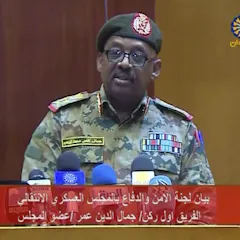
History shows that when government elites believe that there is a risk that they may lose control of the capital, they escalate targeted violence against civilians.
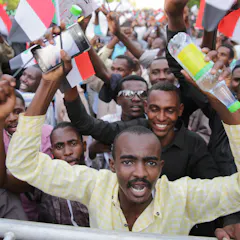
The killing of protesters by the Sudanese military signifies its reluctance to hand over power, as demanded by the African Union.
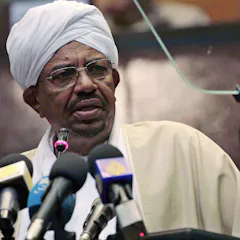
The African Union and its member states are creating their own interpretation of immunity which will protect its heads of state from courts abroad.
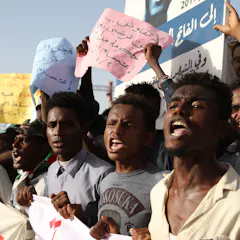
The African Union’s policy offers no wriggle room for a discretionary response to coups, a scourge that imperils the consolidation of democracy.
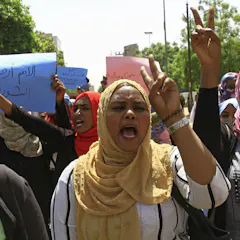
There are challenges that Sudan must overcome before power is transferred to its people.
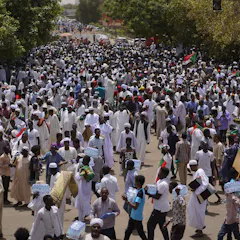
The immediate cause of the economic crisis that brought many thousands of Sudanese onto the streets and continued beyond al-Bashir’s downfall lay in the structure of the economy itself.

Women in Sudan have been resisting the controls placed on them for some time - by using their smart phones and social media to trade.
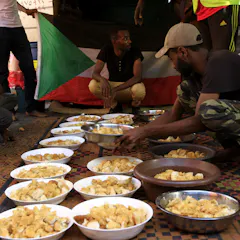
Urban public spaces may be built to represent governments, but often become sites of protest.

For democracy to work, the press has to be free.
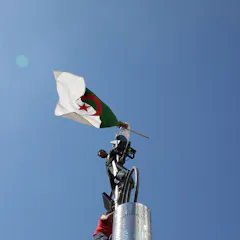
Government restrictions on individual freedoms in the name of public security is increasing.
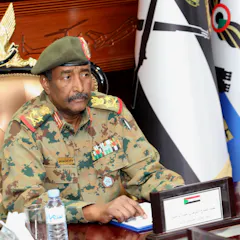
There are concerns that the transition to civilian rule in Sudan won’t be smooth.
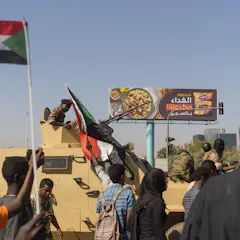
The time for fundamental political reforms in Sudan is now with the end of al-Bashir’s rule.
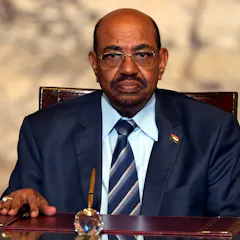
The fact that al-Bashir has been deposed will again raise questions about the former Sudanese president facing trial at the ICC.
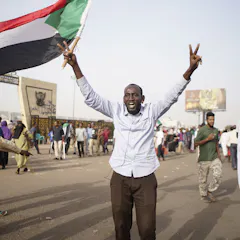
Songs provided motivation and guidance to protesters in Sudan during their uprising against Omar al-Bashir.
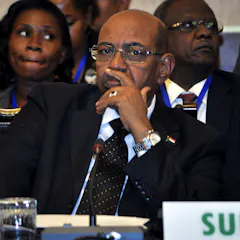
Al-Bashir’s ability to play a skillful combination of internal and external balancing acts, plus ruthless repression and a divided opposition, kept him in power for three decades.
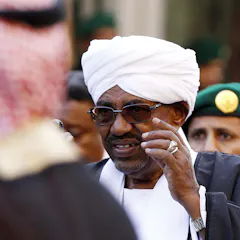
Sudanese protesters against al-Bashir’s regime have scored an important victory. But there’s a long way to go before democracy is restored.
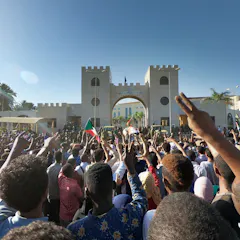
Sudan’s academics have been instrumental in bringing regime change and negotiating transitions.
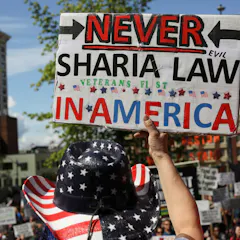
There is no inherent tension between Islam and democratic values. Like any use of religion in politics, the application of Sharia as law depends on who is using it – and why.
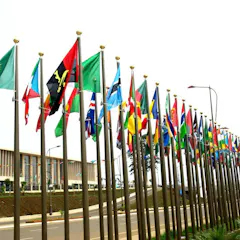
The African Peer Review Mechanism got off to a good start, but enthusiasm soon waned.
Top contributors
-

Professor, Weber State University
-
Senior Research Fellow, Norwegian Institute of International Affairs and Visiting Professor University of Buckingham, Norwegian Institute of International Affairs
-
Associate Professor of History, University of Washington
-
Associate Professor of International Studies, University of Nottingham
-
PhD candidate, University of the Pacific
-
Professor of History, Colgate University
-
Professor of History, Durham University
-
Senior Lecturer in International Law, The University of Western Australia
-
Lecturer in History, Newcastle University
-
Senior Research Fellow, Horn of Africa and Southern Africa, Institute of Commonwealth Studies, School of Advanced Study, University of London
-
Researcher at the Austrian Institute for International Affairs, Österreichisches Institut für Internationale Politik (OIIP)
-
Professor of Architecture and SARChI: DST/NRF/SACN Research Chair in Spatial Transformation (Positive Change in the Built Environment), Tshwane University of Technology
-
Associate Professor of International Relations, University of Trieste
-
Associate Professor of Urban & Environmental Design, University of Khartoum
-
Research Fellow, International Food Policy Research Institute (IFPRI)