
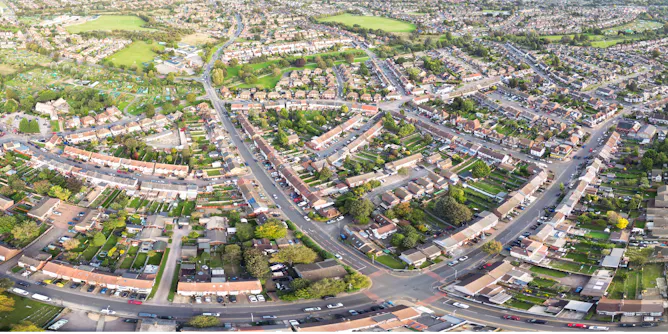
Developers will always choose low-density suburbs at the edge of cities over more environmental alternatives.
Articles on Suburban sprawl
Displaying 1 - 20 of 28 articles

Following the Second World War, the federal government led the country’s transformation from a rural to a suburban nation, despite lacking any constitutional jurisdiction in community planning.

Having a small backyard in outer suburban developments doesn’t make up for everything else that’s missing in these new neighbourhoods.
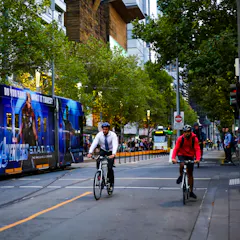
Before the pandemic, the country was making great strides towards creating more compact, sustainable and liveable cities.

Cities can learn from past pandemics to see how communities and lifestyles are shaped by outbreaks.

Nova Scotia’s African Canadian communities have grappled with racism for decades. By looking at community green spaces, we can see how they serve the community’s unique needs.
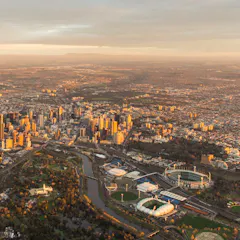
State and local governments can’t do much about the rapid population growth in Melbourne, but they can take steps to reduce the costs of growing disparities between the outer suburbs and inner city.
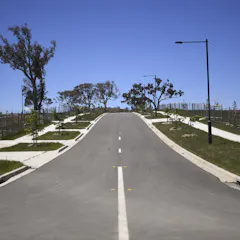
A sense of place matters for people and communities. When a suburb is created from scratch, close attention needs to be paid to the cues from the landscape and meanings people attach to the area.
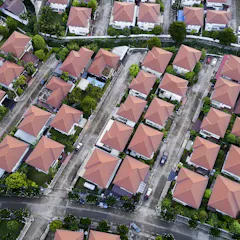
Much of the growth in our cities is in the outer suburbs, now home to around 5 million people. And that creates problems like traffic that detract from the advantages residents see in living there.
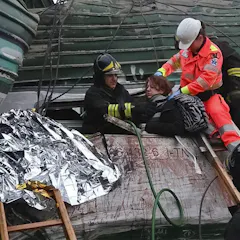
The development of suburban infrastructure depends on political, technical and financial priorities. A train derailment in an Italian suburb has highlighted the need to retrofit infrastructure.
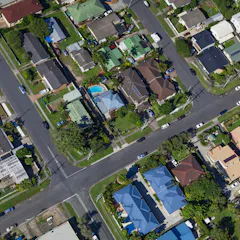
Residents of established middle suburbs are slowly coming round to the idea, but governments and the property sector lack the capacity to deliver compact cities that are acceptable to the community.
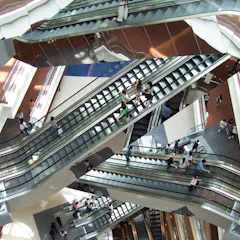
The mall’s inventor, Victor Gruen, envisioned thriving hubs of civic activity, rather than bland, asphalt-enclosed shopping centers. Is his original vision now being realized – or further corrupted?
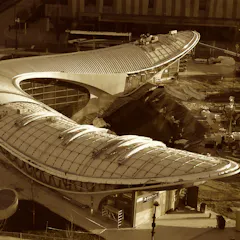
Suburban areas feel infrastructure stress most acutely. Having to deal with severe inadequacies, suburbs offer fertile ground for infrastructure experimentation and innovation.

Recent floods in southeast Louisiana were the most severe U.S. natural disaster since 2012’s Hurricane Sandy. Suburban sprawl and slow execution of flood control projects worsened the damage.

The Banksia woodlands of the Swan Coastal Plain are home to thousands of species, many unique. But they are gradually being swallowed by Perth, one of the world’s most sprawling cities.

Farms on Sydney’s fringes supply 20% of the city’s food. That could drop by more than half if urban sprawl isn’t kept in check.

Melbourne’s farms currently supply over 40% of the city’s food. But a growing population and urban sprawl mean by 2050 they’ll supply half as much.

Home teardowns are often unnecessary and costly, in more ways than one.
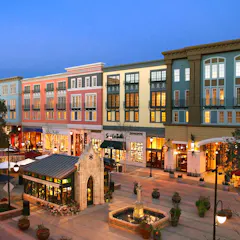
Meet the indoor shopping mall’s hipper, “New Urbanist” cousin.
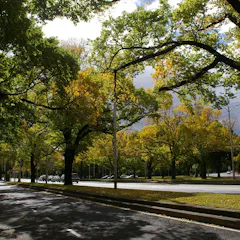
When you look out of your window in the morning, how many trees do you see? Your answer might depend on what suburb you live in. As you go further from the city centre, the amount of tree cover in a suburb…
Top contributors
-

Associate Director Student Experience, Monash University
-
Distinguished Professor and Director, Urban Futures Enabling Capability Platform, and Director, Healthy Liveable Cities Group, RMIT University
-
Professor, Faculty of Environmental and Urban Change, York University, Canada
-
Professor in Urban Horticulture, The University of Melbourne
-
Associate Professor, Institute for Sustainable Futures, University of Technology Sydney
-
Emeritus Professor in Sustainable Urbanism, Swinburne University of Technology
-
Associate Professor in Food Systems, The University of Melbourne
-
PhD candidate, Murdoch University
-
Housing Policy Researcher, Expert Advisor, Housing Assessment Resource Tools and Adjunct Professor, L’Université d’Ottawa/University of Ottawa
-
Professor, School of Planning, University of Waterloo
-
Professor of Urban Policy and Director, Urban Futures Enabling Impact Platform, RMIT University
-
Director Biosecurity Flagship, CSIRO
-
Director, Melbourne Sustainable Society Institute, The University of Melbourne
-
Senior Research Fellow, School of Biological Sciences and Oceans Institute, The University of Western Australia
-
Professor Emeritus, Centre for Planetary Health and Food Security, Griffith University