
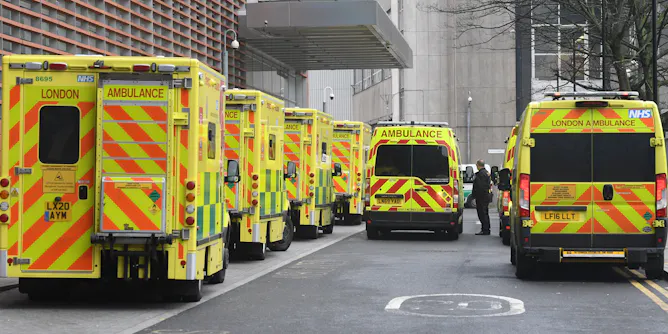
Black patients were 30% and Asian patients 49% more likely to die within 30 days of hospital admission compared to patients from white backgrounds of a similar age and baseline health.
Articles on Structural racism
Displaying 21 - 35 of 35 articles
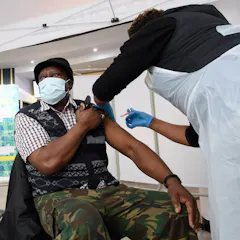
Black people have understandable concerns about vaccines due to a history of racism.
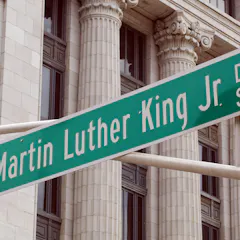
US cities began naming streets in Black neighborhoods for Martin Luther King Jr. after his 1968 assassination. Researchers studying these areas 50 years later found entrenched deprivation.
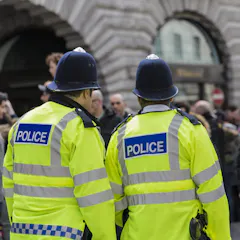
Our findings on stop and account and vehicle stop checks potentially shine a light on why these powers may disproportionately affect black people.
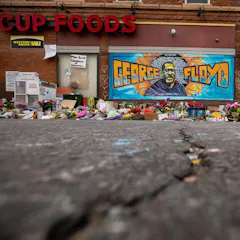
Despite its progressive image, Minneapolis is one of the most segregated cities in the United States. That is by design not accident, argues an urban planning scholar.
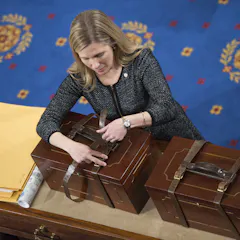
With a Supreme Court ruling rejecting one of the founders’ two reasons for creating the Electoral College, only one reason remains: racism.
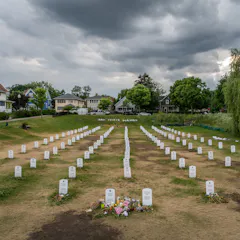
The #SayTheirNames campaign recalls the long struggle by Black Americans to assert their humanity in death, with roots in the fight for slave burials.

Going to a protest may increase your risk of COVID-19. But calling out the structural racism that takes black lives and affects health outcomes for people of colour is also vital.
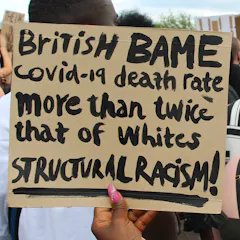
There is no single reason why COVID-19 has had a disproportionate effect on ethnic minorities, but we know that racism and socioeconomic factors both play a role.
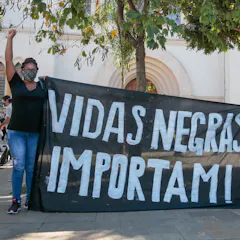
In Brazil, black COVID-19 patients are dying at higher rates than white patients. Worse housing quality, working conditions and health care help to explain the pandemic’s racially disparate toll.
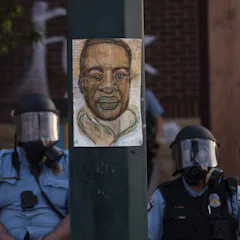
Police killings of black men gain widespread attention, but black men’s life-and-death issues are ignored on a daily basis, a physician who studies health gaps explains.
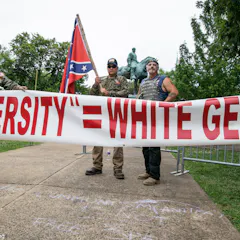
White Americans have been in denial about the fact that police go after Black men and other men of colour. But the research and statistics kept by state and federal agencies show this happens.
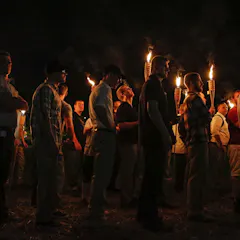
One white educator reflects on the challenges, and the urgency, of tackling white supremacy in schools and on campuses in every country
The physical world is racially segregated as a result of structural racism. A researcher examines whether similar problems exist online.

His landmark contributions to anthropology have faded from memory, despite real-world policy impact during the mid-20th century.
Top contributors
-

Consultant Physician in Sexual Health and HIV Medicine, Queen Mary University of London
-
Clinical Lecturer in Intensive Care Medicine, Queen Mary University of London
-
Associate Professor of Family Medicine, Charles R. Drew University of Medicine and Science
-
Associate Professor, Department of Educational Studies, University of British Columbia
-
Sachs Lecturer, Johns Hopkins University
-
Affiliate Faculty, Metropolitan State University of Denver
-
Professor of Urban and Environmental Policy and Planning, Tufts University
-
Post Doctoral Fellow in Geospatial Institute, Saint Louis University
-
Professor of Toxicology, Equity and Inclusive Practice, Director of Impact and Innovation, University of East London
-
Professor of Race and Education and Director of the Centre for Race, Education and Decoloniality in the Carnegie School of Education, Leeds Beckett University
-
Assistant researcher, University of Sydney
-
Associate Professor of Media, Culture, and Communication, New York University
-
Lecturer, Criminology, Western Sydney University
-
Assistant Professor of Political Science, University of Maryland, Baltimore County
-
Yolanda Moses is a Friend of The Conversation.
Professor of Anthropology, University of California, Riverside