

The recruitment into gangs is not simply an issue of individual criminality or policing, but the result of institutional failures and conditions that make some youth more vulnerable.
Articles on Institutional racism
Displaying 1 - 20 of 44 articles
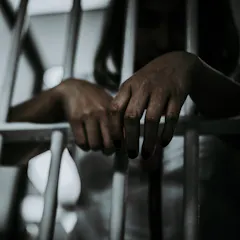
Lowering Indigenous incarceration rates is a key aim of the Closing The Gap targets, but there are more First Nations people behind bars than ever. How did this happen and what can fix it?

Ending institutional racism is a long-term goal and requires well-informed and engaged people to remake systems and structures
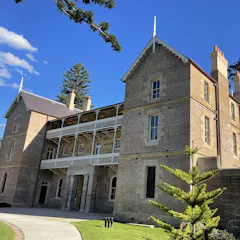
Built in 1821 to house and provide productive employment for the New South Wales colony’s growing population of female convicts, the Parramatta Female Factory was also the site of countless horrors.

When hospital and GP staff do not reflect the population they serve, patients’ health suffers.
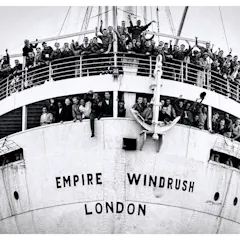
The Windrush generation has a long and storied history encompassing empire, war, migration, multiculturalism, racism and scandal – a history that has transformed British society and culture.

Like many large institutions, the Met remains in denial about the scale of its racism problem. The Casey review falls short in its recommendations for how to address it.

Beliefs about language are never just about language. They reflect institutional power dynamics.

A study of more than 200 social services and arts groups points to the severity of structural barriers.

When a person expresses racial bias, then that bias, conscious or not, is racism.
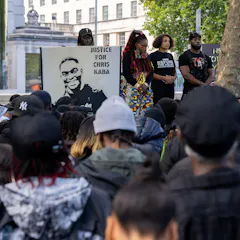
For disproportionate policing to be effectively tackled, it is vital to understand the fear and hurt it creates.
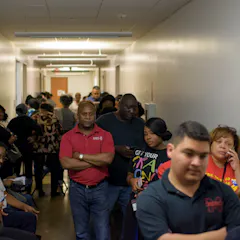
A 2014 US Presidential Commission set a guideline that voters should not have to wait more than 30 minutes to cast their ballots. In some voting districts, it’s taking longer than an hour.

Until authorities acknowledge systemic racism and are held responsible for it, Aboriginal people will never see equity or just outcomes.

Disturbing findings of a new report reveal the extent of racism in Scottish cricket.
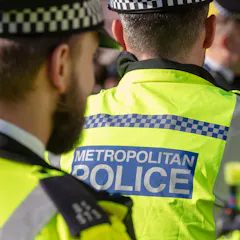
A landmark report in 1999 concluded that the police were institutionally racist, but the new action plan fails to acknowledge it.
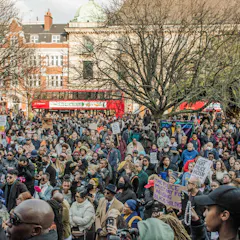
Discussions of racism in Britain centre around the experiences and traumas of Black people, but rarely on the perpetrators.

Romani children across Europe are overrepresented in institutional care. Research shows widely held prejudical views and structural inequality is to blame.
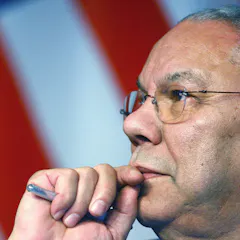
A scholar of African American studies explores how the former secretary of state, who died at 84, dealt with what WEB DuBois described as the ‘double-consciousness’ of being Black and American.
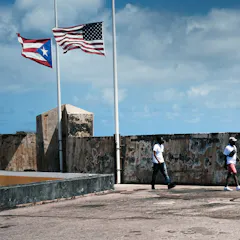
A series of Supreme Court cases based on racist language and reasoning still govern the lives of 4 million Americans.

White denialism of racism provokes a narrative of ‘us versus them.’ Self-reflection and listening are among the ways to be accountable for interrupting and eradicating racism.
Top contributors
-

Assistant Professor of Justice Studies and Sociology, Norwich University
-
Presidential Fellow in Ethnicity and Inequalities, University of Manchester
-
Professor of History, Texas A&M University
-
Professor of Indigenous Health, Executive Director, Carumba Institute, Queensland University of Technology
-
PhD student in Education, York University, Canada
-
Professor of AfroEurasian Sport, EM Lyon Business School
-
Indigenist Health Humanities Academic Director, Queensland University of Technology
-
Senior Lecturer in Film, University of Roehampton
-
Assistant Professor in International Social and Public Policy, London School of Economics and Political Science
-
Professor of Toxicology, Equity and Inclusive Practice, Director of Impact and Innovation, University of East London
-
Research Associate in Higher Education Policy and Planning, Ali Mazrui Centre for Higher Education Studies, University of Johannesburg
-
Senior Project Advisor, Carumba Institute, Queensland University of Technology
-
Associate Professor for Responsible Business, Middlesex University
-
Ph.D. Candidate in Political Science, Michigan State University
-
Visiting Researcher in Journalism, Media and Cultural Studies, Cardiff University