

Creative Australia has reinstated Khaled Sabsabi and Michael Dagostino as the creative team for the 2026 Venice Biennale – after facing much criticism.
Articles on Racial inequality
Displaying 1 - 20 of 56 articles
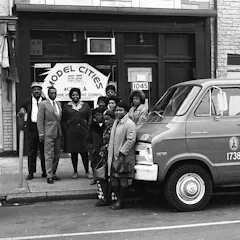
The Great Society’s Model Cities Program wasn’t perfect. But it offered a vision of what democratic, community-based planning could look like.
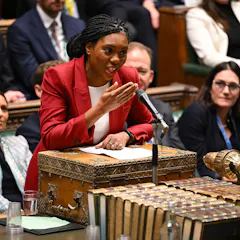
Badenoch’s brand of Conservatism avoids confronting racial inequality in Britain.

South Africa needs policies that look after households that aren’t poor, but are also not financially secure.

Black would-be homeowners pay the price when big investors buy up the neighborhood.
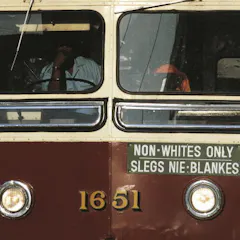
Critics of the 1994 political settlement largely hail from the black middle class, even though it has been one the principal beneficiaries of South Africa’s social democracy.
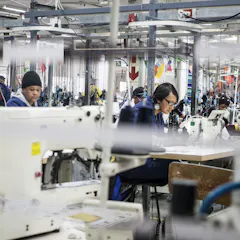
Access to economic and education opportunities increases women’s ability to withstand and recover from financial shocks.

During the 1918 flu pandemic, white people died at similar rates to Black Americans, according to a new study – a very different pattern than what occurred during the COVID-19 pandemic.

The United States came in 41st worldwide on the UN’s 2022 sustainable development index, down nine spots from last year. A political historian explains the country’s dismal scores.

Bilingual education is possible for all South Africa’s children.

The study highlights the flimsy boundaries between different forms of violence: torture and extrajudicial punishment, lawful arrest, and an unlawful kidnapping.

Inspired by her own experience with the education system, a professor of sociology explores how race and racism influence school choice and education.

Online rage towards white communities and privileged classes can be read as fatigue with the postcolonial state.
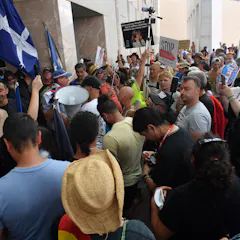
Recently, white protesters have attempted to co-opt Indigenous peoples’ call for sovereignty and self-determination for their own agendas.

The rule of law embodies the rallying cry for the fair and democratic exercise of public power, buttressed by law and fundamental rights.

Thanks to the public events and the scholarly engagement with her life and work, Charlotte Maxeke has become one of the most visible South African women from the 19th and 20th centuries.

The book reveals an insidious, unthinking form of racial hierarchy.
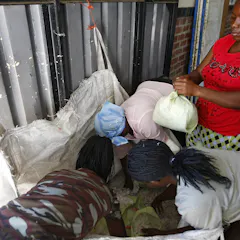
Racial and gender disparities in access to work are entrenched features of the South African labour market.

The new governing elite mistakenly believes that the goal of a democratic South Africa is simply to extend to everyone what whites enjoyed under apartheid.

A survey finds that hardship disparities across racial and ethnic groups have persisted throughout the pandemic.
Top contributors
-

Professor of Political Studies, University of Johannesburg
-
Professor of Sociology, University of the Witwatersrand
-
DSTI/NRF Research Chair in Welfare and Social Development, University of Johannesburg
-
Assistant Professor of Sociology, University at Albany, State University of New York
-
Assistant Professor at CIDE (Center for Research and Teaching in Economics) and Research Assistant Professor, Vanderbilt University
-
Professor of Law, The University of Texas at Austin
-
Researcher at the Centre for African Studies, University of Basel
-
Sachs Lecturer, Johns Hopkins University
-
Faculty Director for Professional Education, BU School of Education, Boston University
-
Associate Professor of Communication and Social Behavior, Cornell University
-
Professor of Psychology and Education, USC Dornsife College of Letters, Arts and Sciences
-
Professor of Urban Form and Society, UCL
-
Economics PhD Candidate, Stellenbosch University
-
Associate Professor, Criminal Justice, Penn State
-
Professor of Law, University of South Carolina