
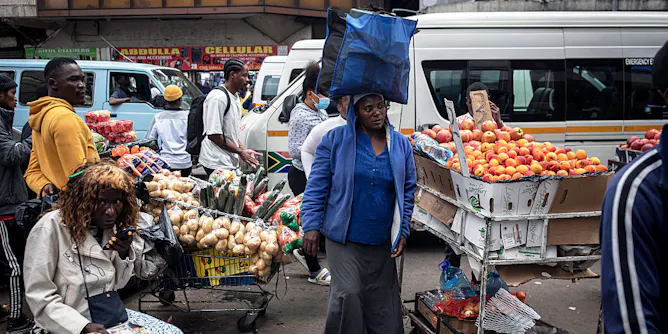
Informal trading is an integral part of the city of Johannesburg’s identity.
Articles on Street vendors
Displaying all articles
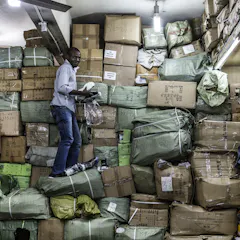
Ethiopian migrants in Johannesburg have reused buildings, densified commercial space and developed networks.
Street vendors are fighting to be brought under labour law rather than remain under business law.
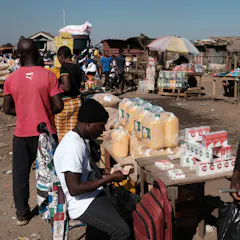
Economic crises since the 1990s led to a sharp rise in Zimbabwe’s informal economy, hence some call the country a nation of vendors.
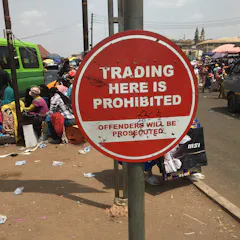
Street vendors in Ghana face a daily battle with city authorities.
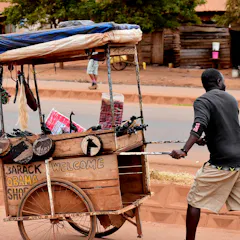
Street sales are a source of jobs, income and survival for the urban poor in Ghana.
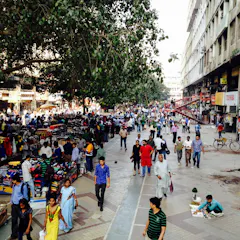
Contemporary characterisations of squatters and street vendors as a “nuisance” reproduces colonial urbanism ideas of hygiene and order.
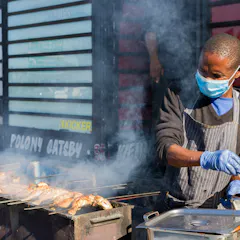
Vendors are continuously exposed to outdoor air pollution from traffic or automotive emissions and cooking fuels such as gas and open fires.
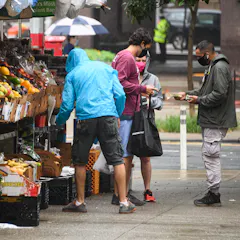
Cities have long resisted the public demand for street food vendors, but the pandemic may reverse those restrictions for good.
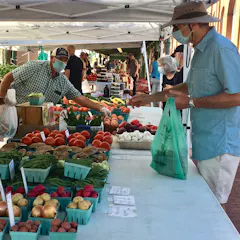
After trying to remove street vendors from its cities for years, China is supporting them to help jump-start its economy. An urban scholar explains why other cities should do the same.
Top contributors
-

Visiting senior lecturer, University of the Witwatersrand
-
Senior Lecturer, Department of Planning, Kwame Nkrumah University of Science and Technology (KNUST)
-
Associate Professor, University of the Witwatersrand
-
Senior Researcher, Gauteng City-Region Observatory
-
Associate Professor at Aix-Marseille University, Aix-Marseille Université (AMU)
-
PhD in public health, Tshwane University of Technology
-
Public Health Specialist, South African Medical Research Council
-
Associate Professor of Human Ecology, University of California, Davis
-
Senior Lecturer of Sociology, University of Essex
-
PhD Candidate, University of Waterloo
-
Leverhulme Early Career Research Fellow, University of Edinburgh
-
John Rennie Short is a Friend of The Conversation.
Professor Emeritus of Public Policy, University of Maryland, Baltimore County
-
Associate Professor, University of the Western Cape
-
Senior Lecturer, Department of Planning, Kwame Nkrumah University of Science and Technology (KNUST)