
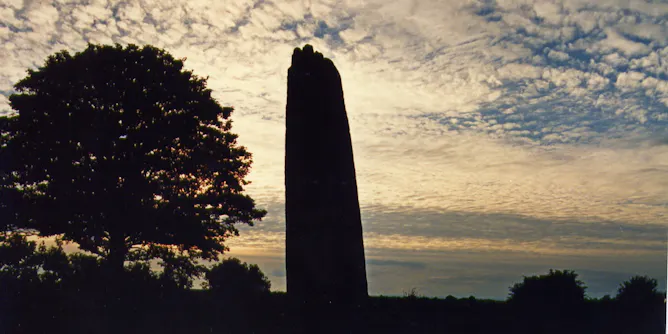
The people who put up these giant stones did not choose the nearest possible source.
Articles on Stonehenge
Displaying 1 - 20 of 22 articles
Stonehenge has captured popular imagination for generations.
The Virtual World of Stonehenge has been released to coincide with the summer solstice.
A new study shows the monument’s most exotic stones did not arrive by chance but were instead deliberately selected and transported.
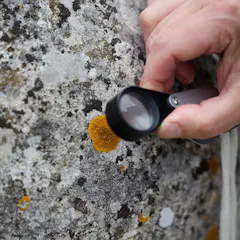
Lichens bridge the living and non-living – understanding them allows us to better see how to conserve our heritage, and also ourselves.
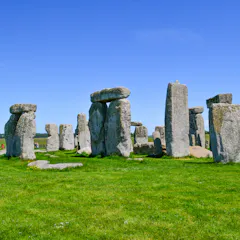
This is the longest known journey for any stone used in a Neolithic monument.
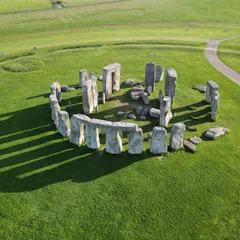
The centre of solstice activities at Stonehenge is the Altar Stone – a large sandstone slab of uncertain origins. Our new work has found a match for it all the way in Scotland.
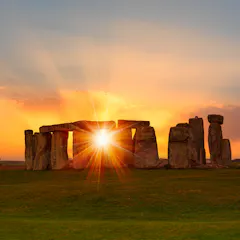
5,000 year old stones may survive paint but not climate breakdown.

Extreme weather caused by climate change could deface the stones and undermine their foundations.
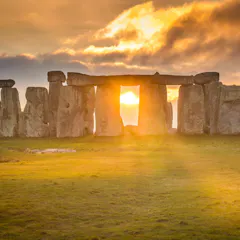
The monument’s ancient connection to the skies may run even deeper than we realised.
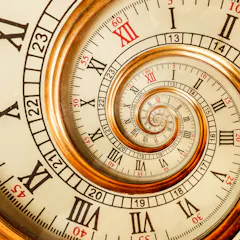
The 24-hour system was independently invented multiple times.
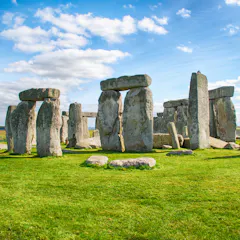
A remarkable set of discoveries has confirmed that parts of Stonehenge first stood 140 miles away at Waun Mawn, west Wales.
Aotearoa New Zealand is falling behind in world heritage sites. Is it time we lobbied for recognition of our unique cultural history?
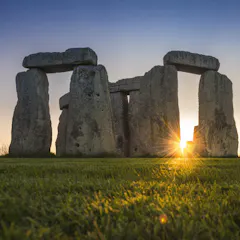
How we traced the origin of the sarsen stones.
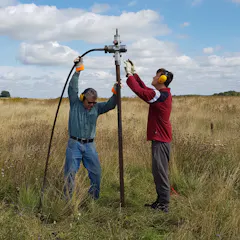
Archaeologists reveal two-kilometre ring of pits around the neolithic Durrington Walls by studying old geophysical surveys.

Edinburgh will this year host the 30th Beltane.
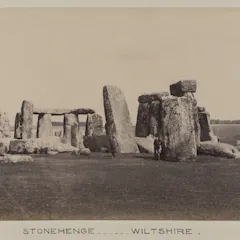
Stonehenge has a traffic problem. But building a £1.4 billion tunnel is not the answer.
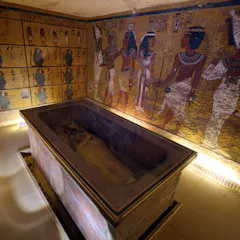
It takes more than a quick scan for high-tech archaeology to reveal history’s secrets.
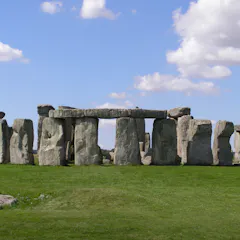
Piecing together how Stonehenge came to be reveals similarities and differences with other monuments of the time.
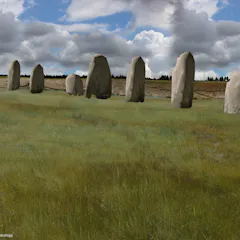
Advances in computer power mean archaeologists can now tell a huge amount about what’s underground without picking up a spade.
Top contributors
-

Research Fellow, School of Earth and Planetary Sciences, Curtin University
-
Professor of Geochronology, Curtin University
-
Professor of Archaeological Science, University of Bradford
-
Professor of Archaeology, Institute of Archaeology, UCL
-
Senior lecturer in archaeology, UCL
-
Experimental Officer and Geophysical Researcher, University of Southampton
-
Professor of Contemporary Archaeology, University of Oxford
-
Member of Kellogg College, University of Oxford and Visiting Fellow in Archaeology, Bournemouth University
-
Professor of Physical Geography, University of Brighton
-
University of St Andrews
-
Deputy Head of Department of Archaeology and Anthropology, Bournemouth University
-
Professor in Astrophysics, Emeritus, University of Colorado Boulder
-
Anniversary Chair in Landscape Archaeology, University of Bradford
-
Professor of Law, University of Waikato
-
Professor of Law, University of Waikato