
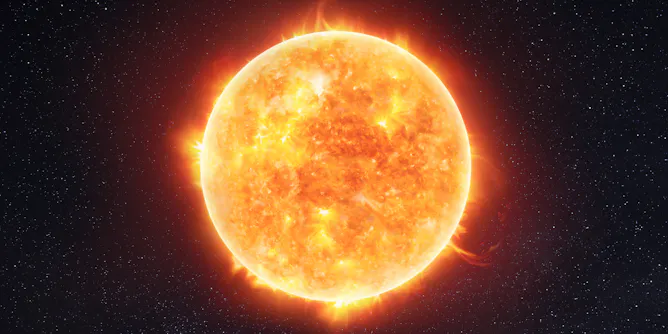
Stars are constantly vibrating because of ‘starquakes’. Listening to their sound can reveal a surprising amount of information.
Articles on Stellar evolution
Displaying all articles

The largest study yet of ‘twin stars’ shows planetary orbits may be less stable than we thought.
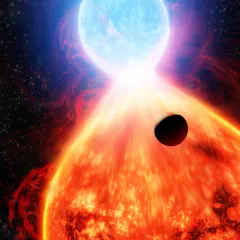
The planet Halla looks like it should have been devoured by its host star, a red giant called Baekdu – but a secret in the star’s past may hold the answer to the planet’s present.
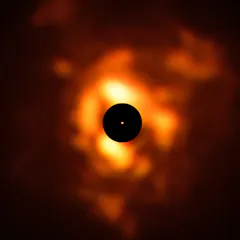
Humanity has a front-row ticket to astronomical history in the making – the death of Betelgeuse.
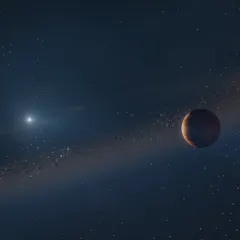
In 5 billion years the Sun will collapse. A new discovery suggest some planets may still survive afterwards.

The black hole is part of a binary star system within our Milky Way galaxy. It orbits a colossal supergiant companion star.
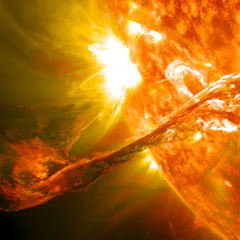
Has the Sun entered a stage of old age?
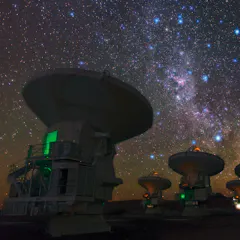
The ‘oldest known nova’ (a star explosion) in the sky was actually not a nova, astronomers show.
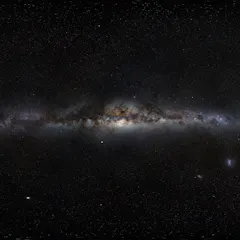
Understanding how the billions of stars in our galaxy formed and evolved is the subject of a huge galactic archaeology project.
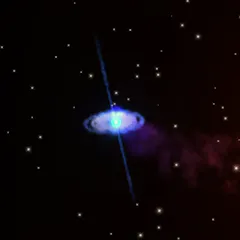
They’re are the overachievers of the universe: incredibly dense but very small when compared to others stars. So how much do we know about the extreme behaviour of neutron stars?
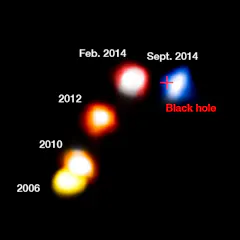
The best observations yet of a mysterious gas cloud that was heading for the black hole at the hear of our Milky Way reveal it may have more stellar origins.
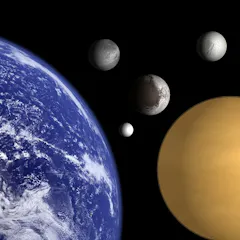
Just how big are the stars? Earth feels quite big, what with it taking an entire day to fly between Sydney and London, and clearly the sun and moon are quite large in the sky. But with virtually everything…
Top contributors
-

Research Scholar, Academia Sinica
-
Professor (Astrophysics), University of Southern Queensland
-
Associate Professor in Astrophysics, Monash University
-
Associate professor, UNSW
-
Professor of Astrophysics, University of Manchester
-
Professor of Astrophysics, University of Sydney
-
Professor of Astrophysics, Monash University
-
Professor, Curtin Institute of Radio Astronomy, Curtin University
-
Associate Professor in Astrophysics, University of Tasmania
-
Professor of Theoretical Astrophysics, Monash University
-
Research Fellow, School of Physics and Astronomy, Monash University
-
Professor of Astrophysics Education, The Open University
-
Associate Dean of Innovation and Engagement, Swinburne University of Technology
-
Associate Professor, Astrophysics, Australian National University
-
Astronomer, University of Sydney