

What’s really the most dangerous American city? The way crimes are currently counted in the US can easily confuse and mislead.
Articles on Statistics
Displaying 161 - 180 of 289 articles

Undergraduate statistics degrees have tripled in the past decade. Is ‘statistician’ really the sexy new job?

Galaxy images and patient records can be equally confusing. Now a team of astrophysicists have realised their methods could help medical professionals.
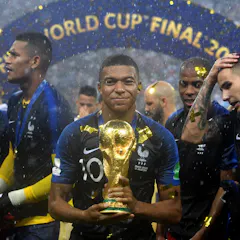
The best team to lift the trophy was Brazil’s star-studded 1970 team.
A survey shows that most Puerto Ricans didn’t highly rate the official information coming out of the island. With the Institute of Statistics in trouble, the situation is likely not to improve.

Australia has won the soccer World Cup three times, in simulation games only. So what are the challenges to predicting the winner?
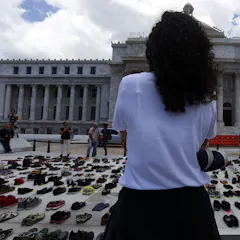
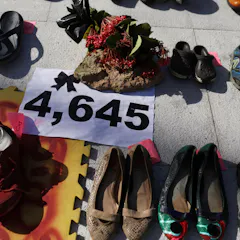
The government said 64, journalists said 4,645. What went wrong?
We are often presented with surveys that claim to show how we all think on a certain subject. But how many people do you need to ask for that finding to have have any convincing meaning?
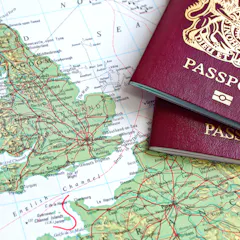
Statistics are political – so we should question the recent drop in government estimates of British citizens living in the EU.
If journal editors fail to retract or properly flag data revealed as inaccurate, they leave open the possibility that it’ll be cited for years to come.

A statistical method widely used today by scientists and others is all thanks to a statistician at a Guinness brewery whose work was published anonymously more than a century ago.

The internet has not only changed the kinds of answers historical study can provide, but also what questions can be asked.
The Retail Prices Index (RPI) is responsible for rising rail fares and student loan repayments.

A new approach to gathering data from football matches which uses cybernetics and AI could help coaches spot weak links in their teams.
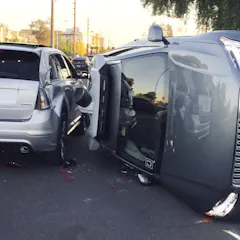
Comparing crash rates between humans and self-driving cars requires more data than anyone currently collects. And some of it will be quite hard to figure out.

Australian cricket captain Steve Smith’s play during the recent Ashes saw him hailed as one of the greatest Australian players. So what do the numbers say?
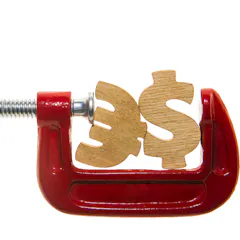
The squeeze on wealth in the middle class by those at the top is a long established trend in international inequality data. But the ABS doesn’t provide this information.

The same-sex marriage postal survey gave Australians a chance to create data for social change. And that’s rare.
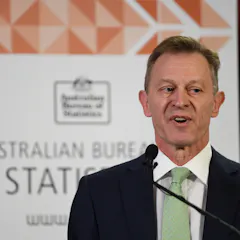
Not everyone who could vote did vote in the voluntary postal vote on same-sex marriage. So what can we draw from the result if only four out of five eligible Australians took part?

We are observing two new phenomena. On one hand doubt is shed on the quality of entire scientific fields or sub-fields. On the other this doubt is played out in the open, in the media and blogosphere.
Top contributors
-

Senior Lecturer in Statistics, University of Glasgow
-
Professor of the Practice of Data Science, Washington University in St. Louis
-
Professor of Biostatistics and Epidemiology, Adelaide University
-
Professor of Statistics, Queensland University of Technology
-
Professor of Economics and Public Policy, ANU College of Arts and Social Sciences, Australian National University
-
Vice Provost for Faculty Affairs and Professor of Statistics, Virginia Tech
-
Associate Professor, Department of Statistics and Actuarial Science, University of Waterloo
-
Associate Professor of Mathematical Sciences, University of Technology Sydney
-
Professor of Business and Sports Analytics, University of Leeds
-
Professor of Statistics, Queensland University of Technology
-
Professor of Bioinformatics, WEHI (Walter and Eliza Hall Institute of Medical Research)
-
Emeritus Professor, La Trobe University
-
Professor, Future Fellow and Head of Statistics at UNSW, and a Deputy Director of the Australian Centre of Excellence in Mathematical and Statistical Frontiers (ACEMS), UNSW
-
Biostatistician, The University of Melbourne
-
Associate Professor, POLIS@ANU Centre for Social Policy Research, Australian National University