

One in a million or one in ten? Mathematics can help us work out the odds of whether recent sightings of UFOs are really alien spaceships.
Articles on Statistics
Displaying 81 - 100 of 289 articles
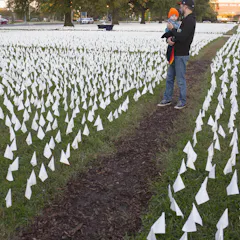
Record-keepers have a pretty good sense of how many people have died. But figuring out the cause of those deaths is a lot trickier – and that’s why reasonable modelers can disagree.

Many governments, including the US, already collect and make public population statistics that could help them prepare for the next pandemic.

We used probability to find out what collecting all 678 stickers might cost you.
The claim that our brain size limits us to 150 meaningful friendships has been challenged by a recent paper.
Understanding numbers in the news or social media can empower you to figure out risks and make good choices. Here’s what to look out for to make sure you aren’t misled by COVID-19 coverage.

A long-sought crack in the Standard Model of particle physics may have been spotted.
It’s important to get the figures right to know if we are truely out of any recession, or if we need further stimulus to help get more people into work.
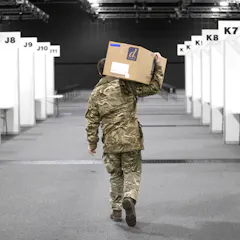
We are repeatedly missing opportunities to gain quality evidence to help us manage the pandemic – that’s why we need designed evaluations.
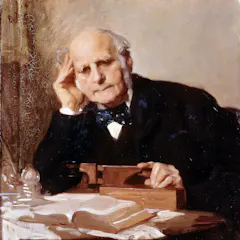
Smart people can have really bad ideas – like selectively breeding human beings to improve the species. Put into practice, Galton’s concept proved discriminatory, damaging, even deadly.
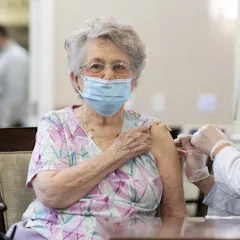
West Virginia’s success holds some important lessons for other states and the rest of the COVID-19 vaccine rollout.
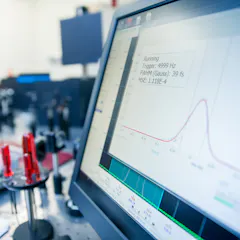
Whether you are predicting the outcome of an election or studying how effective a new drug is, there will always be some uncertainty. A margin of error is how statisticians measure that uncertainty.
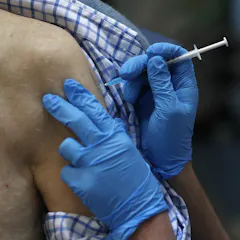
The coronavirus vaccine was developed faster than any vaccine in history. It took just 332 days from the first sequencing of the virus genome to the first vaccines given to the public.
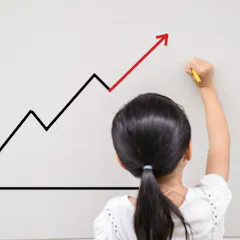
There have been some shockingly bad graphs circulating during the pandemic.
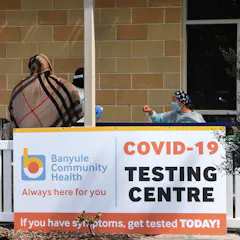
After more than a month of testing without a single positive case, the probability of coronavirus lurking in Victoria is vanishingly small.

Asking these four questions can help us identify good news when we see it, be more critical of news reports, or delay our judgement until we have more information.
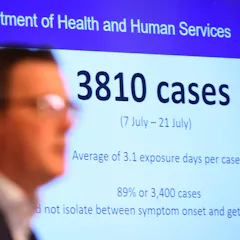
The COVID-19 pandemic has highlighted how much modern societies are governed by statistics. Despite their objective appearance, these numbers gain their strength from very human relationships.

African governments must engage rating agencies better, providing them and investors with credible economic data, and regularly address all concerns being raised.
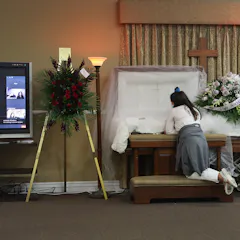
Health statisticians keep careful tabs on how many people die every week. Based on what’s happened in past years, they know what to expect – but 2020 death counts are surging beyond predictions.

The pandemic has exposed many of us to new statistical concepts, on the news, in everyday conversations and on social media. But how many are you getting wrong?
Top contributors
-

Senior Lecturer in Statistics, University of Glasgow
-
Professor of the Practice of Data Science, Washington University in St. Louis
-
Professor of Biostatistics and Epidemiology, Adelaide University
-
Professor of Statistics, Queensland University of Technology
-
Professor of Economics and Public Policy, ANU College of Arts and Social Sciences, Australian National University
-
Vice Provost for Faculty Affairs and Professor of Statistics, Virginia Tech
-
Associate Professor, Department of Statistics and Actuarial Science, University of Waterloo
-
Associate Professor of Mathematical Sciences, University of Technology Sydney
-
Professor of Business and Sports Analytics, University of Leeds
-
Professor of Statistics, Queensland University of Technology
-
Professor of Bioinformatics, WEHI (Walter and Eliza Hall Institute of Medical Research)
-
Emeritus Professor, La Trobe University
-
Professor, Future Fellow and Head of Statistics at UNSW, and a Deputy Director of the Australian Centre of Excellence in Mathematical and Statistical Frontiers (ACEMS), UNSW
-
Biostatistician, The University of Melbourne
-
Associate Professor, POLIS@ANU Centre for Social Policy Research, Australian National University