
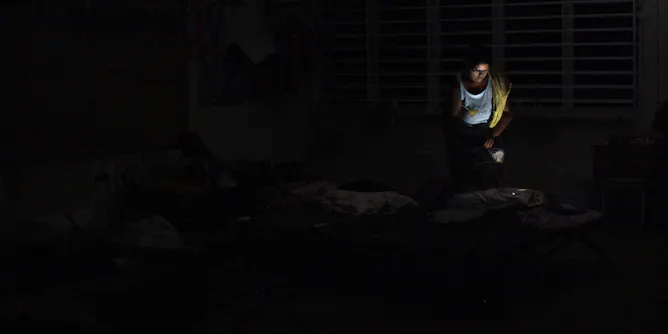
Although Puerto Ricans are American citizens, what happens on the island tends to stay there, at least in terms of economic data.
Articles on Statistics
Displaying 181 - 200 of 289 articles

What makes someone more likely to succeed when the lights shine brightest?
Scientists have a big problem: Many psychological studies don’t hold up to scrutiny. Is it time to redefine statistical significance?

How many healthy years of life do you have ahead before you become unhealthy – and then die? One model tries to find the answer.
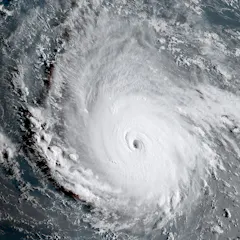
Saturated media coverage of hurricanes like Harvey and Irma can make it seem like disasters happen all the time. Is the frequency of billion-dollar disasters really rising?

Humans behave like atoms when viewed from a distance.

Women will now be better informed when it comes to deciding whether it’s worth undergoing another round of IVF.
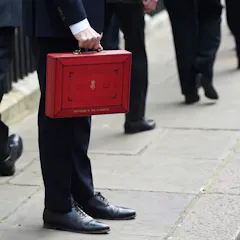
No democratic government should be able to manipulate the public by getting a sneak peek at the data.
Today algorithms are ubiquitous, yet often misunderstood. Rather than mysterious entities, they’re closer to recipes, and the quality of the output depends on the input – in their case, data.

Methods stemming from decades of research on disordered materials are used to describe algorithmic phase transitions, and to design new algorithms in machine-learning problems.

Even though the shift towards part-time employment has actually been happening for many years, it now appears to be slowing.

The unpredictability of women’s tennis in 2017 should make us strongly question the performance of the official rankings – and not simply the players’ performance.
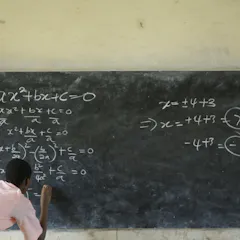
By embracing a style beyond the typical classroom lecture, math education can serve all of our students better.

Researchers need to be able to draw conclusions based on previously published studies in their field. A new aggregation method synthesizes prior findings and may help reveal more of the big picture.
Any field that collects and analyzes data relies on statistical techniques to make sense of it all. Modern, more accurate methods should supplant the old ways… but in many cases, they haven’t yet.
The decisions we make in life often come down to Bayes’ Theorem, but most of us don’t even realise what it is. So how does it work?
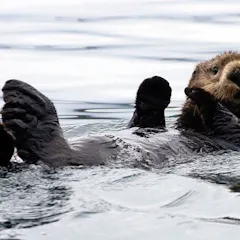
Sea otters had been absent from this Alaskan national park for at least 250 years. By marrying math and statistics, scientists map this animal’s successful comeback.

Just about everyone wants medical care, but some want it a lot more. We discovered a personality trait that explains why it’s hard to improve health care outcomes and costs.

Sometimes statistics and probability can produce unexpected or counter-intuitive results. If we’re hoping to use numbers to make good decisions, we should be wary of the traps.
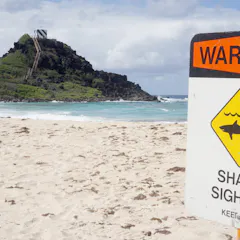
We naturally overestimate the risk of rare events, like shark attacks or terrorism. But there are things you can do to think more rationally about the real risk.
Top contributors
-

Senior Lecturer in Statistics, University of Glasgow
-
Professor of the Practice of Data Science, Washington University in St. Louis
-
Professor of Biostatistics and Epidemiology, Adelaide University
-
Professor of Statistics, Queensland University of Technology
-
Professor of Economics and Public Policy, ANU College of Arts and Social Sciences, Australian National University
-
Vice Provost for Faculty Affairs and Professor of Statistics, Virginia Tech
-
Associate Professor, Department of Statistics and Actuarial Science, University of Waterloo
-
Associate Professor of Mathematical Sciences, University of Technology Sydney
-
Professor of Business and Sports Analytics, University of Leeds
-
Professor of Statistics, Queensland University of Technology
-
Professor of Bioinformatics, WEHI (Walter and Eliza Hall Institute of Medical Research)
-
Emeritus Professor, La Trobe University
-
Professor, Future Fellow and Head of Statistics at UNSW, and a Deputy Director of the Australian Centre of Excellence in Mathematical and Statistical Frontiers (ACEMS), UNSW
-
Biostatistician, The University of Melbourne
-
Associate Professor, POLIS@ANU Centre for Social Policy Research, Australian National University