

Health statisticians keep careful tabs on how many people die every week. Based on what’s happened in past years, they know what to expect – but 2020 death counts are surging beyond predictions.
Articles on Statistics
Displaying 101 - 120 of 289 articles
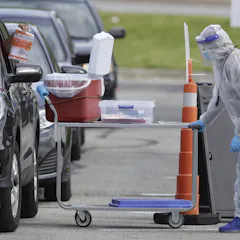
A team of researchers from Indiana University performed random testing for SARS-CoV-2 across the state. The results offer some of the most accurate data to date about important aspects of the virus.
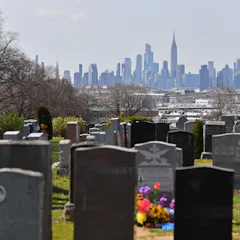
The COVID-19 death toll in the US is now over 130,000. What do 130,000 fatalities look like? A biostatistician provides some perspective.

Many of the more formal models for predicting the pandemic try to understand why changes happen – but often it can be more accurate to ignore the reasons and simply look at the data.

Many more people have been infected with coronavirus than the statistics suggest.
Without a vaccine, the cost of reaching herd immunity during a pandemic is counted in lives lost, and it won’t quickly stop the virus’s spread.
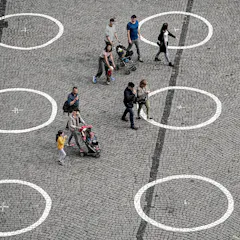
K is all about the super-spreaders.
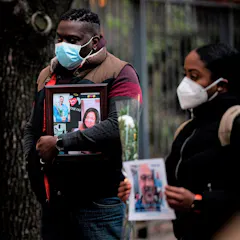
Why one city suffers significantly more deaths than another isn’t always obvious. A simple experiment shows how failing to consider certain factors can point policy makers in the wrong direction.

An easy question, but a difficult answer.
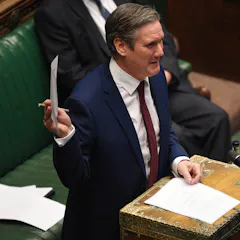
Most people believe the government was wrong to stop publishing international comparisons of COVID-19 death tolls.
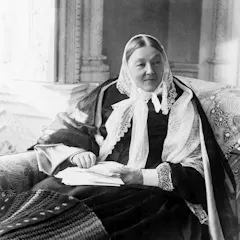
On the 200th anniversary of Florence Nightingale’s birth, we take a look at how her monumental efforts helped shape the way we model health care and disease outbreak data today.

Countries aiming to flatten the coronavirus curve have one crucial aim: reduce the “effective reproduction number” of the virus to below 1. This means the spread is slowing, rather than accelerating.

Three graphs of mortality data tell the story of the direction the UK and the world are heading in after the peak of the coronavirus outbreak.

Tim Hortons changed Roll up the Rim to include a digital element. A statistician correctly predicted that playing on the last day of the contest would dramatically increase the odds of winning.
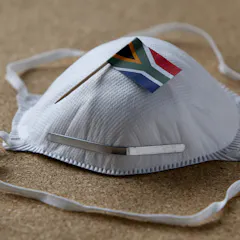
We’d all love to know more about our neighbours – from COVID-19 data, census data and other official data sources – but we shouldn’t.

Researchers and public health officials still don’t know how widespread nor how deadly the coronavirus really is. Random testing is a way to quickly and easily learn this important information.
A lot of numbers are being tossed around about COVID-19 and what to expect in the future. They’re being used to make critical public health decisions, but they aren’t as simple as they appear.

Struggling to tell your daily infections from your cumulative counts, or a linear from a log scale? Here are a few pointers to help you master the deluge of data about the COVID-19 pandemic.
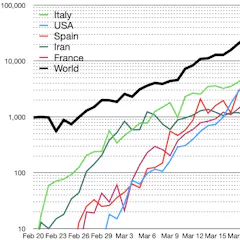
We need to update models on death rates or introduce truly random testing to understand the true impact of the coronavirus.
Countries have been trying to count their populations since the Han dynasty in China.
Top contributors
-

Senior Lecturer in Statistics, University of Glasgow
-
Professor of the Practice of Data Science, Washington University in St. Louis
-
Professor of Biostatistics and Epidemiology, Adelaide University
-
Professor of Statistics, Queensland University of Technology
-
Professor of Economics and Public Policy, ANU College of Arts and Social Sciences, Australian National University
-
Vice Provost for Faculty Affairs and Professor of Statistics, Virginia Tech
-
Associate Professor, Department of Statistics and Actuarial Science, University of Waterloo
-
Associate Professor of Mathematical Sciences, University of Technology Sydney
-
Professor of Business and Sports Analytics, University of Leeds
-
Professor of Statistics, Queensland University of Technology
-
Professor of Bioinformatics, WEHI (Walter and Eliza Hall Institute of Medical Research)
-
Emeritus Professor, La Trobe University
-
Professor, Future Fellow and Head of Statistics at UNSW, and a Deputy Director of the Australian Centre of Excellence in Mathematical and Statistical Frontiers (ACEMS), UNSW
-
Biostatistician, The University of Melbourne
-
Associate Professor, POLIS@ANU Centre for Social Policy Research, Australian National University